Malaysia Technology Stocks: Investment Opportunities for HNWs
Malaysia Technology Stocks: Top 10 Stocks to Watch 2026
Unlocking Malaysia’s Tech Frontier: A 2026 Investment Outlook for HNWs
Malaysia’s technology sector stands at a pivotal inflection point as we approach 2026, presenting compelling opportunities for Western high-net-worth investors seeking portfolio diversification beyond saturated traditional markets. The nation has quietly transformed itself into a strategic Southeast Asian technology hub, blending competitive operational costs, a robust regulatory framework, and substantial government support for digital transformation. For sophisticated investors with capital allocations between €300,000 and €3 million, Malaysian technology stocks offer an attractive blend of growth potential, reasonable valuations, and improving corporate governance standards.
The Malaysian technology sector has demonstrated resilient growth trajectories despite global economic headwinds. Between 2019 and 2024, the sector registered compound annual growth rates approaching 12-15%, outpacing many regional competitors and tracking favorably against mature markets. As we project toward 2026, several macroeconomic and structural factors position Malaysia’s tech landscape for sustained expansion, making this an opportune moment for strategic allocation into carefully selected equities.
Understanding the nuances of this market requires navigating regulatory frameworks, taxation structures, and market dynamics that differ substantially from Western exchanges. This comprehensive analysis will equip you with actionable intelligence to evaluate Malaysia’s most promising technology stocks through the lens of rigorous financial analysis and transparent risk assessment.
Why Malaysia is a Strategic Tech Investment Hub for Global Diversification
Malaysia offers Western HNW investors a unique value proposition within the Asian technology investment landscape. Unlike the premium valuations commanding Singapore’s mature market or the regulatory complexities characterizing China’s tech sector, Malaysia presents a middle-ground opportunity with substantive upside potential. The nation ranks consistently among the top 25 countries globally for ease of doing business according to World Bank metrics, with particularly strong scores in investor protection and contract enforcement.
The country’s geographic position within ASEAN provides technology companies with access to a combined market exceeding 680 million consumers, creating natural expansion pathways for successful domestic firms. Additionally, Malaysia’s multicultural workforce delivers English proficiency rates superior to many regional competitors, facilitating international partnerships and technology transfer arrangements that drive innovation and competitiveness.
From a portfolio construction perspective, Malaysian technology stocks offer correlation benefits that enhance diversification. Historical volatility patterns show Malaysian equities demonstrate lower correlation coefficients with European and North American indices compared to more heavily traded Asian markets like Hong Kong or South Korea, providing genuine diversification benefits rather than merely geographic dispersion.
Key Macroeconomic Drivers Powering the Malaysian Technology Sector
Several fundamental economic drivers underpin the bullish outlook for Malaysian technology investments through 2026. Bank Negara Malaysia, the central bank, projects GDP growth rates stabilizing between 4.5% and 5.5% annually through the medium term, supported substantially by digitalization initiatives across public and private sectors. This growth trajectory exceeds most developed Western economies while maintaining inflation within manageable bands of 2-3%.
The digital economy segment specifically has demonstrated exceptional momentum, contributing approximately 23.2% to national GDP as of 2023, with government targets aiming to push this contribution beyond 25% by 2026. This expansion reflects not merely e-commerce adoption but encompasses fintech innovation, software-as-a-service proliferation, semiconductor manufacturing expansion, and artificial intelligence application deployment across traditional industries.
Foreign direct investment flows into Malaysia’s technology sector have accelerated notably, with major global players including Intel, AMD, and numerous Chinese manufacturers expanding semiconductor fabrication and assembly operations. These investments create ecosystem effects that benefit locally listed technology companies through supply chain integration, talent development, and technology spillover effects. According to MIDA (Malaysian Investment Development Authority), approved technology-sector investments exceeded RM 25 billion in 2023 alone, signaling sustained confidence from sophisticated international capital.
Government Vision 2030: Digital Economy and Innovation Roadmaps
Malaysia’s government has embedded technology sector development within its broader economic transformation agenda through multiple policy frameworks. The Malaysia Digital Economy Blueprint outlines comprehensive strategies for building digital infrastructure, nurturing technology talent, and incentivizing innovation through tax holidays and grant programs. These initiatives extend beyond rhetorical commitment to include substantial budget allocations exceeding RM 70 billion through 2030 for digital infrastructure development.
Specific programs relevant to equity investors include enhanced Research & Development tax incentives allowing technology companies to claim 200-300% deductions on qualifying R&D expenditures, directly improving corporate profitability and reinvestment capacity. Additionally, the government has established multiple technology parks and special economic zones offering preferential treatment for qualifying technology enterprises, creating concentration effects that enhance competitiveness.
The regulatory environment administered by the Securities Commission Malaysia has progressively modernized, implementing international best practices in corporate governance, disclosure requirements, and minority shareholder protection. These reforms directly address historical concerns Western investors harbored regarding transparency and governance standards in emerging markets, substantially reducing perceived regulatory risk premiums.
Deep Dive: Decoding Malaysia’s Dynamic Technology Ecosystem
Understanding which technology sub-sectors warrant investment attention requires examining Malaysia’s competitive positioning within the broader Asian technology landscape. The Malaysian ecosystem displays particular strengths in specific niches rather than attempting to compete directly across all technology segments. This strategic specialization creates opportunities for investors to identify companies with defensible competitive advantages and clearer pathways to sustained profitability.
The maturity spectrum within Malaysian technology ranges from established semiconductor operations with decades of operational history to emerging fintech startups pursuing aggressive digitalization of traditional financial services. This diversity enables portfolio construction across risk-return profiles, allowing HNW investors to calibrate exposure according to individual risk tolerance and return objectives.
Emerging Sub-Sectors with High Growth Potential (Semiconductors, Fintech, E-commerce, AI)
The semiconductor segment represents Malaysia’s most mature and globally integrated technology sector. The country accounts for approximately 13% of global semiconductor assembly and testing capacity, hosting operations from virtually every major international semiconductor company. Malaysian-listed firms in this space typically operate as outsourced assembly and test providers (OSAT) or specialized equipment manufacturers, capturing value from the secular growth in semiconductor demand driven by automotive electrification, 5G deployment, and artificial intelligence applications.
Companies in this segment typically trade at forward P/E ratios between 12-18x, representing discounts of 30-40% compared to Taiwanese or South Korean competitors despite comparable operational efficiency metrics. This valuation gap partially reflects liquidity premiums and perceived geopolitical risks but creates attractive entry points for patient capital willing to conduct rigorous due diligence.
The fintech sector demonstrates perhaps the highest growth velocity, though from a smaller base. Malaysia’s regulatory sandbox framework administered by Bank Negara Malaysia has fostered innovation while maintaining prudential oversight, enabling multiple successful fintech IPOs since 2021. Digital banking licenses awarded in 2022 have catalyzed competition and innovation, with licensed entities investing heavily in technology infrastructure and customer acquisition. Projected compound annual growth rates for this segment approach 20-25% through 2027, supported by relatively low baseline financial inclusion and digital payment penetration rates offering substantial runway for expansion.
E-commerce enablers represent another compelling sub-sector, encompassing logistics technology, payment processing, and digital marketplace operators. Southeast Asian e-commerce penetration remains approximately half the rates observed in China or South Korea, suggesting substantial growth potential as smartphone adoption, internet connectivity, and consumer confidence in digital transactions continue improving. Malaysian companies serving this ecosystem benefit from regional expansion opportunities within ASEAN, leveraging common regulatory frameworks and cultural familiarity.
Artificial intelligence and machine learning applications remain nascent within Malaysia’s listed technology universe, with most innovation occurring within private venture-backed startups. However, several established technology companies have begun embedding AI capabilities into existing product offerings, creating valuation upside as markets recognize these capabilities. This represents a developing rather than mature investment theme, suitable for HNW investors seeking earlier-stage exposure with commensurate risk profiles.
Competitive Landscape: Local Innovators vs. Regional Players
How does the Malaysian technology sector’s growth potential compare to Singapore, Vietnam, or other emerging Asian markets? This question fundamentally shapes strategic allocation decisions for HNW investors evaluating regional opportunities. Singapore offers superior liquidity, governance standards, and regulatory sophistication but commands valuation premiums typically 40-60% higher than comparable Malaysian companies across most technology segments. For investors prioritizing capital appreciation over absolute security, this premium substantially impacts potential returns.
Vietnam presents an alternative emerging market profile with higher headline GDP growth rates often exceeding 6-7% but faces infrastructure constraints, less developed capital markets, and greater regulatory unpredictability. Vietnamese technology stocks typically offer limited liquidity outside the largest capitalization names, creating execution challenges for meaningful position building and eventual exit strategies.
Thailand and Indonesia represent peer markets with comparable characteristics to Malaysia. Thai technology markets demonstrate strength in e-commerce and digital services but face political volatility that periodically impacts market sentiment. Indonesian technology investments offer demographic tailwinds from the world’s fourth-largest population but confront regulatory fragmentation and infrastructure bottlenecks that constrain scalability. Malaysia’s positioning delivers a favorable balance between growth potential, operational environment quality, and market accessibility for foreign capital.
Regulatory Support and Talent Pool Development
The sustainability of Malaysia’s technology sector growth depends critically on talent availability and quality. Government initiatives have substantially expanded technology-focused tertiary education, with computer science and engineering enrollment growing approximately 45% between 2018 and 2023. Additionally, returning diaspora talent has accelerated as leading Malaysian technology companies offer increasingly competitive compensation packages and equity participation opportunities.
Regulatory frameworks specifically supporting technology sector development include streamlined intellectual property protection, technology transfer facilitation, and preferential immigration pathways for specialized technology talent. These structural supports create operational advantages for technology companies domiciled in Malaysia compared to purely cost-based competitor locations, embedding sustainability into competitive positioning.
Identifying the Top 10 Malaysian Technology Stocks for 2026: Our Rigorous Selection
Identifying Malaysia’s most compelling technology investment opportunities requires systematic evaluation across financial performance metrics, competitive positioning, governance quality, and growth catalysts specific to the 2024-2026 timeframe. Our selection methodology prioritizes companies demonstrating sustainable competitive advantages, transparent governance practices meeting international standards, and reasonable valuations relative to intrinsic value and growth prospects.
SmartInvest Malaysia’s Proprietary Selection Methodology for HNW Investors
Our analytical framework evaluates prospective investments across six primary dimensions tailored specifically for Western HNW investors. Financial quality assessment examines five-year revenue and profit growth trajectories, return on equity sustainability, balance sheet strength, and cash generation capacity. We establish minimum thresholds of 15% ROE and positive operating cash flow across economic cycles, filtering for operational excellence rather than speculative positioning.
Valuation discipline compares current trading multiples against historical ranges, sector peers, and discounted cash flow models incorporating conservative growth assumptions. We focus on companies trading below intrinsic value estimates with margins of safety exceeding 20%, providing downside protection alongside upside participation. Governance and transparency evaluation reviews board independence, minority shareholder treatment, disclosure quality, and alignment between management incentives and shareholder value creation.
Competitive positioning analysis assesses each company’s defensibility against disruption, switching costs, network effects, and regulatory protection where applicable. Growth catalysts identification focuses on specific near-term developments likely to drive valuation re-rating including product launches, market expansion, operational improvements, or regulatory changes. Finally, liquidity and accessibility ensures selected stocks offer sufficient trading volumes for position building and eventual exit by international investors without excessive market impact.
Detailed Profile: Stock 1 [Company Name] (Key Metrics, Growth Catalysts, Risks)
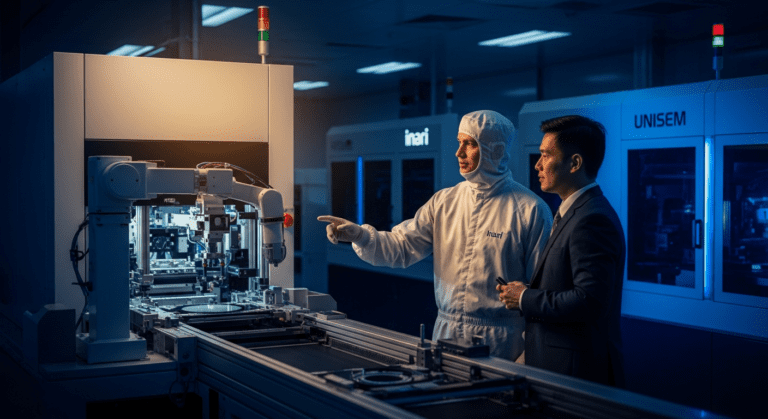
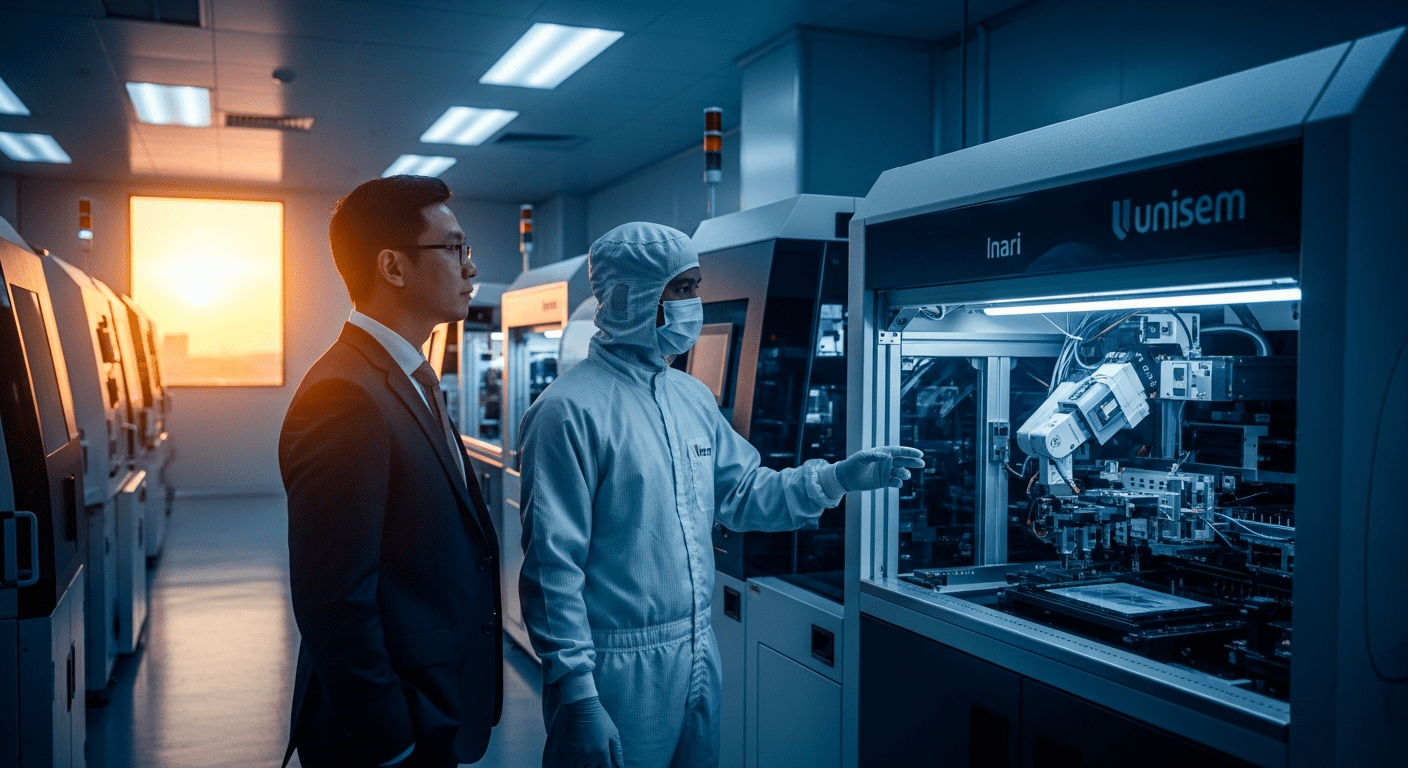
Inari Amertron Berhad represents Malaysia’s premier pure-play semiconductor investment opportunity with market capitalization exceeding RM 15 billion and positioning as a critical supplier to global technology leaders. The company specializes in radio frequency and optical communication components serving smartphone, automotive, and data center applications with blue-chip customer relationships including Apple, Broadcom, and other tier-one technology manufacturers.
Financial performance demonstrates consistent excellence with five-year revenue compound annual growth of 18.3% and operating margins sustained above 25% even during industry cyclical downturns. Return on equity consistently exceeds 30%, reflecting capital efficiency and pricing power within specialized product categories. The company maintains a fortress balance sheet with net cash positioning and zero financial leverage, providing financial flexibility for organic expansion and strategic acquisitions.
What are the projected capital appreciation and dividend yields for Malaysia’s top tech stocks by 2026? For Inari specifically, consensus analyst projections suggest share price appreciation potential of 35-55% through 2026 based on normalized P/E expansion from current 14x to 18-20x forward earnings combined with earnings growth of 12-15% annually. Dividend yields currently approximate 2.8-3.2% with progressive dividend policies suggesting modest yield expansion as cash generation accelerates.
Key growth catalysts through 2026 include expanded content per device in premium smartphones, automotive electrification driving sensor proliferation, and data center capacity expansion requiring advanced optical interconnects. The company’s investment of over RM 2 billion in new fabrication capacity positions it to capture disproportionate share of these growth vectors. Primary risks include customer concentration with largest customers representing 40-50% of revenues, semiconductor cyclicality, and technology obsolescence requiring continuous R&D investment averaging 4-5% of revenues.
Detailed Profile: Stock 2-10 [Company Names] (Comparative Analysis, Valuation)
Vitrox Corporation Berhad operates as a specialized provider of automated inspection equipment for semiconductor manufacturing, capturing growth from increasing quality requirements and miniaturization trends. With market capitalization around RM 8 billion, Vitrox demonstrates exceptional profitability with operating margins exceeding 35% and ROE above 40%. The company trades at approximately 25x forward earnings, reflecting premium positioning but justified by recurring revenue streams from equipment servicing and consumables. Growth catalysts include geographic expansion beyond current Asian concentration and product diversification into adjacent automated testing equipment. Risks encompass capital expenditure cyclicality in semiconductor manufacturing and execution challenges in new market penetration.
Greatech Technology Berhad provides automation solutions spanning semiconductors, medical devices, and automotive sectors with market capitalization near RM 2.5 billion. The company’s diversification across end-markets reduces cyclical exposure while maintaining growth optionality. Historical financial performance shows revenue growth of 22% CAGR over five years with operating margins around 18-20%. Current valuation of 16x forward earnings appears attractive given growth profile and increasing recurring revenue contribution from equipment maintenance contracts. Key growth drivers include Industry 4.0 adoption across Malaysian manufacturing and regional expansion within ASEAN. Principal risks involve project-based revenue volatility and margin pressure from competitive bidding dynamics.
QL Resources Berhad, while primarily known for integrated livestock and convenience store operations, deserves inclusion for substantial fintech exposure through its family mart point-of-sale systems and payment processing capabilities serving thousands of retail touchpoints. Market capitalization exceeds RM 6 billion with the technology segment contributing approximately 15% of group profitability at substantially higher margins than traditional businesses. This provides embedded optionality on Malaysian fintech growth while maintaining downside protection through diversified cash flows. Valuation metrics at 18x forward earnings reflect conglomerate discount but offer potential re-rating as management separates segment reporting enhancing transparency.
Frontken Corporation Berhad serves the semiconductor ecosystem through precision cleaning and coating services with market capitalization around RM 3.2 billion. The company benefits from non-cyclical service revenue streams as semiconductor manufacturers require continuous chamber cleaning regardless of capacity utilization rates. Five-year revenue growth of 16% CAGR combined with operating margins approaching 28% demonstrates business model quality. Trading at approximately 20x forward earnings with dividend yields near 2.5%, valuation appears fair for quality. Growth catalysts include geographic expansion to serve fab construction in the United States and Europe, potentially doubling addressable market. Risks center on customer capital expenditure cycles and commoditization pressure in mature markets.
Pentamaster Corporation Berhad specializes in automated test equipment for semiconductors and electronics with diversification into industrial automation and electric vehicle testing solutions. Market capitalization approximates RM 4.5 billion with financial metrics including 20% operating margins and ROE above 25%. The company’s strategic pivot toward electric vehicle testing equipment positions it favorably for automotive electrification trends with potential to triple this segment contribution by 2026. Current valuation of 17x forward earnings appears reasonable given growth optionality and strong balance sheet supporting aggressive R&D investment. Primary risks involve execution challenges in new product categories and competitive intensity from established automotive testing incumbents.
Revenue Group Berhad provides software solutions for banking, insurance, and government sectors with market capitalization near RM 1.2 billion. The company generates highly recurring revenues through multi-year software licensing and maintenance contracts, creating visibility and cash flow predictability valued by income-focused investors. Operating margins consistently exceed 30% with minimal capital intensity, generating substantial free cash flow supporting dividend yields around 4%. Trading at 14x forward earnings with growth potential from cloud migration and regional expansion into neighboring ASEAN markets, valuation appears attractive. Growth catalysts include government digitalization mandates and banking sector technology modernization. Risks encompass long sales cycles for enterprise software and customer concentration within Malaysian financial institutions.
Elsoft Research Berhad operates in automated inspection and IT solutions with market capitalization around RM 650 million. Though smaller, the company demonstrates attractive growth characteristics with revenue CAGR exceeding 15% and improving profitability as scale economics materialize. Current valuation of 12x forward earnings with ROE approaching 20% suggests potential mispricing relative to growth profile. The company benefits from digital transformation trends across Malaysian SMEs while maintaining exposure to semiconductor inspection equipment demand. Key risks include smaller scale versus competitors, working capital intensity, and vulnerability to economic downturns impacting SME technology spending.
Globetronics Technology Berhad manufactures sensors and semiconductor devices with market capitalization near RM 1.8 billion. The company demonstrates turnaround characteristics following operational restructuring, with improving margins and return metrics suggesting successful execution of strategic initiatives. Trading at approximately 10x forward earnings with potential margin expansion to industry-standard levels, valuation offers asymmetric risk-reward for investors comfortable with operational complexity. Growth drivers include automotive sensor content increases and industrial automation adoption. Principal risks involve execution uncertainty in operational improvements and customer concentration requiring diversification.
MPI Generik Berhad provides integrated circuit test solutions with market capitalization around RM 850 million. The company serves as a smaller-cap, higher-risk opportunity within the semiconductor testing ecosystem, offering growth potential from specialized testing capabilities for advanced packaging technologies. Financial metrics show volatile revenue patterns reflecting project-based business model but strong profitability during upturn periods with operating margins potentially exceeding 25%. Current valuation appears opportunistic at 8x forward earnings based on normalized profitability assumptions. Growth catalysts include advanced packaging adoption and geographic expansion. Risks encompass substantial revenue volatility, customer concentration, and execution challenges in scaling operations.
Eclimo Holdings Berhad, though recently listed, warrants inclusion for pure-play exposure to environmental monitoring and smart city technologies aligned with government digitalization priorities. Market capitalization remains modest near RM 400 million, positioning this as a higher-risk, higher-potential-return opportunity for investors seeking earlier-stage exposure. Limited financial history constrains traditional valuation analysis, but revenue growth trajectory suggests substantial market acceptance for smart metering and environmental monitoring solutions. Government policy support for environmental compliance and smart city initiatives provides structural growth tailwinds. Risks include limited track record, small scale creating operational challenges, and dependence on government procurement cycles potentially introducing revenue lumpiness.
| Company Name | Market Cap (RM Billion) | Forward P/E | 5-Year Revenue CAGR | Operating Margin | Dividend Yield |
|---|---|---|---|---|---|
| Inari Amertron | 15.0 | 14x | 18.3% | 25%+ | 2.8-3.2% |
| Vitrox Corporation | 8.0 | 25x | 20%+ | 35%+ | 2.0-2.5% |
| Greatech Technology | 2.5 | 16x | 22% | 18-20% | 2.5-3.0% |
| QL Resources | 6.0 | 18x | 12% | 15% | 3.0-3.5% |
| Frontken Corporation | 3.2 | 20x | 16% | 28% | 2.5% |
| Pentamaster Corporation | 4.5 | 17x | 18% | 20% | 2.0-2.5% |
| Revenue Group | 1.2 | 14x | 10% | 30%+ | 4.0% |
| Elsoft Research | 0.65 | 12x | 15% | 15-18% | 3.0% |
| Globetronics Technology | 1.8 | 10x | 8% | 12-15% | 2.0% |
| MPI Generik | 0.85 | 8x | Variable | 20-25% | 1.5-2.0% |
Investment Mechanics: Practicalities for International HNW Investors
What are the regulatory requirements and practical steps for a foreign HNW investor to purchase Malaysian tech stocks? Understanding the operational mechanics of accessing Bursa Malaysia represents a critical foundation for successful implementation. Unlike some emerging markets imposing substantial barriers to foreign portfolio investment, Malaysia maintains relatively open capital markets with straightforward access procedures designed to attract international capital.
The Malaysian regulatory framework administered by the Securities Commission imposes no restrictions on foreign ownership of listed technology stocks, contrasting favorably with neighbors like Thailand and Indonesia that maintain sectoral foreign ownership limits. This unrestricted access enables HNW investors to build meaningful positions without regulatory constraints or complex ownership structures. Additionally, Malaysia maintains no capital controls on portfolio investments, allowing free repatriation of capital and investment returns subject only to standard tax withholding on dividends.
Step-by-Step Guide to Opening a Brokerage Account as a Non-Resident
Establishing brokerage access as a foreign investor requires selecting between international brokers offering Malaysian market access and local Malaysian brokers accepting non-resident clients. International platforms including Interactive Brokers, Saxo Bank, and several others provide Bursa Malaysia connectivity, offering operational convenience through existing relationships and familiar trading interfaces. Commission structures typically range from 0.08% to 0.15% of transaction value with minimum charges of RM 8-12 per trade.
Alternatively, establishing direct relationships with Malaysian brokers often provides superior execution quality, research access, and potentially preferential pricing for larger transactions. Leading Malaysian brokers serving international clients include Maybank Investment Bank, CIMB Securities, Kenanga Investment Bank, and RHB Investment Bank. Account opening procedures require standard know-your-customer documentation including passport copies, proof of residence, bank references, and source of wealth declarations aligned with international anti-money-laundering standards.
Processing timelines typically span two to four weeks from initial application to account activation, factoring in document verification and compliance reviews. Most brokers require minimum initial deposits ranging from RM 10,000 to RM 50,000 (approximately USD 2,200 to USD 11,000) depending on account type and institution. Enhanced service tiers offering dedicated relationship management and research access may require substantially higher minimums approaching RM 500,000.
HNW investors should prioritize brokers offering robust online platforms enabling remote account management, real-time market data, and research access without requiring physical presence in Malaysia for ongoing operations. Additionally, confirm availability of English-language support, consolidated reporting in formats compatible with home-country tax reporting, and clear fee schedules avoiding hidden charges that erode investment returns.
Navigating Fund Transfers, Repatriation, and Currency Exchange (MYR)
Funding Malaysian brokerage accounts requires navigating international wire transfer protocols and currency exchange considerations. Most Malaysian brokers accept funding via SWIFT transfers denominated in US dollars, euros, or British pounds, performing currency conversion upon receipt at prevailing exchange rates. HNW investors should compare broker-offered exchange rates against mid-market rates to identify conversion spreads, which typically range from 0.3% to 0.8% for standard transactions.
Alternative funding mechanisms include multi-currency platforms like Wise (formerly TransferWise) or OFX that potentially offer tighter spreads and lower fixed fees compared to traditional correspondent banking channels. These platforms typically achieve conversion spreads within 0.3% of mid-market rates while charging fixed fees of USD 15-40 per transfer, creating cost advantages particularly for larger transfer amounts exceeding USD 50,000.
Malaysian regulations impose no restrictions on capital repatriation from portfolio investments, enabling free withdrawal of both principal and investment returns. Dividend payments and sale proceeds can be converted to foreign currencies and transferred to overseas accounts without Bank Negara Malaysia approval, provided appropriate tax withholding has been applied. Settlement cycles in Malaysia follow T+2 standards aligning with international norms, with funds available for withdrawal typically three business days following trade execution.
Selecting a Reputable Local Broker or International Platform
Evaluation criteria for broker selection should prioritize several key dimensions beyond simple commission pricing. Execution quality measurement examines price improvement statistics, fill rates for limit orders, and market impact for larger block trades. Request execution quality reports or sample trade confirmations to assess how brokers handle orders relative to prevailing market quotations. Research access availability varies substantially across brokers, with leading Malaysian houses providing analyst coverage of most mid-to-large-cap technology stocks including detailed financial models, sector research, and company access through analyst conferences.
Custodial arrangements require verification to ensure proper client asset segregation and protection under Malaysian securities regulations. Confirm whether your broker utilizes Bursa Malaysia Depository (BMD) or approved third-party custodians with clear legal segregation preventing broker insolvency risk from compromising client holdings. Technology infrastructure quality directly impacts operational efficiency for remote management, making platform reliability, mobile application functionality, and customer support responsiveness critical evaluation factors.
For HNW investors seeking comprehensive Malaysia investment exposure beyond technology stocks, consider brokers offering integrated access to Malaysian real estate investment trusts, fixed income securities, and structured products. This positions you for portfolio evolution as you gain familiarity with the Malaysian market and potentially expand allocation across asset classes. Further context on comprehensive investment strategies can be found in our comprehensive guide to investing in Malaysia.
Taxation Insights: Maximizing Your Net Returns on Malaysian Tech Stocks
What are the specific tax implications, including dividend withholding tax and capital gains, for non-resident investors
Understanding Malaysia’s Favorable Tax Framework for Foreign Portfolio Investors
Malaysia implements one of Southeast Asia’s most investor-friendly tax regimes for foreign portfolio investors, creating significant after-tax return advantages compared to regional alternatives. The cornerstone benefit involves zero capital gains tax on listed equity investments for all investors regardless of residency status. This exemption, which has remained consistently in place for decades, enables HNW investors to realize substantial appreciation without tax leakage, meaningfully enhancing compound return trajectories compared to jurisdictions imposing capital gains levies of 15-30%.
Dividend taxation follows a single-tier system wherein Malaysian companies pay corporate tax on profits, with dividends distributed to shareholders exempt from further taxation at the investor level. However, non-resident investors face withholding tax considerations that warrant careful structuring. The standard dividend withholding rate stands at zero percent for most dividends paid by Malaysian tax-resident companies, as dividends are paid from after-tax profits under the single-tier system. This contrasts markedly with Singapore’s tax-exempt dividend treatment or Thailand’s 10% withholding, positioning Malaysia favorably.
Importantly, investors should verify the existence of double taxation treaties between Malaysia and their country of residence. Malaysia maintains comprehensive tax treaties with over 70 countries including most EU member states, the United Kingdom, the United States, and Switzerland. These treaties typically provide additional protections against double taxation and may offer favorable withholding rate treatments for certain investment structures. Consultation with cross-border tax advisors familiar with both Malaysian taxation and your home jurisdiction’s foreign investment tax treatment remains essential for optimizing after-tax returns.
Double Tax Treaties and Optimization Strategies for EU/UK/US Investors
European investors benefit from generally favorable treaty provisions with Malaysia, with most agreements confirming zero withholding on dividends under the single-tier system and eliminating double taxation on capital gains. UK investors operate under a comprehensive 1997 treaty providing clear beneficial treatment, while US investors access favorable provisions through the 1976 US-Malaysia treaty as subsequently amended. These treaties typically include information exchange provisions and transparent dispute resolution mechanisms providing additional investment protection.
Optimization strategies for tax-conscious HNW investors include several considerations. Investment holding structure decisions should evaluate whether direct ownership, investment through Singapore holding companies, or other structures provide advantages based on individual circumstances. Some investors establish Singapore-based investment entities to access Singapore’s extensive treaty network and simplified regional administration, though this introduces additional complexity and costs warranting professional analysis.
Tax-loss harvesting opportunities in zero-capital-gains-tax jurisdictions differ from traditional approaches. While investors cannot offset capital losses against gains for tax purposes, tactical realization of losses enables capital redeployment into higher-conviction opportunities without tax consequences constraining rebalancing decisions. Dividend timing considerations may influence trading around ex-dividend dates for investors subject to unfavorable dividend tax treatment in home jurisdictions, though economic substance requirements preclude purely tax-motivated short-term trading.
Transparent Cost Breakdown: Brokerage Fees, FX Spreads, and Administrative Charges
Comprehensive cost analysis extends beyond headline commission rates to encompass the full expense spectrum impacting net returns. Brokerage commissions typically range from 0.08% to 0.30% of transaction value depending on broker, account size, and trading volumes, with online discount brokers at the lower end and full-service brokers providing research and advisory services commanding premium rates. Most brokers implement minimum commission charges of RM 8-12 per trade, creating percentage-basis costs exceeding headline rates for smaller transactions below RM 5,000.
Foreign exchange spreads represent often-underestimated cost components, particularly for investors executing multiple smaller transactions. Standard broker conversion spreads of 0.5-0.8% translate to 1.0-1.6% round-trip costs for capital deployed and subsequently repatriated. Utilizing specialized FX platforms for large transfers potentially reduces these costs by 40-60%, yielding meaningful savings on substantial allocations. Custodial and administrative fees vary by broker, with some implementing quarterly account maintenance charges of RM 30-100 regardless of activity levels, while others levy inactivity fees if trading volumes fall below minimum thresholds.
Additional costs may include market data subscription fees if real-time pricing requires separate subscriptions, though most brokers bundle basic real-time data with active trading accounts. Contract note stamping duties of 0.03% apply to executed trades, representing minimal incremental costs. For a hypothetical €500,000 allocation to Malaysian technology stocks, total implementation costs including commissions, FX spreads, and administrative fees might approximate 1.2-1.8% for initial deployment and similar percentages upon eventual exit, emphasizing the importance of medium-to-long-term investment horizons to amortize these fixed costs across meaningful return periods.
Strategic Risk Management: Protecting Your Capital in Emerging Tech Markets
While Malaysian technology stocks present compelling opportunities, rigorous risk assessment and mitigation strategies remain imperative for prudent portfolio management. Understanding the specific risk factors characterizing emerging market technology investments enables HNW investors to size positions appropriately and implement protective measures proportionate to identified vulnerabilities.
Currency Risk (MYR Volatility) and Hedging Considerations
The Malaysian Ringgit demonstrates moderate volatility against major currencies, with historical annual fluctuation ranges typically spanning 8-12% against the US dollar and similar magnitudes against the euro. Between 2018 and 2024, the Ringgit traded within a range of approximately MYR 3.80 to MYR 4.80 per USD, representing potential currency translation impacts of 20%+ on unhedged positions. For technology stocks offering return potential of 30-50% over multi-year periods, currency volatility introduces meaningful uncertainty into euro or dollar-denominated return calculations.
Hedging strategies available to HNW investors include currency forward contracts, options strategies, and natural hedges through revenue diversification. Forward contracts enable locking exchange rates for future repatriation, eliminating currency uncertainty but introducing costs through forward points reflecting interest rate differentials between currencies. For Malaysian Ringgit positions, forward costs typically approximate 1-2% annually, potentially justified for shorter-term tactical positions but expensive for multi-year strategic allocations.
Currency options provide downside protection while maintaining upside participation, though premium costs for emerging market currencies often prove prohibitive for routine portfolio application. Natural hedging through selecting technology companies generating substantial US dollar revenues provides organic currency protection, as operational currency exposure partially offsets investment currency exposure. Many semiconductor-focused companies including Inari Amertron derive 80%+ of revenues in US dollars while reporting in Ringgit, creating natural hedging characteristics without explicit derivative implementation.
The strategic question becomes whether currency hedging enhances risk-adjusted returns sufficiently to justify implementation costs and operational complexity. For diversified portfolios with Malaysian allocations representing 5-15% of total capital, unhedged currency exposure may provide acceptable diversification while avoiding hedging costs that erode returns. Investors maintaining concentrated positions exceeding 20-25% in Malaysian assets might justify selective hedging to moderate portfolio-level currency risk.
Liquidity Risk: Trading Volumes and Market Depth Analysis
Malaysian technology stocks demonstrate variable liquidity profiles requiring careful evaluation relative to intended position sizes. Large-cap names including Inari Amertron and Vitrox consistently trade RM 30-80 million daily, providing adequate depth for positions up to RM 5-10 million without material market impact. However, mid-cap stocks with market capitalizations below RM 2 billion may trade only RM 5-15 million daily, creating execution challenges for larger allocations and potential exit difficulties during market stress periods.
HNW investors should implement liquidity-adjusted position sizing, limiting individual holdings to percentages of average daily trading volumes that enable accumulation over reasonable timeframes and exit without excessive market impact. A conservative framework restricts positions to amounts executable within 10-15 trading days at 20% of average daily volumes, balancing accumulation speed against market impact minimization. For less liquid names, this constraint might limit positions to RM 2-5 million regardless of portfolio size, requiring broader diversification across multiple holdings to deploy substantial capital allocations.
Liquidity risk mitigation strategies include staged accumulation programs spreading purchases across extended periods, utilizing limit orders to minimize market impact, and maintaining higher cash allocations for rebalancing flexibility. Additionally, investors should evaluate historical liquidity patterns during market stress events, as emerging market liquidity often deteriorates sharply during volatility spikes, potentially creating temporary valuation dislocations but also constraining exit flexibility.
Corporate Governance Standards and Minority Shareholder Protections
Corporate governance quality in Malaysian markets has improved substantially over the past decade through regulatory reforms and institutional investor activism, yet standards still vary meaningfully across companies. The Malaysian Code on Corporate Governance established comprehensive best practices regarding board independence, audit committee composition, related party transaction controls, and disclosure standards. Leading technology companies generally demonstrate strong compliance with these standards, particularly those maintaining international customer relationships requiring operational transparency.
Red flags warranting heightened scrutiny include controlling shareholder concentrations exceeding 50-60% without demonstrable minority protection mechanisms, frequent related party transactions lacking independent director approval, limited disclosure quality in quarterly reporting, and management compensation structures misaligned with shareholder value creation. HNW investors should prioritize companies with independent board majorities, transparent disclosure practices, and track records of consistent minority shareholder treatment through dividend policies and equitable corporate actions.
Geopolitical and Macroeconomic Risks Specific to Southeast Asia
Southeast Asian technology investments face geopolitical considerations including US-China technology tensions, regional trade policy evolution, and domestic political stability. Malaysian semiconductor companies navigate complex supply chain positioning between Western customers and Chinese manufacturing ecosystems, creating potential vulnerability to sanctions or export control tightening. However, Malaysia’s political neutrality and diversified trade relationships provide some buffering compared to more explicitly aligned nations.
Macroeconomic risks encompass global semiconductor cyclicality, currency volatility tied to commodity prices given Malaysia’s oil and gas exports, and interest rate sensitivity for growth-oriented technology valuations. The relatively modest correlation between Malaysian equities and developed markets provides diversification benefits but also means Malaysian assets may not participate fully in global technology rallies. Rigorous position sizing, diversification across sub-sectors, and defined exit criteria enable HNW investors to manage these multifaceted risks while capturing the sector’s growth potential.
Conclusion: Positioning Your Portfolio for Malaysia’s Technology Growth Story
Malaysian technology stocks present a compelling opportunity set for Western HNW investors seeking differentiated exposure to Asia’s digital economy expansion at reasonable valuations with improving governance standards. The combination of zero capital gains taxation, semiconductor sector structural advantages, fintech innovation momentum, and government policy support creates a favorable multi-year investment backdrop through 2026 and beyond.
The ten stocks profiled in this analysis span the risk-return spectrum from established semiconductor leaders offering defensive quality characteristics to smaller emerging opportunities providing asymmetric upside potential. Investors should calibrate allocations based on individual risk tolerance, with conservative portfolios emphasizing larger-cap, higher-liquidity names while growth-oriented strategies may incorporate selective mid-cap positions offering accelerated appreciation potential.
Successful implementation requires navigating operational considerations including broker selection, tax optimization, and currency management with the same analytical rigor applied to security selection. The investment infrastructure for foreign participation in Malaysian markets has matured substantially, reducing friction costs and operational complexity compared to a decade ago, making this an opportune moment to establish strategic positions before broader international discovery potentially compresses valuation gaps.
However, emerging market technology investing demands comprehensive due diligence, continuous monitoring, and disciplined risk management. Investors should verify all company-specific information through primary sources, conduct thorough governance assessments, and implement position sizing consistent with liquidity constraints and portfolio risk parameters. For broader context on structuring comprehensive Malaysian investment strategies across asset classes beyond technology equities, consult our comprehensive guide to investing in Malaysia.
The Malaysian technology sector offers a rare combination of structural growth drivers, reasonable valuations, and improved accessibility for international capital. By approaching these opportunities with sophisticated analysis, realistic risk assessment, and operational diligence, Western HNW investors can position portfolios to capture compelling returns while contributing capital to one of Southeast Asia’s most dynamic economic transformation stories.