Investing in Malaysia: The Ultimate Guide 2026
This guide is intended for investors, entrepreneurs, and capital allocators seeking to diversify and secure their investments in Southeast Asia. With comprehensive analysis spanning over 24,000 words across seven chapters, this document serves as the definitive reference for understanding and executing the Malaysian investment opportunity.
Chapter 1: Macroeconomic Context: Why Malaysia is an ASEAN Pillar in 2026?
Long-term investment requires looking beyond immediate returns. For a wealth manager or an entrepreneur, the first question is not “How much does it yield?”, but “Is the economy stable enough to guarantee my capital over 10 years?” The answer for Malaysia is a categorical “Yes”, supported by institutional analysis and decades of consistent economic policy.
1.1. Economic Resilience and Diversification Strategy
Malaysia possesses one of the most dynamic and diversified economies in Southeast Asia. The country has moved away from its historical dependence on commodities to focus on high-value-added services and cutting-edge industry. This paradigm shift guarantees stable and predictable growth.
1.1.1. Institutional Projections: IMF and World Bank
The consensus of major global financial institutions positions Malaysia as a regional engine. The International Monetary Fund and World Bank consistently highlight Malaysia’s prudent macroeconomic management and structural reform agenda as key drivers of sustained growth.
- GDP Growth (2026): Forecasts project GDP growth of around 4.5% to 5.5%. This rate, supported by robust domestic demand and prudent fiscal policy, gives the Malaysian economy resilience superior to many Western markets. The domestic consumption component remains strong, driven by a growing middle class with increasing purchasing power. Private investment, particularly in manufacturing and services, continues to expand as the government maintains its commitment to a business-friendly regulatory environment.
- Credit Rating: The maintenance of a solid rating by agencies such as Moody’s or S&P (often at A- or A3) reassures sovereign investors and major funds about the country’s ability to honor its debt and manage public finances with discipline. This investment-grade rating reflects Malaysia’s track record of fiscal responsibility, with public debt levels that, while notable, remain manageable relative to GDP. The government’s commitment to reducing the fiscal deficit through targeted subsidy rationalization and revenue enhancement measures further strengthens investor confidence.
- Foreign Direct Investment Flows: Malaysia consistently ranks among the top destinations for FDI in Southeast Asia, attracting between USD 8-10 billion annually in net FDI inflows. These investments concentrate in high-value manufacturing, digital services, and specialized financial services, reflecting the economy’s successful transition toward knowledge-intensive sectors.
For foreign investors, this means that macroeconomic risk is controlled. You are investing in an economy that is in a “catch-up” phase and is protected by its own diversification. Unlike many emerging markets that remain overly dependent on single commodity exports or limited manufacturing bases, Malaysia has successfully cultivated multiple engines of growth across manufacturing, services, agriculture, and increasingly, the digital economy.
1.1.2. The Manufacturing Sector Transformation: From Factory to High-Tech
The manufacturing industry is a pillar, but its nature has profoundly evolved. What began in the 1970s as labor-intensive textile and basic electronics assembly has transformed into one of the most sophisticated manufacturing ecosystems in Asia.
- Electronics and Semiconductors: Malaysia is a key global player in semiconductor assembly and testing, ranking among the top seven exporters of semiconductors globally. Hubs like Penang, dubbed the “Silicon Valley of the East”, attract massive investments from multinationals such as Intel, Bosch, and Osram. Intel alone has invested over USD 5 billion in its Penang operations, making it one of the company’s largest global manufacturing sites. Advanced Micro Devices (AMD), Infineon Technologies, and Texas Instruments have similarly established major footprint in the country. This sector is essential for real estate: it creates structural and high demand for housing for expatriate executives and engineers (particularly for serviced apartments), as these facilities require thousands of highly skilled workers and management personnel.
- Electrical & Electronics (E&E) Sector: The Malaysian E&E sector accounts for approximately 39% of total manufacturing output and represents Malaysia’s largest export category. The sector is strongly integrated into global value chains (GVC), serving as a critical link in the production networks of major technology brands worldwide. Investment in this sector is often accompanied by substantial tax incentives from the Malaysian Investment Development Authority (MIDA), an asset that investment funds can leverage to optimize their net return. Companies establishing qualifying operations can access Pioneer Status or Investment Tax Allowances that dramatically reduce effective tax rates for initial years of operation.
- Aerospace and Medical Devices: Beyond semiconductors, Malaysia has emerged as a significant player in aerospace manufacturing and maintenance, repair, and overhaul (MRO) services. Companies like Spirit AeroSystems, Airbus, and Rolls-Royce have established operations in specialized aerospace parks. The medical devices sector has grown exponentially, with Malaysia now ranking as one of the world’s leading exporters of medical gloves and increasingly sophisticated medical equipment. This diversification within manufacturing provides multiple entry points for investors seeking exposure to different segments of the industrial value chain.
1.1.3. The Economic Corridors: Regional Development Engines
Malaysia’s development strategy includes several designated economic corridors designed to distribute growth more evenly across the country and create specialized economic zones. Understanding these corridors is essential for investors seeking to position assets strategically.
- Iskandar Malaysia (Southern Corridor): Located in Johor, adjacent to Singapore, this 2,217 square kilometer development region represents Malaysia’s most ambitious economic zone. With cumulative investments exceeding RM 380 billion since its inception, Iskandar Malaysia focuses on manufacturing, logistics, education, healthcare, and tourism. Its proximity to Singapore creates unique arbitrage opportunities for businesses seeking lower operational costs while maintaining access to Singapore’s sophisticated financial and professional services ecosystem. Real estate investors find particular value in Iskandar’s residential and commercial developments, which serve both Malaysian and Singaporean demand.
- Northern Corridor Economic Region (NCER): Covering the states of Perlis, Kedah, Penang, and northern Perak, NCER emphasizes agriculture, manufacturing, and tourism development. Penang’s technology cluster serves as the cornerstone, while agricultural modernization initiatives in Kedah create opportunities in agribusiness investment and food processing industries.
- East Coast Economic Region (ECER): Encompassing Kelantan, Terengganu, Pahang, and the district of Mersing in Johor, ECER focuses on oil and gas, petrochemicals, tourism, and manufacturing. The region’s abundant natural resources and strategic access to the South China Sea make it attractive for energy-related investments and logistics operations serving the broader Asia-Pacific market.
1.2. The Geopolitical Advantage: Malaysia, Strategic Hub of Asia-Pacific
Malaysia’s geographic location is not simply a geographic advantage; it is a measurable logistical and commercial asset that guarantees it a central role in global trade. Positioned at the crossroads of major shipping lanes connecting East Asia, South Asia, and the Middle East, Malaysia benefits from maritime traffic flowing through the Strait of Malacca, one of the world’s most important shipping chokepoints handling approximately 25% of global traded goods.
1.2.1. Access to ASEAN and RCEP Markets
As a founding member of the Association of Southeast Asian Nations (ASEAN), Malaysia is the gateway to a market of over 650 million consumers with a combined GDP exceeding USD 3.6 trillion. The ASEAN Economic Community (AEC) framework has progressively eliminated trade barriers, creating an increasingly integrated regional market. Additionally:
- RCEP Agreement: Malaysia is part of the Regional Comprehensive Economic Partnership (RCEP), the world’s largest free trade area covering approximately 30% of global GDP and population. This agreement, which brings together major Asian economies (China, Japan, South Korea, Australia, New Zealand, and all ten ASEAN members), positions the country as an essential distribution hub. RCEP’s provisions for reduced tariffs and harmonized rules of origin enable companies based in Malaysia to serve the entire region with unprecedented efficiency.
- Implications for Companies: Establishing a company in Malaysia allows businesses to benefit from reduced or zero customs tariffs and facilitated access to regional supply chains, a critical factor for investment fund due diligence. Manufacturing operations in Malaysia can export finished goods to China, Japan, and other RCEP members with preferential tariff treatment, while importing components and raw materials at reduced costs. This creates compelling economics for regional production bases and distribution centers.
- Strategic Neutrality: Unlike some regional neighbors, Malaysia maintains relatively balanced relationships with both Western economies and China, allowing businesses to navigate geopolitical tensions with greater flexibility. This strategic positioning becomes increasingly valuable as global supply chains reconfigure in response to trade tensions and companies seek locations that can serve multiple markets without triggering political complications.
1.2.2. World-Class Infrastructure
Infrastructure quality is the guarantor of smooth and efficient logistics, minimizing bottleneck risks. Malaysia has invested heavily in infrastructure development over the past three decades, creating physical networks that rival those of developed economies.
- Port Klang: It is one of Asia’s most efficient container ports, consistently ranking among the world’s top 15 busiest ports by container throughput, handling over 13 million TEUs (twenty-foot equivalent units) annually. Its constant modernization ensures speed and reliability of maritime exchanges. Port Klang’s strategic position on the Strait of Malacca, combined with sophisticated container handling facilities and excellent hinterland connectivity, makes it a preferred transshipment hub for cargo moving between East Asia, South Asia, and beyond. The port’s expansion plans include additional berths and automated handling systems to accommodate growing trade volumes.
- Air Connectivity: Kuala Lumpur International Airport (KLIA) is a major air hub, handling over 62 million passengers annually pre-pandemic and recovering strongly. The airport facilitates travel for executives and expatriates, essential for maintaining intense international economic activity. KLIA serves as the home base for Malaysia Airlines and AirAsia, providing extensive connectivity throughout Asia and beyond. The airport’s efficient operations, modern facilities, and competitive landing fees attract international carriers, ensuring Malaysia remains well-connected to global business centers.
- Highway Network: Malaysia boasts Southeast Asia’s most extensive highway system, with over 2,000 kilometers of toll expressways connecting major cities and industrial zones. This road infrastructure enables efficient domestic logistics and reduces transportation costs for manufacturers distributing products across the peninsula. The North-South Expressway serves as the primary arterial route, while the growing network of east-west highways improves connectivity to port facilities and development corridors.
- The HSR (High-Speed Rail) Project: Although the high-speed rail project to Singapore has experienced delays, its potential relaunch remains a major catalyst for real estate in the Johor Bahru corridor. If realized, the HSR would reduce travel time between Kuala Lumpur and Singapore to approximately 90 minutes, fundamentally reshaping the economic geography of the southern peninsula and creating significant real estate appreciation in areas served by HSR stations.
1.3. The Regulatory Environment and Human Capital
The Malaysian government has chosen to be an active partner for foreign capital, offering both powerful tax incentives and a skilled workforce. This pro-business orientation reflects a long-standing policy consensus across Malaysia’s major political parties, providing continuity and predictability for long-term investors.
1.3.1. “Pro-Business” Policies and Facilitating Organizations
The Malaysian state has simplified procedures and offers targeted tax advantages for foreign direct investment (FDI). The Investment Promotion Framework aims to position Malaysia as the preferred investment destination in Southeast Asia for high-value activities.
- MIDA (Malaysian Investment Development Authority): This organization is the one-stop center for investors, serving as the principal government agency for promoting and coordinating industrial development. It administers incentives such as “Pioneer Status” (tax exemption of up to 5 years, potentially extendable) and the “Investment Tax Allowance” (deduction of part of investment expenses, typically 60% or 100% of qualifying capital expenditure). These tools are essential for optimizing the profitability of newly created businesses. MIDA also facilitates expatriate employment approvals and provides guidance on regulatory requirements, effectively serving as a single point of contact for foreign investors navigating Malaysia’s business establishment process.
- Malaysia Digital (MD): This program specifically targets technology companies and startups by offering tax advantages, visa facilities, and a support ecosystem, making KL an increasingly popular destination for web entrepreneurs and venture capital funds. MD Status companies can access a preferential 0% or 10% corporate tax rate for a period of up to 10 years, depending on the nature of their operations. The program also offers streamlined employment pass approvals for foreign digital talent, addressing a key constraint for technology companies requiring specialized expertise not readily available locally.
- Ease of Doing Business Reforms: Malaysia has undertaken significant regulatory reforms to improve the business environment, including digitizing company registration, streamlining construction permits, and strengthening minority investor protections. These reforms reflect government commitment to maintaining competitive advantage in attracting mobile international capital.
1.3.2. Human Capital: Youth, Bilingualism, and Education
Malaysia has abundant and qualified human capital, an often-overlooked but critical factor for successful business establishment. The country’s investment in education over the past five decades has created a workforce capable of supporting increasingly sophisticated economic activities.
- Language Proficiency: The literacy rate exceeds 95%, and business English proficiency is widespread, particularly among the younger workforce and in urban centers. This bilingual competence minimizes training and translation costs for international companies. Malaysia’s colonial history and continued emphasis on English in business and higher education create a workforce that can seamlessly integrate into multinational operations, facilitating knowledge transfer and reducing friction in cross-border collaboration. Many Malaysian professionals also possess competence in Mandarin, Tamil, or other languages, enhancing the country’s attractiveness for companies serving diverse Asian markets.
- Youth of the Population: Malaysia benefits from favorable demographics, with a median age of approximately 29 years and a large proportion of the population under 30 years old, guaranteeing constant renewal of qualified workforce, particularly in engineering and IT sectors. This demographic profile contrasts favorably with aging populations in East Asian economies like Japan and South Korea, providing Malaysia with a sustained labor supply advantage for coming decades. The youth bulge also drives domestic consumption, supporting businesses serving the local market.
- Technical and Vocational Education: Malaysia has invested substantially in technical and vocational education and training (TVET) institutions, producing graduates with practical skills aligned to industry needs. Public universities and technical colleges graduate over 200,000 students annually in engineering, information technology, and sciences. Private institutions add significantly to this pipeline, often partnering with international universities to deliver programs meeting global standards. This educational infrastructure ensures businesses can source the talent necessary for operations requiring technical expertise.
- Talent Return Initiatives: Programs like Returning Expert Programme (REP) offer tax incentives to attract Malaysian professionals working abroad to return home, bringing international experience and expertise back to the domestic economy. For foreign companies establishing operations, this means access to talent combining local cultural knowledge with global best practices acquired during overseas stints.
1.4. The Legal Framework: Security Inspired by British Common Law
Legal security is the foundation of any high-value investment. The Malaysian system, heir to British common law, is renowned for its clarity, predictability, and protection of property rights. Malaysia’s legal framework provides foreign investors with a familiar and reliable foundation for commercial activities.
- Contract Clarity: Contract law is solid, which is fundamental for real estate transactions, mergers and acquisitions, and joint ventures. Malaysian courts have extensive precedent in commercial matters, and judgments generally follow predictable patterns based on established principles. The Contract Act 1950, rooted in British law, governs commercial agreements with clarity that facilitates dispute prevention and resolution.
- Property Protection: Property rights are clearly established and protected by law, reassuring foreign investors about the sustainability of their assets. The National Land Code provides comprehensive regulations for land ownership and transactions, while the Torrens system of land registration ensures certainty of title. Organizations such as the Companies Commission of Malaysia (SSM) ensure transparency in financial markets and business registrations, maintaining public registries that enable due diligence on counterparties and provide certainty regarding corporate ownership structures.
- Judicial Independence: The Malaysian judiciary maintains substantial independence, with courts generally deciding commercial disputes based on legal merits rather than political considerations. While the legal system is not without challenges, commercial courts demonstrate competence in handling complex business disputes, and the availability of international arbitration provides additional assurance for foreign investors concerned about potential bias in domestic courts.
1.5. Conclusion of Chapter 1: A Strategic and De-risked Asset
The ultimate guide to investing in Malaysia begins with a simple truth: you are buying access to a booming economy, strategically positioned, with controlled institutional and financial risk. The convergence of stable macroeconomic management, strategic geographic location, sophisticated infrastructure, and capable human capital creates an investment environment that balances opportunity with security.
Investors who succeed in Malaysia are those who recognize this macroeconomic reality and rely on local support to transform figures into return opportunities. Understanding that Malaysia offers not just attractive returns but also institutional stability and legal predictability distinguishes it from higher-risk emerging markets.
The opportunity in 2026 lies not only in high gross returns, but in the possibility of integrating your capital into a commercial and fiscal ecosystem designed for long-term success. Malaysia’s consistent policy orientation toward attracting foreign investment, combined with its participation in regional economic integration initiatives, positions it as a platform for accessing Southeast Asia’s growth trajectory with manageable risk.
We will now detail the three main investment channels that allow you to capitalize on this favorable context, providing practical guidance on real estate acquisition, business establishment, and financial market participation in the Malaysian context.
Chapter 2: The Investment Landscape: Three Growth Channels (Real Estate, Business, Finance)
With the macroeconomic context secured (as detailed in Chapter 1), it is time to define your entry strategy into the Malaysian market. For foreign investors, Malaysia offers three main investment channels, each presenting distinct risk profiles, returns, and tax implications. The savvy investor will often combine these channels to maximize diversification of their Asian portfolio.
2.1. Channel 1: Real Estate (Patrimony and Returns)
Real estate is often the first entry point for foreign capital in Malaysia. It is not just about buying an asset, but benefiting from a clear legal framework for non-residents, with rental yield potential superior to the average of European capitals. The Malaysian property market offers transparency, clear title registration systems, and relatively straightforward acquisition processes for foreign buyers who understand the regulatory framework.
2.1.1. The Attractiveness of Thresholds and Acquisition Prices
Unlike some Asian countries where property access for foreigners is very limited, Malaysia is open to investment, although minimum thresholds are applied to protect the local market and ensure that foreign purchases target the premium segment rather than competing with local buyers for affordable housing.
- Purchase Thresholds by State: The minimum threshold is generally set at RM 1,000,000 (approximately €200,000 to €250,000 or USD 220,000 to USD 275,000) per property, but it is crucial to note that this threshold varies significantly by state. In Kuala Lumpur (Federal Territory), the threshold stands at RM 1,000,000 for condominiums. In Selangor, the threshold is RM 2,000,000 for certain districts, while Penang maintains RM 1,000,000 for most areas. Johor, particularly in Iskandar Malaysia, has historically offered lower thresholds (around RM 600,000) for certain designated zones to encourage foreign investment, though policies evolve. The structuring expert must know these state-by-state differences to optimize the investor’s portfolio and identify arbitrage opportunities.
- The New Property Market and Developer Incentives: New projects often offer attractive payment terms and launch advantages, including developer financing packages, furniture packages, and sometimes guaranteed rental returns for initial periods. The districts of KLCC (the city center, where properties can reach RM 1,500 to RM 3,000 per square foot) and Mont Kiara in Kuala Lumpur remain the attraction poles for luxury properties, targeted by expatriate clientele and wealth managers. These established expatriate enclaves offer international schools, Western-style amenities, and strong rental demand from multinational corporate assignees.
- Acquisition Cost Breakdown: Beyond the purchase price, foreign buyers must budget for stamp duty (ranging from 1% to 4% on a progressive scale, depending on property value), legal fees (typically 1% to 1.5% of purchase price, subject to minimum fees), and valuation fees. For a RM 1,000,000 property, total transaction costs typically range from RM 40,000 to RM 60,000, making Malaysia’s transaction costs moderate compared to markets like Singapore or Hong Kong.
One of the greatest opportunities lies in acquiring freehold properties, conferring the same rights as a Malaysian citizen, which is a major legal security for foreign investors. Freehold title provides perpetual ownership with no lease expiry, contrasting with leasehold properties (typically 99-year leases) that depreciate as the lease term shortens. The Malaysian Torrens title system ensures clarity of ownership through centralized land registries, significantly reducing title risk compared to deed-based systems in some jurisdictions.
2.1.2. Property Types for Optimal Returns
The choice of property type is decisive for rental success, and understanding the target tenant profile is essential for maximizing returns:
- Condominiums vs. Landed Properties: For foreign investors, condominiums (high-rise apartments with facilities) represent the most accessible and liquid option. They typically offer better rental yields than landed properties (terrace houses, semi-detached houses, bungalows) because maintenance is managed by the management corporation, and they appeal to the expatriate and young professional market. Landed properties generally appreciate more slowly but may offer better long-term capital appreciation in prime locations. However, foreigners face more restrictions on landed property purchases in certain states.
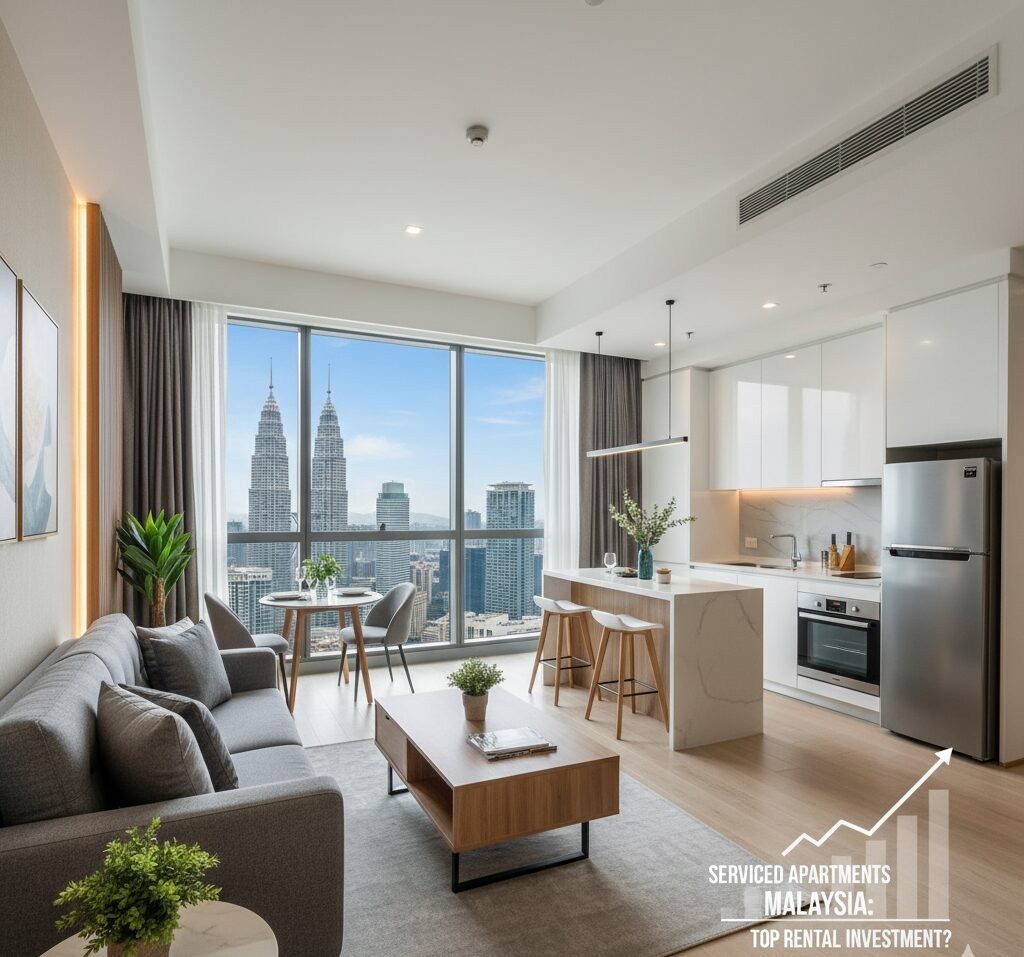
- Serviced Apartments and Serviced Residences: This is the most profitable segment for non-residents seeking immediate rental income. These apartments, managed like hotels with housekeeping and concierge services, target executives on short or medium-term assignments who prioritize convenience over traditional rental arrangements. They offer higher potential rental yields of often between 5% and 7% net (after management fees and maintenance), thanks to stable occupancy rates driven by corporate demand. Major serviced apartment operators like Ascott, Fraser Hospitality, and local chains maintain professional management standards that ensure consistent returns. The key consideration is location: properties within walking distance of business districts, international schools, or major shopping centers command premium rates and maintain high occupancy even during economic downturns.
- Residential Condominiums for Long-Term Rental: Standard condominiums typically yield 3% to 5% net, with lower management intensity than serviced apartments. These appeal to expatriate families and local professionals seeking longer tenancies (one to three years). Prime locations like Bangsar, Damansara Heights, and Dutamas in Kuala Lumpur maintain strong rental demand, while secondary locations may face higher vacancy risks.
- Commercial and Office Real Estate: Investment in commercial spaces, particularly in technology or financial hubs, is intended for investors seeking more stable very long-term income (often via 3 to 5-year leases, sometimes longer for anchor tenants) and direct correlation with the country’s economic growth. Commercial property investment typically requires higher capital outlay (minimum RM 2-3 million for quality assets) and involves more complex due diligence regarding tenant creditworthiness and market dynamics. However, commercial leases often include clauses passing maintenance costs to tenants, reducing landlord expenses. Grade A office buildings in KLCC, KL Sentral, and emerging business districts like Bangsar South offer institutional-quality assets with yields around 4% to 6%.
- Industrial Properties and Warehouses: With Malaysia’s manufacturing strength and e-commerce growth, industrial properties represent an emerging opportunity. Purpose-built industrial parks near Port Klang, Johor ports, or the Free Industrial Zones offer attractive yields (6% to 8%) and long-term lease contracts with established corporations. These assets require specialized knowledge of industrial property management and tenant requirements but can provide excellent risk-adjusted returns for investors comfortable with this asset class.
→ Content Call – Real Estate: For a complete analysis of returns, acquisition processes, and real estate taxation (RPGT, Stamp Duty), consult our Complete Guide to Real Estate Purchase in Malaysia for Non-Residents, the most comprehensive resource in the French-speaking market.
2.2. Channel 2: Entrepreneurship and Business (Venture Capital and FDI)
Malaysia is a springboard for companies targeting the ASEAN market. This channel attracts venture capital, export companies, and funds seeking to acquire Asian market shares. The business environment combines relatively straightforward incorporation procedures with substantive tax incentives for qualifying activities.
2.2.1. Simplified Company Formation: The Sdn. Bhd.
The most common structure for foreign investors is the Sendirian Berhad (Sdn. Bhd.), the equivalent of a Limited Liability Company (LLC) or private limited company. The process is fast and transparent, managed by the Suruhanjaya Syarikat Malaysia (SSM), which maintains an online portal for company registration and ongoing compliance filings.
- Incorporation Timeline and Process: A standard Sdn. Bhd. can be incorporated within 3 to 7 working days if documentation is complete. The process involves: (1) Name reservation with SSM (1-2 days), (2) Preparation of Memorandum and Articles of Association, (3) Filing of incorporation documents with SSM (1-3 days for approval), and (4) Obtaining business licenses and tax registration. Total setup costs typically range from RM 5,000 to RM 15,000, including professional fees for company secretarial services, which are mandatory.
- Legal Protection: The Sdn. Bhd. offers a distinct legal personality, protecting the personal assets of shareholders and directors in case of litigation. This corporate veil provides crucial protection for investors, though directors must still exercise duties of care and fiduciary responsibility under the Companies Act 2016. The limited liability structure means shareholders’ risk is limited to their investment in the company, protecting personal wealth from business creditors.
- Share Capital Requirements: Malaysia has relatively low minimum share capital requirements, making company formation accessible. The minimum nominal share capital is RM 1, though in practice, companies typically establish initial capital of RM 10,000 to RM 100,000 depending on business scope. However, companies seeking to employ foreign staff or obtain work visas (Employment Pass) will need to justify more substantial paid-up capital, often around RM 500,000 for a category 1 work permit for senior executives, or RM 350,000 for middle management roles. Certain licensed activities (financial services, education, healthcare) may have specific minimum capital requirements mandated by sector regulators.
- Ongoing Compliance Requirements: Sdn. Bhd. companies must file annual returns with SSM, maintain proper accounting records, conduct annual general meetings, and prepare audited financial statements if annual revenue exceeds RM 1 million. These requirements ensure corporate governance but necessitate engaging competent company secretarial and accounting services, typically costing RM 5,000 to RM 20,000 annually depending on company size and complexity.
2.2.2. Sectors Targeted by FDI and Innovation
The state uses powerful tools to attract companies in specific sectors, thus creating high-growth niches for investors. Malaysia’s investment promotion strategy targets activities that generate high-value employment, facilitate technology transfer, and contribute to the country’s economic upgrading objectives.
- “Pioneer Status” and Investment Tax Allowance: Tax exemption on statutory income for a period of 5 years (potentially extendable to 10 years for strategic investments) for projects that meet innovation or major investment criteria. Manufacturing projects with capital investment exceeding RM 300 million or engaging in high-technology activities qualify for these incentives. The Investment Tax Allowance (ITA) offers an alternative, providing 60% to 100% allowance on qualifying capital expenditure, deductible against 70% of statutory income. Companies can choose between Pioneer Status and ITA based on their specific circumstances, with ITA often preferred for capital-intensive operations with long payback periods.
- Fintech and E-commerce Sector: Supported by the Malaysia Digital (MD) program, these sectors benefit from subsidies, reduced taxation (0% or 10% corporate tax for qualifying activities), and an accelerated process for obtaining licenses. Kuala Lumpur is becoming a financial technology hub in Southeast Asia, with Bank Negara Malaysia operating a progressive regulatory sandbox that allows fintech companies to test innovations with reduced regulatory burden. Payment gateways, digital lending platforms, insurtech companies, and blockchain applications all find supportive regulatory frameworks in Malaysia. The e-commerce sector benefits from excellent logistics infrastructure and a tech-savvy population of 33 million consumers, plus access to the broader ASEAN e-commerce market.
- Specialized Sectors with Strong Incentives: Biotechnology, renewable energy, and research and development activities receive enhanced incentives. Companies establishing R&D centers can access deductions of up to 300% of qualifying R&D expenditure, effectively subsidizing innovation activities. The aerospace sector receives targeted support through the Aerospace Malaysia Innovation Centre (AMIC), while the medical device sector benefits from streamlined regulatory approval processes through the Medical Device Authority (MDA).
- Special Economic Zones (SEZ): Zones like Iskandar Malaysia, adjacent to Singapore, offer specific advantages to attract investment in sectors such as finance, logistics, and education. Companies in these zones can access infrastructure at competitive costs, streamlined approvals, and sometimes additional tax incentives beyond national schemes. Free Industrial Zones (FIZs) provide duty exemptions on imported raw materials and capital equipment for export-oriented manufacturing, effectively creating tariff-free production enclaves. There are currently over 20 FIZs across Malaysia, strategically located near ports and airports.
2.2.3. The Importance of Commercial Due Diligence
Although the framework is favorable, entrepreneurial success requires rigorous local due diligence. The Malaysian business ecosystem is competitive, with established local players in most sectors and multinational corporations maintaining significant market share. The investor must validate:
- Market Demand and Cultural Adequacy: Malaysia is a complex multicultural market with Malay, Chinese, and Indian communities maintaining distinct consumption patterns and preferences. Products and services must often be adapted to accommodate religious requirements (halal certification for food products), language preferences (packaging in Malay and English, sometimes Chinese), and cultural sensibilities. Market research should assess whether the business model that succeeded elsewhere can translate to Malaysian consumer behavior and price points. Local focus groups and pilot programs can validate assumptions before full-scale launch.
- Regulatory and Licensing Requirements: Obtaining specific licenses and permits is critical and timelines vary significantly by sector. Food and beverage businesses require licenses from multiple agencies (local council, health department, fire department, sometimes religious authorities for halal certification). Education businesses need approval from the Ministry of Education and must meet curriculum standards. Healthcare services require registration with the Malaysian Medical Council or relevant professional bodies. Import licenses, manufacturing licenses, and telecommunications licenses all involve specialized application processes. Engaging local consultants familiar with sector-specific requirements is essential for navigating this landscape efficiently.
- Competition Analysis: Assessing competitive dynamics requires understanding not just obvious competitors but also the local business networks and relationships that may affect market access. In some sectors, strong relationships with distributors, retailers, or government agencies provide competitive moats that newcomers must overcome. Understanding whether a sector is dominated by government-linked companies (GLCs) or well-established family conglomerates helps set realistic market penetration expectations.
- Local Partnership Considerations: While not always legally required, local partners can provide crucial market knowledge, networks, and credibility. However, partner selection requires careful due diligence on financial standing, reputation, and alignment of objectives. Many foreign businesses fail in Malaysia not due to poor business models but due to partnership conflicts stemming from inadequate upfront agreement on roles, decision-making authority, and exit provisions.
→ Content Call – Entrepreneurship: For a detailed analysis of share capital requirements, the Employment Pass application process, and Joint-Venture options, consult our Ultimate Guide to Company Creation and Management in Malaysia for Foreigners.
2.3. Channel 3: Financial Markets (Portfolio and Diversification)
For fund managers and individuals seeking to diversify their portfolio without requiring a physical presence, Malaysian financial markets offer increasingly attractive liquidity and regulatory stability. Bursa Malaysia, the national stock exchange, provides access to a diverse range of listed companies across sectors, while the bond market offers both conventional and Islamic fixed-income instruments.
2.3.1. Malaysia Stock Exchange (Bursa Malaysia)
Bursa Malaysia is the main stock market with a market capitalization exceeding RM 1.8 trillion (approximately USD 400 billion), making it one of the larger exchanges in Southeast Asia. The exchange offers opportunities in key sectors representing the country’s economic strength:
- Growth and Defensive Sectors: Telecommunications companies like Axiata and Maxis provide stable dividend yields around 4% to 5%, combining defensive characteristics with exposure to Southeast Asia’s growing digital connectivity. The finance sector, dominated by Maybank, CIMB, and Public Bank, offers exposure to regional banking expansion with dividend yields typically around 4% to 6%. These banks maintain strong capital ratios and benefit from Malaysia’s relatively stable credit environment. The manufacturing sector, particularly glove production companies like Top Glove and Hartalega, achieved extraordinary returns during the pandemic and continue to benefit from structural demand growth in healthcare. The E&E sector, while cyclical, offers exposure to global technology supply chains through listed companies serving major technology brands.
- Plantation Sector: The palm oil plantation sector (Sime Darby Plantation, IOI Corporation) remains a major contributor to stock indices, though controversial from an ESG perspective due to environmental and labor practice concerns. These companies offer exposure to agricultural commodities and can provide inflation protection, though investors must weigh returns against reputational risks in portfolios with ESG mandates.
- REITs (Real Estate Investment Trusts): Malaysian REITs are very popular with investors for regular income distribution, required by regulation to distribute at least 90% of taxable income to unit holders. As of 2026, there are 18 listed REITs on Bursa Malaysia with combined market capitalization exceeding RM 50 billion. They allow indirect investment in commercial real estate (shopping centers, offices, hotels, industrial properties) without having to manage direct property purchase, offering a good alternative for passive income. High-performing REITs include Pavilion REIT (focused on prime retail assets), IGB REIT (holding premium shopping malls), and Sunway REIT (diversified across retail, hospitality, and office assets). Typical REIT yields range from 4% to 7%, with premium assets at the lower end and higher-risk assets offering higher yields. These funds are managed by the Securities Commission (SC), ensuring strict regulatory oversight including asset valuation requirements, leverage limits, and disclosure standards. REIT investment provides liquidity that direct property ownership lacks, allows portfolio diversification across multiple properties and sectors, and delivers tax-efficient income since REIT distributions are generally not subject to withholding tax for foreign investors under certain conditions.
2.3.2. Islamic Finance: A Strategic Global Niche
Malaysia is the global leader in Islamic finance, accounting for over 40% of global sukuk issuances and hosting the world’s most developed Islamic banking sector. This exponentially growing segment attracts international capital seeking Sharia-compliant financial products that avoid interest (riba), excessive uncertainty (gharar), and prohibited activities.
- The Sukuk Market: Sukuk (Islamic bonds) offer alternatives to conventional bonds, with stable returns and a risk profile often well-framed by local regulators. Malaysia is the primary issuer of sovereign and corporate Sukuk in the world, with outstanding sukuk exceeding RM 900 billion. Sukuk structures vary, with the most common being Ijarah (sale and leaseback), Murabahah (cost-plus financing), and Musharakah (profit-sharing). Sovereign sukuk issued by the Malaysian government typically yield slightly above conventional Malaysian Government Securities of similar tenure, offering investors approximately 3% to 4.5% depending on maturity. Corporate sukuk from investment-grade issuers yield 4% to 6%, while sukuk from mid-tier corporates may yield 6% to 8%. The sukuk market benefits from dedicated Islamic institutional investors globally (particularly from the Gulf Cooperation Council countries) who provide stable demand.
- Islamic Banking Products: All major Malaysian banks operate Islamic banking windows or subsidiaries, offering Sharia-compliant deposit products, financing facilities, and investment accounts. Islamic deposit accounts typically offer competitive returns compared to conventional fixed deposits, and financing facilities for property or business acquisition follow Sharia-compliant structures that achieve similar economic outcomes to conventional lending but through permissible mechanisms.
- Implications for Funds: Investment funds with ethical or Islamic mandates will find in Malaysia the most mature and liquid platform for their investments. This represents a unique diversification opportunity, with low correlation to traditional Western markets. Malaysia’s International Shari’ah Research Academy for Islamic Finance (ISRA) and Islamic Financial Services Board (IFSB) provide thought leadership and standard-setting that enhances the credibility of Malaysian Islamic finance globally. Funds can access not just public market instruments but also private Islamic investment opportunities in real estate, infrastructure, and private equity structured according to Sharia principles.
→ Content Call – Finance: For detailed investment strategies in the stock market, portfolio management, and an analysis of the Malaysian REITs market, consult our Strategic Guide to Investing in Bursa Malaysia and Financial Markets.
2.4. The MM2H Factor: Long-Stay Visa and Investment
The Malaysia My Second Home (MM2H) program is an indirect but powerful investment channel, designed to attract high net worth individuals (HNWI), retirees, and those seeking a Southeast Asian base. While not an investment visa per se, MM2H facilitates long-term residence that supports investment activities and provides lifestyle benefits.
2.4.1. Advantages of MM2H Status
MM2H allows foreigners to obtain a renewable visa for up to 10 years (recently revised from the previous 5-year renewable structure), subject to meeting financial requirements. Although it is not a path to permanent residence or citizenship, it offers significant advantages:
- Current Financial Requirements (2026): The MM2H program underwent significant revisions in recent years, substantially increasing financial requirements. Current requirements vary by applicant age and tier. For applicants under 50 years, the general requirement includes monthly offshore income of RM 40,000 (approximately USD 9,000) and liquid assets of RM 1.5 million, with a fixed deposit requirement of RM 1 million in a Malaysian bank. For applicants over 50 years, requirements are slightly lower: RM 40,000 monthly income, RM 1.5 million liquid assets, and RM 500,000 fixed deposit. A premium tier offers even lower requirements for those purchasing property above RM 2.5 million. These requirements position MM2H for affluent applicants rather than the mass retiree market previously targeted.
- Facilitation of Real Estate Purchase: Although purchase thresholds still apply, MM2H holders simplify the approval process for foreign property purchase, particularly in states with additional approval layers. MM2H status streamlines opening local bank accounts, as banks view visa holders as more stable customers than tourists or short-term visitors. This facilitates applying for mortgages, which Malaysian banks will extend to MM2H holders, typically financing up to 70% to 80% of property value (compared to 50% to 60% for non-residents without MM2H status). Loan interest rates for MM2H holders approximate those for Malaysian citizens, currently around 4% to 5% for property financing.
- Tax Planning Advantages: Under certain conditions (not residing more than 182 days per year in Malaysia), the MM2H holder can maintain their Malaysian non-resident tax status, which is crucial for investors whose income comes from abroad. Non-residents are taxed only on Malaysian-sourced income, meaning foreign rental income, dividends from non-Malaysian companies, and capital gains from foreign assets remain untaxed in Malaysia even if the individual spends significant time in the country. This creates potential for favorable tax structuring, particularly for individuals from high-tax jurisdictions who can maintain tax residency in low-tax or territorial tax countries while enjoying Malaysia’s lifestyle and investment opportunities.
- Lifestyle and Practical Benefits: MM2H allows bringing in personal vehicles with import duty exemptions, importing personal effects duty-free, and employing a domestic helper. The visa permits the holder to engage in approved business activities and employment in executive positions without separate employment passes, subject to conditions. For families, MM2H dependents can access Malaysia’s international schools and healthcare system, with many quality options at costs substantially below Western equivalents. The visa provides social visit passes for parents, allowing extended family visits without separate visa applications.
2.4.2. Alternative Visa Options
Beyond MM2H, investors should be aware of other residence options that may better suit specific circumstances:
- Premium Visa Programme (PVIP): Launched in 2022, PVIP targets ultra-high-net-worth individuals willing to make substantial financial commitments. The 20-year visa requires purchasing property worth at least RM 10 million, maintaining substantial fixed deposits, and demonstrating significant income. While expensive, PVIP offers greater flexibility than MM2H for those who qualify and prioritize long-term certainty.
- Employment Pass and Investor Visa: Foreign investors actively managing their Malaysian business can obtain Employment Passes through their own company, subject to meeting minimum investment and employment creation criteria. This route suits entrepreneurs and active business operators rather than passive investors.
- Malaysia Tech Entrepreneur Programme (MTEP): Technology entrepreneurs can access facilitated visas through MTEP if they establish technology companies meeting specific criteria. This program offers faster processing and lower financial thresholds than MM2H but requires active business operations.
This program constellation provides flexible pathways for different investor profiles, from retirees seeking lifestyle benefits to active entrepreneurs building businesses. The choice depends on individual circumstances, investment timeline, and desired level of engagement with Malaysia.
2.5. Synthesis and Next Steps: The Multi-Channel Approach
The true advantage of Malaysian investment lies in the synergy between these three channels. The intelligent investor does not approach them in isolation but rather constructs an integrated strategy that leverages complementarities:
- Real Estate/Business Link: A created company (Channel 2) justifies a work visa (Employment Pass), which facilitates real estate purchase (Channel 1) by enabling the opening of better quality bank accounts and access to better borrowing rates. The company can also hold investment properties, potentially accessing business financing at more favorable terms than personal mortgages. Property ownership provides office or residential accommodation for business operations, reducing operating expenses while building equity.
- Finance/Real Estate Link: Investing in REITs (Channel 3) provides exposure to the real estate market without the complexity of direct management, serving as a liquid alternative or complement to direct property holdings. REIT dividends can provide steady cash flow while maintaining capital in liquid form, offering flexibility that direct property ownership lacks.
- Business/Finance Synergy: Operating businesses can utilize Malaysian capital markets for growth financing, either through bank facilities or potentially through public listing on Bursa Malaysia for mature companies. The presence of a successful operating business also strengthens applications for residence permits and provides a platform for recruiting international talent to Malaysia.
Malaysia allows a portfolio structure where real estate serves as a living base and wealth store, the company as an operational base generating active income and employment rationale, and financial markets as a diversification base providing liquidity and passive income. All operate under a single legal and tax framework with the common law foundation providing familiar legal certainty. This flexibility is a major asset for sophisticated investors seeking to build integrated Asia exposure rather than pursuing isolated opportunistic investments.
The multi-channel approach also provides risk mitigation through diversification across asset classes with different correlation profiles. Real estate provides tangible asset exposure with inflation protection; businesses generate operational returns tied to economic growth and entrepreneurial execution; financial markets offer liquidity and access to large-cap corporate performance. Economic scenarios affecting one channel may leave others relatively unaffected, creating portfolio resilience.
Now that we have defined the opportunities and explored the practical mechanics of accessing each investment channel, we will detail Chapter 3 to secure your capital: the legal and tax framework that governs these investments and determines net returns after regulatory obligations.
Chapter 3: The Legal and Tax Framework: Securing Capital
After establishing macroeconomic stability (Chapter 1) and mapping investment opportunities (Chapter 2), the next and most critical step is securing capital through a robust legal and tax framework. Sophisticated investors do not seek tax evasion, but legal optimization, asset protection, and regulatory predictability. Malaysia offers a Common Law environment and territorial taxation that, when properly structured, guarantee the sustainability of wealth.
3.1. The Legal Framework: Asset Protection and Business Law
The rule of law is the pillar upon which all long-term investment decisions rest. The Malaysian legal system, inherited from the British period, offers a familiar and reliable environment for Western capital. The stability of legal institutions and the predictability of commercial law create an environment where contracts are enforceable and property rights are respected, fundamental prerequisites for any substantial investment.
3.1.1. The Common Law System and Dispute Resolution
Malaysian business law is rooted in Common Law, which means that previous judicial decisions (case law) play an essential role in interpreting statutes and establishing legal principles. This characteristic provides essential predictability for international contracts and complex transactions, as parties can research precedents to understand how courts will likely interpret their agreements.
- Protection of Property Rights: The Malaysian Federal Constitution guarantees the protection of property rights, including for foreigners. Article 13 establishes that no person shall be deprived of property except in accordance with law, and any compulsory acquisition requires adequate compensation. This constitutional protection applies to both land titles (Freehold and leasehold) and intellectual property (patents, trademarks, copyrights). Foreign investors enjoy the same property rights protection as Malaysian citizens, though acquisition restrictions for certain property types exist to preserve local housing affordability. The National Land Code provides comprehensive regulation of land ownership and transactions, while the Patents Act 1983, Trade Marks Act 2019, and Copyright Act 1987 protect intellectual property with enforcement mechanisms comparable to international standards.
- The Court System: Malaysia operates a dual-track court system, with civil courts handling commercial and property matters while Syariah courts have jurisdiction over Islamic family law and religious matters affecting Muslims. For foreign investors, civil courts are the relevant jurisdiction. The hierarchy includes Magistrates’ Courts and Sessions Courts for smaller matters, the High Court for substantial commercial disputes (with specialized commercial divisions in major cities), the Court of Appeal, and the Federal Court as the apex court. Commercial disputes involving amounts exceeding RM 1 million typically commence in the High Court. Judges in commercial divisions generally demonstrate competence in complex business disputes, though case backlogs can extend litigation timelines. First instance decisions in High Court commercial cases typically take 12 to 24 months, with appeals adding further time.
- International Arbitration (AIAC): The Kuala Lumpur Regional Centre for Arbitration, renamed Asian International Arbitration Centre (AIAC) in 2018, has become a leading institution for resolving commercial and contractual disputes in Asia. Established in 1978, AIAC has administered over 2,500 cases involving parties from more than 80 countries. It allows contracting parties to settle their disputes according to neutral and internationally recognized arbitration rules, away from local courts, a de-risking clause often required by international investment funds. AIAC operates under the Arbitration Act 2005, which is based on the UNCITRAL Model Law and provides for minimal court intervention in the arbitral process. Enforcement of arbitral awards in Malaysia follows the New York Convention on the Recognition and Enforcement of Foreign Arbitral Awards, which Malaysia ratified in 1985. The Malaysian courts have consistently upheld a pro-arbitration stance, rarely interfering with arbitral decisions except in cases of fundamental procedural irregularity or public policy violations. AIAC offers both ad-hoc arbitration administration and its own rules-based arbitration procedures, with costs typically 30% to 50% lower than comparable institutions in Singapore or Hong Kong. Hearings can be conducted in English or other languages, and AIAC maintains modern hearing facilities in Kuala Lumpur’s Bangunan Sulaiman complex.
- Successful Arbitration Examples: AIAC has successfully resolved major construction disputes involving infrastructure projects exceeding USD 100 million, international joint venture disputes in manufacturing and technology sectors, and shareholder disputes in regional companies. The availability of experienced arbitrators with expertise in Islamic finance, construction, technology, and corporate law makes AIAC particularly suitable for disputes arising from Malaysian investments. The enforceability of AIAC awards in courts throughout the ASEAN region under various bilateral and multilateral frameworks provides additional assurance for cross-border transactions.
- Contract Law: The Contracts Act 1950, largely based on the Indian Contracts Act 1872 (which itself derives from British common law principles), governs contracts. It is clear and well-interpreted, ensuring a solid foundation for Joint-Ventures, acquisitions, and commercial agreements. The Act establishes requirements for valid contracts (offer, acceptance, consideration, capacity, and lawful object), provides remedies for breach (damages, specific performance, injunctions), and addresses issues like mistake, fraud, misrepresentation, and undue influence. Malaysian courts interpret contractual terms according to established common law principles, giving effect to the parties’ intentions as expressed in clear language while construing ambiguities against the drafter. The Sale of Goods Act 1957 supplements the Contracts Act for commercial sales, establishing implied terms regarding title, description, quality, and fitness for purpose. For sophisticated commercial transactions, parties typically specify that disputes shall be resolved through arbitration under AIAC or Singapore International Arbitration Centre (SIAC) rules, governed by Malaysian or Singapore law depending on the transaction structure.
For investors, the familiarity and reliability of Common Law significantly reduce transactional legal risk compared to less mature civil law systems in Southeast Asia where judicial precedent plays a limited role and statutory interpretation may be less predictable. Experienced commercial lawyers in Kuala Lumpur, often trained in UK, Australian, or Singaporean law firms, provide competent advisory services at rates substantially below those in Singapore or Hong Kong, typically ranging from USD 150 to USD 400 per hour for senior practitioners.
3.1.2. Financial Regulation and Anti-Money Laundering (AML)
Malaysia is supervised by two major authorities that guarantee the integrity of the financial system: Bank Negara Malaysia (BNM, Central Bank) and the Securities Commission (SC). These regulators maintain sophisticated supervisory frameworks aligned with international best practices.
- AML/CFT Compliance: BNM is very strict on anti-money laundering and counter-terrorism financing (AML/CFT), aligning with FATF (Financial Action Task Force) standards. This high level of compliance is essential for Malaysian banks to operate with the international financial community and maintain correspondent banking relationships with global financial institutions. The Anti-Money Laundering, Anti-Terrorism Financing and Proceeds of Unlawful Activities Act 2001 (AMLATFPUAA) provides the statutory framework, requiring financial institutions to implement customer due diligence (CDD), maintain transaction records, report suspicious transactions to the Financial Intelligence Unit, and conduct ongoing monitoring of business relationships. Enhanced due diligence applies to politically exposed persons (PEPs), high-risk jurisdictions, and complex corporate structures. For foreign investors, this means bank account opening requires substantial documentation: proof of identity (passport), proof of address, source of funds declarations, business plans for corporate accounts, and beneficial ownership information. The documentation requirements, while sometimes perceived as onerous, actually provide assurance that the Malaysian financial system maintains integrity and reduces exposure to reputational risks associated with illicit finance.
- Securities Regulation: The SC supervises all capital markets (Bursa Malaysia, asset management funds, Sukuk issuances, corporate bond markets) under the Capital Markets and Services Act 2007 (CMSA) and Securities Commission Malaysia Act 1993. Its regulatory framework is regularly updated to integrate Fintech innovations and digital finance, ensuring a fair and transparent investment environment. The SC requires listed companies to meet continuous disclosure obligations, appoint independent directors, establish audit and risk committees, and comply with corporate governance codes. For fund management, licensing requirements ensure that only competent and properly capitalized entities manage client assets. The SC also regulates initial public offerings, ensuring prospectuses contain adequate disclosure for investor protection. The regulator has demonstrated willingness to take enforcement action against market misconduct, including insider trading and market manipulation, enhancing market integrity. For Islamic capital market products, the SC’s Shariah Advisory Council provides authoritative rulings on Shariah compliance, giving investors confidence in Islamic investments’ authenticity.
- Fund Transfers and Capital Controls: Although Malaysia has foreign exchange controls under the Foreign Exchange Administration Rules (FEA), foreign capital transactions for investment purposes (FDI, real estate purchase, stock markets, repatriation of profits and dividends) are largely liberalized and transfers are facilitated, guaranteeing capital liquidity. The FEA framework, administered by BNM, distinguishes between resident and non-resident transactions. Non-residents enjoy substantial freedom: they can freely bring funds into Malaysia, invest in Malaysian assets, and repatriate proceeds without prior approval, subject to documenting the legitimate nature of transactions. Residents face more restrictions on outward investments and transfers, but these rarely affect foreign investors. Banks facilitate international transfers through SWIFT and other mechanisms, typically completing routine international wire transfers within 2 to 3 business days. Transaction costs are moderate, usually 0.1% to 0.25% plus fixed fees of RM 50 to RM 100 for outward remittances. For large property purchases or business investments, investors should notify their Malaysian bankers in advance to ensure smooth processing of incoming funds, as banks may request additional documentation for anti-money laundering purposes when receiving substantial wire transfers.
3.2. The Corporate Tax Framework: Optimization Through Incentives
Malaysia uses its corporate tax system as a strategic tool to direct investment toward priority and high-value-added sectors. The tax regime combines a competitive base rate with targeted incentives that can dramatically reduce effective tax burdens for qualifying activities.
3.2.1. Corporate Income Tax (CIT) and Effective Rates
The standard corporate income tax (CIT) rate is 24%, which is competitive for the region. Singapore’s headline rate is 17%, but after considering the absence of incentives and higher operating costs, Malaysia’s effective tax burden for incentivized activities often compares favorably. However, the effective rate in Malaysia can be significantly lower thanks to incentives, potentially reaching single digits or even zero for Pioneer Status companies.
- SME Regime: Small and Medium Enterprises (SMEs), defined as companies with paid-up capital not exceeding RM 2.5 million and not part of a group with combined paid-up capital exceeding RM 2.5 million, benefit from a reduced rate of 17% on the first RM 150,000 of taxable income, and 17% on the next bracket from RM 150,001 to RM 600,000, with the standard 24% rate applying to income above RM 600,000. This graduated structure provides significant relief for smaller businesses. For example, a company with RM 500,000 chargeable income would pay: RM 150,000 × 17% = RM 25,500 on the first bracket, plus RM 350,000 × 17% = RM 59,500 on the second bracket, for total tax of RM 85,000 (effective rate of 17%). In contrast, a larger company with the same income would pay RM 500,000 × 24% = RM 120,000. The RM 35,000 difference provides meaningful cash flow advantage for qualifying SMEs.
- “Pioneer” Status and ITA (Investment Tax Allowance): These incentives, managed by MIDA (detailed in Chapter 1), are the most powerful tax de-risking factors:
- Pioneer Status: Provides partial or total exemption (typically 70% to 100%) from statutory income tax for 5 years, potentially extendable to 10 years for strategic activities or substantial investments. A company with RM 10 million annual chargeable income enjoying 100% Pioneer Status would save RM 2.4 million annually in taxes (RM 10 million × 24%), representing RM 12 million in tax savings over 5 years. Companies typically qualify based on criteria including: producing promoted products or engaging in promoted activities as defined by MIDA, making substantial capital investments (often RM 100 million or more for extended periods), employing significant local workforce, or transferring advanced technology. Pioneer Status companies must maintain separate accounts for Pioneer and non-Pioneer activities, as only income from qualifying activities receives exemption.
- ITA (Investment Tax Allowance): Provides allowance of 60% to 100% of qualifying capital expenditure (QCE), which can be set off against 70% of statutory income in each year of assessment. The allowance applies for 5 years from the date the first qualifying expenditure is incurred. For a company investing RM 50 million in automation equipment qualifying for 100% ITA, the allowance would be RM 50 million, available to offset 70% of statutory income over 5 years. If the company earns RM 20 million annually, 70% (RM 14 million) is eligible for offset. The RM 50 million allowance could shelter RM 14 million per year for approximately 3.5 years, after which normal taxation applies. This mechanism particularly benefits capital-intensive projects with long gestation periods before profitability. Companies choose between Pioneer Status and ITA based on their specific investment profile and cash flow projections. Generally, companies expecting rapid profitability prefer Pioneer Status for its simplicity, while those with heavy upfront capital requirements and delayed profitability favor ITA’s ability to carry forward unused allowances.
- Other Corporate Tax Incentives: Beyond Pioneer Status and ITA, numerous sector-specific incentives exist. The Reinvestment Allowance provides 60% allowance on qualifying capital expenditure for expanding existing businesses, available every 15 years. Green Investment Tax Allowance (GITA) offers 100% allowance on qualifying green technology assets. Accelerated capital allowances enable faster depreciation of certain assets, reducing taxable income in early years. Research and Development expenditure qualifies for double or triple deduction, effectively subsidizing innovation activities. These layered incentives can reduce effective tax rates to low levels for companies engaged in multiple qualifying activities.
- Indirect Taxes – Sales and Service Tax (SST): The SST is the equivalent of VAT/GST, comprising a sales tax (5% to 10% on manufactured goods) and service tax (6% on prescribed services). Unlike VAT systems, SST is a single-stage tax rather than value-added tax with input credits at each stage. Investors must plan their supply chain to minimize costs related to this tax. Manufacturers can import raw materials duty-free under various exemption schemes, and exporters typically face zero-rated treatment, ensuring competitiveness. Service tax applies to professional services (legal, accounting, consulting), hotels, restaurants, and telecommunications, among others. While SST adds to business costs, rates remain moderate compared to 15% to 20% VAT rates common in Europe.
3.2.2. Double Taxation Agreements (DTA) and International Taxation
Malaysia has signed Double Taxation Agreements (DTA) with over 70 countries, including major economies like United States, United Kingdom, China, Japan, Australia, Germany, France, Belgium, Switzerland, Netherlands, and Canada, as well as regional partners throughout ASEAN. These DTAs are essential for transnational investors as they eliminate or reduce double taxation and provide certainty regarding tax treatment of cross-border income flows.
- Reduction of Withholding Taxes: Withholding tax rates on dividends, interest, and royalties paid by Malaysian companies to foreign recipients are reduced under DTAs compared to domestic law rates. For example, under Malaysian domestic law, dividends paid to non-residents would potentially be subject to withholding, but Malaysia has adopted a single-tier dividend system that exempts dividends from withholding tax, making this less relevant for dividends. However, interest and royalty payments face different treatment. Interest paid to non-residents is generally subject to 15% withholding tax under domestic law, but DTAs typically reduce this to 5% to 10%. The Malaysia-Singapore DTA reduces interest withholding to 10%, while the Malaysia-Germany DTA reduces it to 7%. Royalties face 10% withholding domestically but are often reduced to 5% to 10% under DTAs, or sometimes 0% for specific categories. For example, the Malaysia-UK DTA provides 8% royalty withholding, while Malaysia-Netherlands provides 0% for certain industrial royalties. Technical fees typically face 10% withholding domestically, reduced to 5% to 8% under many DTAs.
- Tax Credits and Exemption Methods: DTAs prevent double taxation through either exemption or credit methods. Under the exemption method, income taxed in one country is exempt from tax in the other, avoiding double taxation entirely. Under the credit method, the residence country allows a credit for taxes paid in the source country against domestic tax liability. Malaysia’s DTAs employ both methods depending on the income type. Foreign investors should structure their Malaysian investments with consideration of their home country’s tax system and the applicable DTA to minimize total tax burden. For example, a French company receiving dividends from its Malaysian subsidiary faces no Malaysian withholding tax (due to single-tier system) and receives participation exemption or foreign tax credit in France under the France-Malaysia DTA, largely eliminating double taxation.
- Permanent Establishment (PE) Provisions: DTAs define when a foreign company has sufficient presence in Malaysia to be subject to Malaysian corporate tax. Typically, a PE exists if the foreign company maintains a fixed place of business (office, branch, workshop) in Malaysia, or if an agent in Malaysia has authority to conclude contracts on the company’s behalf. Understanding PE thresholds is crucial for foreign companies considering temporary projects or providing services in Malaysia without establishing a subsidiary, as PE status triggers Malaysian tax filing and compliance obligations.
- Tax Treaty Shopping and Anti-Abuse Rules: While DTAs provide legitimate tax planning opportunities, Malaysia (like most countries) has implemented anti-treaty shopping provisions to prevent abuse through artificial structures. The Principal Purpose Test (PPT) included in updated DTAs allows tax authorities to deny treaty benefits if one of the principal purposes of an arrangement was to obtain treaty benefits. Foreign investors should ensure their Malaysian structures have genuine commercial substance rather than existing solely for treaty access.
→ Content Call – International Taxation: For a complete analysis of the application of Double Taxation Agreements and the impact of Sales and Service Tax (SST), consult our Ultimate Guide to Company Creation and Management in Malaysia for Foreigners.
3.3. The Individual Tax Framework (HNWI and MM2H): Territoriality
Personal taxation in Malaysia is based on the principle of territorial taxation, which is one of the most significant advantages for investors and high net worth individuals. This contrasts sharply with citizenship-based taxation (as practiced by the United States and Eritrea) or worldwide taxation for residents (as practiced by most developed countries).
3.3.1. The Principle of Territorial Taxation
In Malaysia, personal income tax is levied only on income that originates or is received in the country. The Income Tax Act 1967 defines Malaysian-sourced income as income accruing in or derived from Malaysia, or received in Malaysia from outside Malaysia by a resident.
- Exemption of Foreign Income for Non-Residents: This means that income derived from abroad (real estate rental income outside Malaysia, dividends from non-Malaysian companies, foreign bank interest, capital gains realized abroad on assets not situated in Malaysia) are generally not taxed in Malaysia for non-residents, even if temporarily received in Malaysia. This creates powerful planning opportunities for individuals with globally diversified income streams who maintain non-resident status. A property investor receiving rental income from properties in Singapore, London, and Paris faces no Malaysian tax on those rental streams if structured properly, even while spending significant time in Malaysia under MM2H visa.
- Recent Amendments on Foreign-Sourced Income: Historically, even residents paid no Malaysian tax on foreign-sourced income received in Malaysia. However, amendments effective from January 1, 2022 changed this for certain categories of residents. Individuals resident in Malaysia who receive foreign-sourced income in Malaysia may now be subject to tax if that income was not subject to tax in the source jurisdiction (addressing concerns about profit-shifting to zero-tax jurisdictions). However, this primarily affects Malaysian citizens and tax residents working abroad or receiving foreign business income. Well-structured foreign investments continue to benefit from territorial taxation principles, particularly for passive investment income from jurisdictions with robust tax systems where appropriate source taxation occurred. Proper planning with qualified Malaysian tax advisors can navigate these rules to preserve tax efficiency.
- Tax on Local Income: Only salaries earned in Malaysia for work performed in Malaysia, consulting fees for services provided in Malaysia, rental income from real estate located in Malaysia, business profits from a Malaysian business, and certain other Malaysian-sourced income are taxable, according to a progressive scale. The Malaysian individual income tax rates for Year of Assessment 2026 are:
- 0% on first RM 5,000
- 1% on next RM 15,000 (RM 5,001 to RM 20,000)
- 3% on next RM 15,000 (RM 20,001 to RM 35,000)
- 8% on next RM 15,000 (RM 35,001 to RM 50,000)
- 14% on next RM 20,000 (RM 50,001 to RM 70,000)
- 21% on next RM 30,000 (RM 70,001 to RM 100,000)
- 24% on next RM 150,000 (RM 100,001 to RM 250,000)
- 24.5% on next RM 150,000 (RM 250,001 to RM 400,000)
- 25% on next RM 200,000 (RM 400,001 to RM 600,000)
- 26% on next RM 400,000 (RM 600,001 to RM 1,000,000)
- 28% on next RM 1,000,000 (RM 1,000,001 to RM 2,000,000)
- 30% on income exceeding RM 2,000,000
This territorial approach is a major opportunity for individuals with diversified income sources on a global scale, allowing Malaysia to serve as a fiscally optimized residence base for those who structure their affairs appropriately while maintaining compliance with both Malaysian rules and tax obligations in their countries of citizenship or economic activity.
3.3.2. Tax Residence Status and the MM2H Program
Tax resident status is determined by the duration of physical presence in the country under specific rules established by the Inland Revenue Board of Malaysia (IRB).
- Residence Test (182 Days): A person is considered a tax resident if they are present in Malaysia for at least 182 days during a calendar year (or in certain cases, meeting presence tests across multiple years). Resident status opens access to certain personal reliefs and deductions (including relief for spouse, children, education, medical expenses, insurance premiums, and others) and the application of the full progressive scale. Non-residents face a flat 30% tax rate on their Malaysian-sourced employment income (for employments less than 60 days, different rules apply), and non-residents with business income are taxed at progressive rates but without access to personal reliefs. The 182-day threshold is calculated based on actual physical presence, not intent or domicile, making it relatively objective. Days of arrival and departure both count as days of presence.
- Role of the MM2H Program: The Malaysia My Second Home (MM2H) visa holder is a non-permanent resident for immigration purposes, which is distinct from tax residence. Holding an MM2H visa does not automatically make someone a tax resident or non-resident; tax status depends solely on physical presence days. If MM2H holders ensure not to exceed the physical presence period of 182 days (notably, spending 181 days or less in Malaysia during the calendar year), they can maintain their Malaysian non-resident tax status. For investors whose income comes from foreign sources, this strategy is vital for wealth preservation. An MM2H holder spending 180 days per year in Malaysia, with income derived entirely from foreign rental properties and overseas investment portfolios, would likely have zero Malaysian tax liability if no Malaysian-sourced income exists. The key is meticulous record-keeping of travel dates and ensuring foreign income is not received in Malaysia in ways that could trigger taxation under recent amendments. Conversely, MM2H holders who spend more than 182 days annually in Malaysia become tax residents, must file Malaysian tax returns, and face taxation on Malaysian-sourced income, though properly structured foreign income may still escape Malaysian taxation if appropriate source-country taxes were paid.
- Tax Planning Strategies: Sophisticated investors often combine MM2H status with tax residence in favorable jurisdictions. For example, maintaining tax residence in a territorial tax jurisdiction (like Singapore, Hong Kong, or Panama) or a jurisdiction with favorable foreign-sourced income treatment, while holding MM2H for lifestyle access to Malaysia, can optimize global tax exposure. Professional guidance from tax advisors qualified in both Malaysia and the investor’s home jurisdiction is essential, as mistakes in structure can result in unexpected tax liabilities or even dual residency situations requiring tiebreaker provisions under DTAs.
Tax residence planning must be carried out with jeweler’s precision, in collaboration with local tax specialists and those from the investor’s country of origin. The interaction of Malaysian territorial taxation, foreign tax credits under DTAs, and domestic tax rules in the investor’s home country creates a complex web requiring expert navigation to achieve optimal outcomes while maintaining full compliance.
3.4. Real Estate Taxation: RPGT and Planning
Real estate investment is subject to a specific tax on capital gains realized upon resale: the Real Property Gains Tax (RPGT). Understanding RPGT structure and planning holding periods appropriately is essential for maximizing net returns from Malaysian property investments.
3.4.1. Real Property Gains Tax (RPGT): A Degressive Tax
RPGT is not an income tax, but a gains tax on profit realized when disposing of real estate property or shares in real property companies. Its rate is degressive based on holding period, encouraging long-term investment and discouraging speculative flipping. The tax applies to the chargeable gain, calculated as disposal price minus acquisition price, minus permissible deductions (legal fees, stamp duty paid on acquisition, renovation costs that increased property value, and others).
- Current RPGT Rates (as of 2026): The rates vary based on holding period and whether the seller is a citizen, permanent resident, or non-citizen/non-permanent resident (which includes MM2H holders):
- Holding Period within 3 years: For disposals within three years of acquisition, the rate is 30% for citizens, permanent residents, and non-citizens alike. This substantial rate deters short-term speculation.
- Holding Period in 4th year: 20% for citizens and permanent residents; 30% for non-citizens.
- Holding Period in 5th year: 15% for citizens and permanent residents; 30% for non-citizens.
- Holding Period in 6th year and beyond: For citizens and permanent residents, the rate is 0% (exempted from RPGT after five complete years of ownership, with some exemptions for principal residence and inherited properties). For non-citizens and non-permanent residents, a flat rate of 10% applies for disposals after the fifth year and continuing indefinitely.
- RPGT Calculation Example: Consider a foreign investor who purchases a condominium for RM 1,000,000 in 2020, incurs RM 40,000 in stamp duty and legal fees at acquisition, invests RM 100,000 in major renovations, and sells the property for RM 1,500,000 in 2027 (after 7 years). The chargeable gain calculation:
- Disposal price: RM 1,500,000
- Less: Acquisition price: (RM 1,000,000)
- Less: Acquisition costs (stamp duty & legal fees): (RM 40,000)
- Less: Permissible renovation expenses: (RM 100,000)
- Chargeable gain: RM 360,000
- RPGT rate (foreign investor, year 7): 10%
- RPGT payable: RM 36,000
- Net gain after tax: RM 324,000
- Exemptions and Reliefs: Malaysian citizens enjoy various exemptions, including one-time exemption for disposal of private residence (if certain conditions met) and exemption for disposal of one private residence every 10 years. These exemptions do not apply to non-citizens. However, disposals due to transfers to family members under certain circumstances, or acquisitions before 1975 (prior to RPGT introduction), may enjoy relief. For foreign investors, the key planning tool is simply the holding period: structuring investments for minimum five-year horizons to access the 10% rate rather than the punitive 30% short-term rate.
- RPGT Compliance: Sellers must notify IRB within 60 days of disposal and pay RPGT within 60 days of disposal. Penalties apply for late payment. Buyers are protected by a system requiring the seller to obtain an RPGT clearance letter before the legal firm can release sale proceeds to the seller, ensuring RPGT is settled before completion.
Foreign investors must therefore plan for a minimum holding period of five years to benefit from the floor rate of 10%, which secures the net capital gain margin and makes Malaysian property investment economically attractive compared to Western markets where capital gains taxes often exceed 20% to 30% with no holding-period relief. RPGT applies only to profit and not to the total sale price, preserving the bulk of capital appreciation for the investor.
3.4.2. Stamp Duty
Stamp duty is levied on the deed of purchase (Memorandum of Transfer – MOT for real property, Share Sale Agreement for shares) according to a progressive scale. For real property transactions, the rates as of 2026 are:
- 1% on the first RM 100,000 of purchase price
- 2% on the next RM 400,000 (RM 100,001 to RM 500,000)
- 3% on the next RM 500,000 (RM 500,001 to RM 1,000,000)
- 4% on the balance exceeding RM 1,000,000
For a property purchased at RM 1,500,000, stamp duty calculation would be: RM 100,000 × 1% = RM 1,000, plus RM 400,000 × 2% = RM 8,000, plus RM 500,000 × 3% = RM 15,000, plus RM 500,000 × 4% = RM 20,000, for total stamp duty of RM 44,000 (approximately 2.93% effective rate). These duties constitute the major initial cost of a real estate transaction in Malaysia beyond the purchase price itself. When combined with legal fees (typically RM 10,000 to RM 20,000 for a standard purchase of this size), valuation fees (RM 1,000 to RM 3,000), and miscellaneous expenses, total transaction costs for acquiring a RM 1.5 million property approximate RM 55,000 to RM 70,000.
The government occasionally offers stamp duty exemptions or reductions for first-time homebuyers (though these typically benefit Malaysian citizens only) or for properties in specific price ranges to stimulate market activity during economic downturns. Foreign investors should inquire whether any such incentive programs are active at the time of intended purchase, though these programs generally target domestic buyers rather than foreign investors.
3.5. The Role of Labuan: An Offshore Jurisdiction within the Federal
For very sophisticated capital structuring and financial engineering, Labuan International Business and Financial Centre (Labuan IBFC) is an offshore jurisdiction under Malaysian federal control. Located off the coast of Sabah in East Malaysia, Labuan functions as a midshore financial center, offering offshore advantages within an OECD-compliant framework.
3.5.1. Labuan Advantages for International Investors
Labuan is the ideal solution for creating Holding Companies, private investment funds (Private Funds), and cross-border financial services companies. The Labuan jurisdiction maintains separate legislation (Labuan Business Activity Tax Act 1990, Labuan Companies Act 1990, Labuan Trusts Act 1996, Labuan Foundations Act 2010) administered by Labuan Financial Services Authority (Labuan FSA), an independent statutory body responsible for development and regulation of Labuan IBFC.
- Advantageous Taxation: Labuan companies (holding companies, trading companies, service companies) engaged in qualifying Labuan business activities (transactions with non-residents or in foreign currency) pay either a flat tax of RM 20,000 per year regardless of profit level, or an income tax rate of 3% on net audited profits, with the company choosing the most favorable option annually. For a Labuan holding company receiving dividends from overseas subsidiaries and paying modest management expenses, the RM 20,000 flat tax option is typically optimal. For Labuan trading companies with substantial net profits, the 3% rate may be preferred. A Labuan company earning RM 10 million net profit annually would pay RM 300,000 in tax at the 3% rate, compared to RM 2.4 million at Malaysia’s standard 24% corporate rate, representing RM 2.1 million annual savings. These tax rates apply only to Labuan-sourced income (which includes income from transactions with non-Malaysian residents or in foreign currency). Income from Malaysian-sourced activities would be subject to standard Malaysian corporate tax, ensuring Labuan advantages are not used to avoid tax on domestic economic activity.
- Substance Requirements: Following OECD Base Erosion and Profit Shifting (BEPS) initiatives and increased scrutiny of offshore structures, Labuan has implemented substance requirements to ensure Labuan entities are not merely “letterbox” companies. Labuan entities must demonstrate adequate substance, including: maintaining a physical office in Labuan (shared office space through licensed trust companies is acceptable), having an adequate number of employees (at least one full-time employee, though directors can be offshore), conducting core income-generating activities in Labuan (board meetings, key management decisions), and incurring adequate operating expenditure in Labuan (typically a minimum of RM 50,000 to RM 100,000 annually for smaller entities). Meeting these requirements ensures the Labuan entity is respected by foreign tax authorities under DTAs and domestic anti-avoidance rules. The substance requirements increase the cost of maintaining a Labuan structure compared to historical “brass plate” arrangements, but the costs remain moderate: annual operating expenses including registered office, local staff, compliance, and audit typically range from RM 30,000 to RM 150,000 depending on entity complexity.
- Asset Protection: Labuan structures, such as Foundations or Trusts, offer excellent protection against creditors and are powerful tools for estate planning. The Labuan Trusts Act 1996 includes provisions preventing forced heirship claims and providing a five-year statute of limitations on creditor claims (creditors must challenge transfers to the trust within five years of the transfer, or two years of becoming aware of the transfer, whichever is later). After these limitation periods, the trust assets are effectively insulated from creditor challenges arising from the settlor’s liabilities. This makes Labuan trusts particularly attractive for wealth protection and succession planning for individuals from civil law jurisdictions with forced heirship rules that would otherwise restrict testamentary freedom. However, transfers made with fraudulent intent to avoid existing creditors remain challengeable, as Labuan legislation does not protect outright fraud.
- International Compliance: Labuan is recognized and regulated by the OECD, complying with transparency requirements under the Common Reporting Standard (CRS) for automatic exchange of financial account information and the Foreign Account Tax Compliance Act (FATCA) for reporting to the US Internal Revenue Service. Labuan maintains a registry of beneficial ownership information accessible to Labuan FSA and competent authorities under information exchange agreements, thus avoiding the status of “non-cooperative tax haven”. Labuan banks and financial institutions conduct full customer due diligence in line with international AML standards. This compliance framework ensures that legitimate users of Labuan structures face minimal reputational risk, while illegitimate users seeking to evade taxes or hide illicit assets find Labuan increasingly inhospitable. For investors, the message is clear: Labuan offers legal tax optimization and asset protection within a compliant framework, not a vehicle for tax evasion or opacity.
- Permitted Activities: Labuan entities can engage in a wide range of activities including holding investments, trading, providing management and consultancy services, operating as family offices, acting as fund managers, providing Islamic financial services, and others. The key requirement is that the activities involve non-residents or are denominated in foreign currency. A Labuan holding company can own shares in Malaysian operating subsidiaries, but dividends received from Malaysian subsidiaries would be subject to standard Malaysian taxation principles (though the single-tier dividend system typically eliminates additional tax), while dividends from foreign subsidiaries can enjoy the Labuan preferential rate. Similarly, a Labuan company providing consultancy services to clients in Singapore, Indonesia, or other foreign markets can enjoy the 3% rate on those service fees, while services provided to Malaysian clients would potentially trigger Malaysian taxation.
The use of a Labuan structure, combined with an operational company (Sdn. Bhd.) in peninsular Malaysia, allows optimization of the capital value chain while ensuring international compliance. A typical structure involves a Labuan holding company owning shares in one or more Malaysian operating Sdn. Bhd. companies, with the operating companies accessing MIDA incentives or other Malaysian tax incentives for their operations, while the holding company enjoys Labuan tax rates on investment income from non-Malaysian sources and provides centralized treasury, financing, and management functions at low tax cost. More sophisticated structures might include Labuan foundations or trusts holding the Labuan holding company, providing asset protection and succession planning benefits alongside the tax efficiency.
3.6. Conclusion of Chapter 3: Legal Predictability as an Asset
Malaysia offers not only growth opportunities, but also the necessary legal framework to secure them. Investors are protected by Common Law with its extensive body of precedent and contract enforceability, benefit from access to international arbitration through AIAC providing alternatives to court litigation, and can optimize their personal income tax through the principle of territoriality that makes Malaysia an attractive residence base for globally mobile individuals with diverse income streams.
Tax planning is the bridge between raw opportunity and secured net return. Mastery of RPGT holding period strategies to minimize property disposition taxes, understanding and accessing MIDA incentives for operational companies, and strategic use of Labuan structures for holding investments and international activities are the keys to successful and compliant wealth structuring. The Malaysian tax system, while complex in its details, offers sufficient incentives and optimization opportunities that effective tax rates for well-structured investments can be dramatically lower than headline rates suggest.
The combination of legal certainty under Common Law, sophisticated financial regulation aligned with international standards, and a corporate tax regime designed to attract investment creates an environment where investors can confidently deploy capital while managing risk through transparent legal structures. Unlike some jurisdictions where legal unpredictability or weak contract enforcement creates latent risks, or where tax rules change unpredictably, Malaysia provides a stable framework that has remained substantially consistent across multiple government administrations, demonstrating policy continuity that supports long-term investment planning.
Chapter 4 will detail the ultimate step in capital security: integrating Malaysian assets into global estate planning and investment strategy over a 20-year horizon and beyond, addressing succession planning, risk management over exChapter 4: Estate Planning and the 20-Year Horizon
For the Family Office and High Net Worth Individual (HNWI), investment is not a matter of immediate profit, but of transmission and sustainability. Malaysian assets must integrate into a global wealth structure that protects capital from political hazards, excessive inheritance taxes, and intrafamily conflicts. This chapter explores Malaysian and Labuan wealth structuring tools, offering solutions for a planning horizon of 20 years and beyond.
4.1. The Succession Challenge in Malaysia: Law and Risks
The Malaysian succession regime presents complexity due to the coexistence of legal systems (civil law, Common Law, and Sharia law for the Muslim population). Foreign investors must anticipate the law applicable to their assets to ensure smooth and legal transmission.
4.1.1. Applicable Law (Domicile vs. Situs) and Double Inheritance Taxation
Malaysia applies private international law principles for the succession of foreigners:
- Movable Assets: Succession is generally governed by the law of the deceased’s domicile (the law of the country where the person intended to settle permanently). This includes shares, bank accounts, and financial portfolios. For a French tax resident, for example, even if their shares are held in a Malaysian bank account, French law may potentially apply to their transmission.
- Immovable Assets: The lex situs rule applies, meaning that the succession of real estate property is governed by the laws of the place where the property is located, i.e., Malaysian law. Malaysia, although exempt from inheritance taxes, does not protect investors against inheritance taxes from their country of domicile that apply to worldwide assets. It is vital to verify the existence of inheritance tax treaties between Malaysia and the country of residence.
For a condominium held in freehold by a foreign investor, Malaysian law will govern the transmission of the property title, hence the need to document succession specifically in Malaysia. Proactive planning is necessary to manage the interaction between the two legal systems.
4.1.2. The Risk of Intestacy (Absence of Will) and Power Delegation
The absence of a will (dying intestate) is the most costly trap in Malaysia. If a non-resident dies without a Malaysian will (or without their foreign will being formally recognized and proven, which is a cumbersome procedure), their Malaysian assets will be distributed according to the Distribution Act 1958.
- Administrative Complexity: The process of “Grant of Letters of Administration” is lengthy, costly, and requires financial guarantees for the capital held, potentially paralyzing the asset for several years. Bank accounts are frozen and real estate transactions blocked until this administration is obtained.
- Fixed Distribution: The law imposes rigid distribution (specific shares to parents, spouse, children) that may not correspond to the deceased’s intentions, often ignoring reconstituted family ties or philanthropic objectives.
It is therefore imperative to draft a Malaysian Will, limited to Malaysian assets only, in order to designate a local executor and expedite the “Grant of Probate” (proof of will) procedure, guaranteeing continuity of asset management. Additionally, establishing a Durable Power of Attorney in Malaysia allows a designated agent to manage assets in case of the holder’s incapacity, before death, ensuring immediate operational continuity.
4.1.3. Absence of Inheritance Taxes and Generational Planning
A major advantage for wealth transmission in Malaysia is the complete absence of inheritance taxes (Estate Tax) on assets. This policy, in effect since 1993, makes Malaysia an attractive jurisdiction for holding trans-generational assets. This absence of tax considerably simplifies planning compared to jurisdictions that apply high marginal rates. However, it is crucial to note that this absence does not exempt from exit tax and potential inheritance taxes in the country of original tax residence or the heirs’ new residence.
4.1.4. Concrete Succession Scenarios: Practical Case Studies
Understanding succession planning is best achieved through practical examples that illustrate the pitfalls and optimal strategies.
Scenario 1: The Unprepared European Investor
Jean-Pierre, a 68-year-old French national, purchased a RM 2.5 million condominium in KLCC in 2018. He also holds RM 800,000 in a Malaysian bank account from rental income accumulated over the years. Jean-Pierre dies suddenly in 2025 without having prepared a Malaysian will, assuming his French will would suffice. His two children, based in Paris, discover that the Malaysian authorities require a “Grant of Letters of Administration” process that takes 18 to 24 months to complete. During this period, the bank account remains frozen, rental income cannot be collected, and the property cannot be sold. Legal fees and court deposits amount to approximately RM 45,000. Additionally, the rigid Distribution Act 1958 allocates the estate in a way that contradicts Jean-Pierre’s wishes to favor his elder son who had helped him manage the property. The lesson: a simple Malaysian will drafted by a local lawyer (cost: RM 2,000-3,500) would have avoided two years of paralysis and RM 40,000+ in unnecessary expenses.
Scenario 2: The Proactive HNWI with Labuan Trust
Elizabeth, a 55-year-old British entrepreneur, establishes a Labuan Trust in 2020 with USD 8 million in assets, including three Malaysian properties (total value RM 12 million), equity in a Malaysian technology Sdn. Bhd., and an international bond portfolio. She appoints a professional Labuan Trustee and retains reserved powers to direct investments. Elizabeth passes away unexpectedly in 2024. Thanks to the Trust structure, there is zero interruption in asset management. The Trustee immediately continues managing the properties, collecting rents, and making distributions to Elizabeth’s three children according to the pre-established distribution schedule (25% at age 25, 35% at age 30, and full access at age 35 for education and business ventures). No probate is required, no Malaysian court involvement, and the assets remain protected from creditor claims in the UK. The family saves an estimated 18 months of administrative delays and over GBP 85,000 in legal and probate fees compared to a simple will-based structure. The Trust continues operating seamlessly, providing professional investment management for the next generation.
Scenario 3: The Reconstituted Family Challenge
Michael, an American investor with a complex family situation (two children from his first marriage, one child from his second marriage, and a long-term domestic partner), owns a RM 5 million portfolio of Malaysian real estate and a 40% stake in a successful Malaysian F&B chain. Without proper planning, the Distribution Act 1958 would create significant conflict, as it doesn’t recognize domestic partnerships and would distribute assets rigidly. Michael establishes a Labuan Foundation with specific provisions: 30% to each of his three children, 10% to his domestic partner, and the remaining portfolio continues generating income for a charitable initiative supporting Malaysian education. This Foundation structure not only respects Michael’s wishes but also creates a perpetual legacy that transcends his lifetime, all while avoiding intestacy litigation that could have cost the family RM 200,000+ in legal disputes.
4.2. Wealth Structuring Tools (Labuan Trusts and Foundations)
To go beyond a simple will and obtain protection, discretion, and control of wealth over multiple generations, Labuan (Labuan IBFC) fiduciary vehicles are the tool of choice, particularly for assets exceeding 10 million Euros.
4.2.1. The Labuan Trust: Wealth Control and Confidentiality
The Labuan Trust is a fiduciary arrangement governed by modern laws, notably the Labuan Trusts Act 1996. It is ideal for investors seeking to legally separate control of benefits and legal ownership of assets.
- Asset Protection: Labuan laws contain robust provisions (anti-forced heirship) that protect assets transferred into the Trust against creditors, lawsuits, claims, and rigid inheritance laws of the Settlor’s country of origin, subject to a waiting period (often two years) between asset transfer and legal action.
- Operational Continuity: The Trust is a vehicle that survives the Settlor. By holding shares of a Malaysian investment company (Sdn. Bhd.) or real estate property titles via a Labuan Holding Company, the Trust ensures continuity of management without interruption due to death. Beneficiaries become directly entitled to Trust distributions, not to the real estate assets themselves, simplifying transmission.
- Flexibility and Reserved Powers: Unlike many international Trusts, Labuan law allows the Settlor to retain a number of powers (such as the power to appoint and remove the Trustee, change beneficiaries, or direct investments), which is a psychological and strategic asset for entrepreneurs who wish to keep an eye on their wealth.
The Labuan Trust is the modern equivalent of a wealth holding, offering an additional layer of security and the ability to manage global assets from an OECD-regulated jurisdiction.
4.2.1.1. Labuan Trust: Detailed Cost Structure and Setup Requirements
Establishing a Labuan Trust requires understanding both the initial setup costs and ongoing annual expenses. The total cost structure varies based on asset complexity, trustee selection, and the level of services required.
Initial Setup Costs (Year 1):
The establishment phase includes legal fees, registration, and initial trustee engagement. For a standard Labuan Trust with assets between USD 5 million and USD 15 million, initial costs typically range from USD 12,000 to USD 25,000. This includes: trust deed drafting and legal review (USD 5,000-8,000), Labuan Financial Services Authority (Labuan FSA) registration fees (approximately USD 2,000), initial trustee acceptance and due diligence fees (USD 3,000-7,000), and opening of trust bank accounts including KYC/AML compliance documentation (USD 2,000-3,000). Additionally, if transferring Malaysian real estate into the trust structure via a Labuan holding company, expect property transfer stamp duty costs of 3-4% of property value, plus legal conveyancing fees of approximately RM 8,000-15,000 per property.
Annual Recurring Costs:
Professional Labuan Trustees charge annual fees based on asset value and complexity. For assets under USD 10 million, expect annual trustee fees of USD 8,000-15,000. For assets between USD 10-25 million, fees typically range from USD 15,000-30,000 annually. For larger portfolios exceeding USD 25 million, fees are generally negotiated but often reach USD 35,000-60,000 per year. These fees cover trust administration, beneficiary distributions, compliance reporting, and regular trust reviews. Additional costs include: Labuan company annual license fees (if holding assets through a Labuan entity): USD 1,500-2,500; annual audit requirements (mandatory for Labuan entities): USD 3,000-6,000; ongoing legal counsel for trust amendments or complex distributions: USD 2,000-5,000; and Labuan office “substance” requirements (physical office space and local staff): USD 15,000-25,000 annually, which is essential to maintain tax benefits and satisfy OECD Base Erosion and Profit Shifting (BEPS) substance requirements.
Total Annual Operating Cost Range:
For a moderately complex Labuan Trust structure holding USD 10-15 million in Malaysian real estate and securities, the total annual operating cost typically ranges from USD 30,000 to USD 50,000 (approximately RM 135,000 to RM 225,000). While this represents approximately 0.3-0.4% of asset value annually, the benefits are substantial: complete asset protection from creditor claims (after the two-year transfer waiting period), avoidance of probate delays and costs (saving 12-24 months and potential legal fees of USD 50,000-100,000+), professional investment management and continuity across generations, confidentiality and privacy of beneficial ownership, and flexibility in distribution strategies to beneficiaries. For ultra-high-net-worth individuals with assets exceeding USD 50 million, these costs become even more justified as the percentage of asset value drops to 0.1-0.2% while the protective and succession benefits remain invaluable.
4.2.2. The Labuan Foundation: The Civil and Philanthropic Alternative
The Labuan Foundation (governed by the Labuan Foundations Act 2010) is a corporate entity without shareholders, similar to a company, but operating like a trust to achieve specified objectives, whether charitable or familial. It is often preferred by clients from civil law countries (continental Europe) who find the concept of “Trust” foreign.
- Objective: The Foundation has its own legal personality. The Founder transfers assets to the Foundation, and a Council manages these assets for achieving objectives. It can be used for managing family inheritance, holding illiquid assets (artwork, private participations), or for Corporate Social Responsibility (CSR) initiatives in Southeast Asia.
- Succession: The Foundation can continue indefinitely, making it suitable for long-term philanthropic projects or the perpetual management of a family legacy, beyond the constraints of trusts that may have time limitations depending on the jurisdiction.
- Hybrid Structure: The Labuan Foundation can combine the civil law approach (corporate entity) with the flexibility of a trust, offering strong protection against creditors and enabling asset segregation.
For HNWI with significant holdings, the Foundation is a superior alternative for consolidating and protecting diversified asset portfolios (real estate, stocks, private businesses).
4.2.3. Singapore vs. Labuan: The Family Office Comparison
For ultra-high-net-worth individuals considering Southeast Asia for family office establishment, the choice between Singapore and Labuan is strategic and depends on asset size, operational complexity, and desired regulatory environment.
Singapore Family Office: The Premium Choice for USD 50M+
Singapore has positioned itself as Asia’s premier wealth management hub, offering the Variable Capital Company (VCC) structure and generous tax incentives under Section 13R and 13X schemes. Singapore’s advantages are compelling: world-class financial infrastructure with access to top-tier global banks and asset managers; deep pool of experienced wealth management professionals and legal advisors; strong regulatory framework under the Monetary Authority of Singapore (MAS) providing investor confidence; established ecosystem of service providers (custodians, administrators, investment managers); and significant tax incentives – family offices managing at least SGD 10 million can achieve 0% tax on specified investment income for qualifying fund structures. However, Singapore comes with substantial costs and requirements. Minimum asset thresholds for tax incentive schemes typically require SGD 10-20 million in committed capital, with institutional investor co-investment often required. Annual operating costs for a Singapore family office are significantly higher, generally ranging from SGD 400,000 to SGD 800,000 (approximately USD 300,000-600,000) annually, including: MAS licensing and compliance costs, professional fund administrator fees, qualified fund manager salaries (SGD 150,000-300,000+ annually), Grade A office space in prime locations (SGD 8,000-15,000 monthly), and comprehensive audit and legal compliance (SGD 40,000-80,000 annually). Additionally, Singapore requires substantial “substance” – typically 2-3 full-time investment professionals based in Singapore, regular board meetings in Singapore, and demonstrable investment decision-making occurring in Singapore.
Labuan: The Efficient Alternative for USD 10-50M
Labuan offers a more cost-effective and accessible alternative while still maintaining OECD-compliant status and robust regulation. Labuan’s key advantages include: significantly lower setup and operating costs (as detailed in section 4.2.1.1), with total annual costs of USD 30,000-50,000 versus SGD 400,000-800,000 in Singapore; lower minimum asset requirements with no formal minimum threshold, making it accessible for family offices with USD 5-10 million in assets; flexible “substance” requirements that can be satisfied with part-time local staff and shared office space; direct access to Malaysian investment opportunities (real estate, private equity, Bursa Malaysia) with preferential treatment; and Labuan’s strategic tax structure offering 3% tax on audited net profits or a flat RM 20,000 annual tax for non-trading entities. For families primarily focused on Malaysian and ASEAN investments rather than global multi-currency portfolios, Labuan provides 80-90% of the benefits at 20-30% of the cost of a Singapore structure. Labuan also offers faster setup timelines (typically 4-8 weeks versus 12-16 weeks in Singapore) and more straightforward governance requirements.
The Optimal Hybrid Strategy:
Sophisticated family offices increasingly adopt a hybrid approach: establishing a Labuan Trust or Foundation to hold Malaysian real estate and regional investments (benefiting from lower costs and direct access), while maintaining a Singapore-based investment advisor relationship or managed account for global securities portfolios, derivatives, and alternative investments requiring sophisticated execution platforms. This structure optimizes both cost efficiency and investment capability. The Labuan vehicle handles succession planning, asset protection, and regional investments, while Singapore provides access to global markets and institutional-quality investment managers for the liquid portion of the portfolio. For a family with USD 30 million total, a typical split might be: USD 15 million in Malaysian real estate and regional investments held through a Labuan Trust (annual cost: USD 40,000), USD 10 million in global equities and bonds managed through a Singapore-based advisor or private bank (cost: 0.5-1.0% AUM, or USD 50,000-100,000), and USD 5 million in liquid reserves and alternatives held in home country structures. This approach achieves comprehensive wealth management while optimizing cost structures across jurisdictions.
4.3. The 20-Year Horizon: Anticipating Economic and Regulatory Changes
Estate planning is not static; it must integrate anticipation of economic, regulatory, and technological changes that will affect Malaysia over the next two decades.
4.3.1. Currency Risk and Ringgit Volatility Management
The Malaysian Ringgit (MYR) is a managed float currency, subject to macroeconomic pressures and capital flows. Over a 20-year horizon, currency risk is one of the most significant threats to capital preservation.
- Historical Volatility: The Ringgit has experienced periods of significant depreciation, particularly during Asian financial crises and commodity price drops. An investor who acquired real estate at RM 3.5 to the Euro could see the value of their investment in Euros diminish if the Ringgit weakens to RM 5.5 to the Euro, despite stable local price appreciation.
- Hedging Strategy: For long-term investments, the most prudent strategy is natural hedging: local income (rents, business profits) should be used to pay local expenses, minimizing currency exposure for operating capital. Capital repatriation should only be considered during Ringgit appreciation peaks, or via Labuan instruments that allow holding assets in strong currencies.
4.3.1.1. Ringgit Historical Volatility: A Two-Decade Analysis
Understanding the Ringgit’s historical performance is essential for realistic 20-year investment planning. The Malaysian Ringgit has demonstrated significant volatility against major currencies over the past two decades, with distinct cycles of appreciation and depreciation.
The 2008-2011 Period: Commodity Boom and Strength
During the mid-2000s commodity super-cycle, the Ringgit showed remarkable strength. Against the US Dollar, the MYR appreciated from approximately 3.80 USD/MYR in 2005 to a peak of 2.95 USD/MYR in July 2008, representing a 28% appreciation. This was driven by Malaysia’s position as a major palm oil and petroleum exporter, combined with strong regional growth and significant foreign direct investment inflows. Against the Euro, the Ringgit strengthened from around 4.70 EUR/MYR in 2005 to approximately 4.20 EUR/MYR in 2008. This period represented the golden era for foreign investors who entered Malaysian real estate markets during 2005-2008, as they benefited from both local property appreciation and favorable currency gains upon repatriation.
The 2013-2016 Crisis: Commodity Collapse and Political Uncertainty
The Ringgit experienced its most severe depreciation during the 2013-2016 period, triggered by multiple factors: the end of the US Federal Reserve’s quantitative easing program, collapsing global commodity prices (crude oil fell from USD 110 to USD 30 per barrel), and domestic political uncertainty surrounding the 1MDB scandal. The Ringgit crashed from 3.10 USD/MYR in 2013 to a low of 4.48 USD/MYR in January 2016, representing a devastating 45% depreciation over just three years. Against the Euro, the decline was equally severe: from 4.15 EUR/MYR to 5.10 EUR/MYR. A European investor who purchased a RM 1 million property in 2013 (EUR 240,000 equivalent) saw its Euro value decline to EUR 196,000 by 2016, despite stable or even appreciating local Ringgit prices. This period taught crucial lessons about currency risk and the importance of matching investment horizons with currency hedging strategies.
The 2020-2022 Pandemic and Recovery Volatility
The COVID-19 pandemic introduced new currency dynamics. Initial flight-to-safety flows in March 2020 saw the Ringgit weaken to 4.40 USD/MYR, but aggressive monetary stimulus by major central banks and Malaysia’s successful pandemic management led to recovery toward 4.10 USD/MYR by early 2021. However, the 2022 US Federal Reserve interest rate hiking cycle, combined with China’s economic slowdown (Malaysia’s largest trading partner), created renewed pressure, with the Ringgit weakening to 4.70 USD/MYR by late 2022. This demonstrated the Ringgit’s ongoing sensitivity to both global monetary policy and regional trade dynamics.
Looking Forward: 2025-2045 Projections
For the 20-year investment horizon from 2025 to 2045, several structural factors will influence Ringgit trajectory. Potential strengthening factors include: Malaysia’s transition to higher-value manufacturing and services reducing commodity dependence; continued infrastructure investment attracting foreign direct investment; ASEAN economic integration creating larger regional market opportunities; and potential discovery and development of additional natural resources. Conversely, weakening pressures may include: demographic aging requiring higher social expenditure; increased competition from Vietnam and Indonesia for manufacturing investment; periodic commodity price volatility; and potential regional political tensions affecting trade flows. Conservative financial planning should assume continued volatility within a 3.50-5.50 USD/MYR range over the next two decades. Prudent investors should plan for worst-case scenarios of 5.50-6.00 USD/MYR in crisis periods, while best-case scenarios might see temporary strengthening to 3.20-3.50 USD/MYR during commodity booms or exceptional growth periods.
Practical Currency Risk Mitigation for 20-Year Investors:
Given this historical volatility, family offices and long-term investors should implement comprehensive currency hedging strategies. First, match currency to cash flows: hold rental income and operating profits in Ringgit to pay local expenses (property management, taxes, staff), minimizing conversion needs. Second, maintain multi-currency liquidity: open USD and EUR accounts within Labuan structures or Malaysian international banks, allowing tactical repatriation during favorable exchange rate windows. Third, consider natural hedges: invest in Malaysian companies with significant export revenue (electronics, palm oil, manufacturing), as their Ringgit earnings benefit from depreciation through enhanced export competitiveness. Fourth, stage capital repatriation: avoid large one-time conversions; instead, repatriate capital gradually over 2-3 year windows when the Ringgit is at cyclical peaks. Fifth, employ financial hedging for large planned repatriations: major Malaysian and international banks offer forward contracts and currency options that can lock in favorable rates for planned capital movements 6-12 months in advance, typically costing 0.5-1.5% annually but providing certainty. The combination of these strategies can reduce currency risk exposure by 60-70% over a 20-year holding period, transforming the Ringgit’s volatility from a major threat into a manageable component of the investment strategy.
4.3.2. Physical and Digital Infrastructure: Future Value Catalysts
The future value of Malaysian assets will be driven by the completion of major infrastructure projects from the 12th Malaysia Plan:
- MRT and LRT (Phase III): The continued expansion of Kuala Lumpur’s public transport networks (Mass Rapid Transit and Light Rail Transit) is a major real estate appreciation factor. It opens new peripheral zones to gentrification and commercial development, requiring precise urban analysis for early investment.
- The KL-Singapore Corridor and Southern Peninsula: The construction of the High-Speed Rail (HSR) between Kuala Lumpur and Singapore, although delayed, remains a strategic project. Its impact, if realized, will be transformative, making Johor Bahru a major economic hub, capturing Singapore’s demand at lower labor and living costs. Investment in the southern peninsula (Iskandar Malaysia) is a high-risk/high-return bet on this realization.
- The “Cloud” and Data: The government is investing massively in data centers and Cloud infrastructure. REITs specialized in Data Centers and technology free zones (like Cyberjaya) are a safe bet on ASEAN’s growing digitization, supported by tech giants establishing their regional infrastructure there.
4.3.2.1. Infrastructure Impact on Real Estate Values: Geographic Zones of Opportunity
Malaysia’s USD 400 billion infrastructure pipeline over the next decade will create distinct geographic zones of appreciation. Understanding these zones is essential for strategic real estate positioning over a 20-year investment horizon.
Zone 1: The KLCC-TRX-Merdeka Corridor (Immediate Premium)
The completion of the Tun Razak Exchange (TRX) international financial district in 2024-2025, combined with the ongoing Merdeka 118 development (the world’s second-tallest building), has created a premium corridor in central Kuala Lumpur. Properties within 1 kilometer of the TRX MRT station have appreciated 15-25% since 2022, with luxury condominiums now commanding RM 1,200-1,800 per square foot. The adjacent Bukit Bintang and KLCC areas benefit from spillover effects. For investors seeking immediate liquidity and established markets, this corridor offers stable 4-5% rental yields with capital appreciation potential of 5-7% annually through 2030, driven by continued Grade A office demand and wealthy Asian buyer interest. However, entry prices are already high (RM 1.5-3 million for quality units), limiting outsized returns.
Zone 2: The MRT3 Corridor and Western Suburbs (2025-2030 Opportunity)
The MRT Circle Line (MRT3), scheduled for completion by 2030, will create the next major appreciation zone. This 50-kilometer circular line will connect 10 major townships including Klang, Petaling Jaya, and Sungai Buloh, opening previously car-dependent suburbs to rail access. Historical data from MRT1 and MRT2 shows properties within 500 meters of new MRT stations appreciate 20-35% in the 3-5 years following station opening. Strategic investors should target areas like Kota Damansara, Bandar Utama, and SS2 Petaling Jaya – currently priced at RM 600-900 per square foot (significantly below KLCC) but with strong fundamentals (established commercial areas, good schools, middle-class demand). Early positioning in 2025-2027 before station completion offers the best risk-reward ratio. Expected appreciation: 25-40% from 2025 to 2032, with rental yields improving from current 4% to 5-6% as accessibility increases. Entry points: RM 800,000-1.2 million for 1,000-1,400 sq ft units near future stations.
Zone 3: The Southern Peninsula and Johor Bahru Transformation (High-Risk, High-Reward 2028-2040)
The Kuala Lumpur-Singapore High-Speed Rail (HSR) project, though delayed multiple times, remains Malaysia’s most transformative long-term infrastructure bet. If completed (current estimated completion 2032-2035), it will reduce KL-Singapore travel time from 5 hours by car to 90 minutes by train, fundamentally restructuring the regional economy. The key investment zone is Iskandar Malaysia, particularly areas within 5 kilometers of the planned HSR terminal in Johor Bahru. Current property prices in prime Johor Bahru locations range from RM 500-700 per square foot – representing a 50-60% discount to Kuala Lumpur and an 80% discount to Singapore (where comparable properties exceed SGD 2,000 per square foot). The risk-reward calculation: if the HSR is completed, early investors in Johor Bahru waterfront and central business district locations could see 100-200% appreciation by 2040 as the city becomes Singapore’s affordable satellite, similar to how New Jersey functions for Manhattan. Singaporean buyers would drive demand, seeking lower-cost homes with rapid access to Singapore employment. However, this bet carries significant execution risk – previous HSR delays and financing challenges mean investors must have 10-15 year holding capacity and risk tolerance for potential non-completion. Strategic approach: allocate no more than 15-20% of Malaysian real estate portfolio to Johor positions, select only freehold properties in prime locations (JB Waterfront, Danga Bay), and structure holdings through Labuan vehicles to minimize holding costs during the long development period.
Zone 4: Digital Corridors – Cyberjaya and Technology Parks (Steady 2025-2045 Growth)
The digital economy infrastructure boom creates another distinct opportunity zone. Cyberjaya, Malaysia’s Silicon Valley equivalent, and emerging technology parks in Iskandar Puteri and Penang Science Park are experiencing sustained demand driven by data center expansions, multinational tech company regional headquarters, and Malaysia’s Digital Economy Blueprint targeting 25% of GDP from digital sectors by 2025. Current Cyberjaya property prices (RM 400-650 per square foot) remain affordable while rental demand from tech professionals is robust (5-6% yields). Data center REITs are investing billions: YTL Power’s 500MW data center capacity expansion, Microsoft and Amazon Web Services establishing regional hubs, and Telekom Malaysia’s Edge computing infrastructure. Properties within 2-3 kilometers of major data center clusters and tech campuses offer compelling 20-year value: lower entry prices (RM 500,000-800,000 for quality units), steady rental demand from growing tech workforce, insulation from economic cycles (data demand is secular growth trend), and potential for significant appreciation (30-50%) as these technology zones mature into established business hubs by 2035-2040. Unlike speculative infrastructure bets, digital corridor investments benefit from existing demand and confirmed corporate commitments, reducing execution risk while maintaining strong upside potential.
Strategic investors with 20-year horizons should diversify across these zones: 40-50% in established premium corridors (KLCC-TRX) for stability and liquidity, 25-30% in MRT3 corridor for medium-term appreciation (2025-2032), 10-15% in Johor Bahru high-risk/high-reward positions, and 15-20% in digital corridors for secular growth exposure. This diversification balances immediate income (premium areas), medium-term capital gains (MRT3), speculative upside (Johor HSR), and long-term secular trends (digital economy), while spreading geographic and execution risks across Malaysia’s infrastructure development pipeline.
4.3.3. Demographic Evolution, E-Commerce and Lifestyle
Malaysia benefits from young demographics, an expanding middle class, and a very high internet penetration rate, fueling a dynamic consumer economy.
- Local Purchasing Power: Income growth in high-tech and service sectors creates a solid local base for luxury real estate and sophisticated financial products. This domestic demand reduces dependence of prestige real estate on foreign buyers alone, securing the intrinsic value of the asset.
- The Rise of E-Commerce: Malaysia is a key market for e-commerce in Asia. Funds can invest in logistics (warehouses, “last-mile delivery”) and financial technology (Fintech) companies supporting this growth, capitalizing on the population’s digital consumption habits.
4.4. Wealth Governance and Risk Analysis (Risk Management)
Estate planning is not complete without rigorous risk analysis and family governance structure, ensuring wealth resilience in the face of crises and conflicts.
4.4.1. Family Governance, Protocol and Values Charter
The transition to wealth management via Trusts or Foundations requires establishing a family governance protocol, which is a living document defining rules, roles, and responsibilities for future generations.
- Distribution Rules: Clearly define how income and capital will be distributed to future generations (at what age, for what reason: education, marriage, business). The Trust can impose distribution conditions, ensuring that capital is a development tool and not simply “easy inheritance”.
- Appointment of Protectors and Committees: The role of the Trust “Protector” is essential (oversight of the Trustee). Additionally, a Family Advisory Committee can be established to involve family members in strategic investment decisions, ensuring buy-in and continuity of vision.
- The Family Charter: For Family Offices, drafting a family charter is crucial. This non-binding document defines values, investment philosophy, and the mission of wealth, serving as a moral guide for future generations.
This protocol ensures that the wealth creator’s vision extends well beyond their lifetime and reduces the chances of costly intrafamily disputes.
4.4.2. Specific 20-Year Risks and Mitigation Strategies
Long-term risks require dynamic mitigation strategies:
- Regional Political Risk: Although stable, Malaysia is sensitive to regional tensions (South China Sea, Sino-American relations). Mitigation comes through diversifying Trust assets in other jurisdictions (Singapore, global funds) while maintaining operational base and expertise in Malaysia.
- International Tax Regulation Risk: The constant evolution of OECD standards (for example, pressure on global minimum tax rates – BEPS 2.0) requires regular review of Labuan structures to ensure local “substance” (office, employees) and compliance, thus avoiding tax reclassification by the Settlor’s country of residence.
- Currency and Inflation Risk: The best mitigation lies in diversifying currency risk. Using financial instruments based on foreign currencies (bank accounts in USD or EUR in Labuan or Malaysia) is essential to hedge risk related to local inflation and Ringgit volatility, ensuring that beneficiaries’ strong currency needs are covered.
4.5. Conclusion of Chapter 4: Secure Transmission and Long Vision
Malaysia establishes itself not only as a profitable investment location, but above all as a strategic anchor point for generational wealth. The absence of inheritance taxes, combined with the power of Labuan Trusts and Foundations, allows HNWIs to establish a transmission plan that protects capital, ensures continuity, and optimizes returns over a 20-year horizon and beyond.
The key to long-term success in Malaysia lies not only in the choice of assets (real estate, stocks, businesses), but in the excellence of their legal and succession structuring. The wealth “Cocoon” is finalized when assets are secured not only against market volatility, but also against legal and tax risks of intergenerational transmission.
Chapter 5 will detail the strategic aspects of concrete implementation: human capital management, cultural challenges, and the importance of local partnerships to transform theoretical investment into prosperous operational reality.Chapter 4: Estate Planning and the 20-Year Horizon
For the Family Office and High Net Worth Individual (HNWI), investment is not a matter of immediate profit, but of transmission and sustainability. Malaysian assets must integrate into a global wealth structure that protects capital from political hazards, excessive inheritance taxes, and intrafamily conflicts. This chapter explores Malaysian and Labuan wealth structuring tools, offering solutions for a planning horizon of 20 years and beyond.
4.1. The Succession Challenge in Malaysia: Law and Risks
The Malaysian succession regime presents complexity due to the coexistence of legal systems (civil law, Common Law, and Sharia law for the Muslim population). Foreign investors must anticipate the law applicable to their assets to ensure smooth and legal transmission.
4.1.1. Applicable Law (Domicile vs. Situs) and Double Inheritance Taxation
Malaysia applies private international law principles for the succession of foreigners:
- Movable Assets: Succession is generally governed by the law of the deceased’s domicile (the law of the country where the person intended to settle permanently). This includes shares, bank accounts, and financial portfolios. For a French tax resident, for example, even if their shares are held in a Malaysian bank account, French law may potentially apply to their transmission.
- Immovable Assets: The lex situs rule applies, meaning that the succession of real estate property is governed by the laws of the place where the property is located, i.e., Malaysian law. Malaysia, although exempt from inheritance taxes, does not protect investors against inheritance taxes from their country of domicile that apply to worldwide assets. It is vital to verify the existence of inheritance tax treaties between Malaysia and the country of residence.
For a condominium held in freehold by a foreign investor, Malaysian law will govern the transmission of the property title, hence the need to document succession specifically in Malaysia. Proactive planning is necessary to manage the interaction between the two legal systems.
4.1.2. The Risk of Intestacy (Absence of Will) and Power Delegation
The absence of a will (dying intestate) is the most costly trap in Malaysia. If a non-resident dies without a Malaysian will (or without their foreign will being formally recognized and proven, which is a cumbersome procedure), their Malaysian assets will be distributed according to the Distribution Act 1958.
- Administrative Complexity: The process of “Grant of Letters of Administration” is lengthy, costly, and requires financial guarantees for the capital held, potentially paralyzing the asset for several years. Bank accounts are frozen and real estate transactions blocked until this administration is obtained.
- Fixed Distribution: The law imposes rigid distribution (specific shares to parents, spouse, children) that may not correspond to the deceased’s intentions, often ignoring reconstituted family ties or philanthropic objectives.
It is therefore imperative to draft a Malaysian Will, limited to Malaysian assets only, in order to designate a local executor and expedite the “Grant of Probate” (proof of will) procedure, guaranteeing continuity of asset management. Additionally, establishing a Durable Power of Attorney in Malaysia allows a designated agent to manage assets in case of the holder’s incapacity, before death, ensuring immediate operational continuity.
4.1.3. Absence of Inheritance Taxes and Generational Planning
A major advantage for wealth transmission in Malaysia is the complete absence of inheritance taxes (Estate Tax) on assets. This policy, in effect since 1993, makes Malaysia an attractive jurisdiction for holding trans-generational assets. This absence of tax considerably simplifies planning compared to jurisdictions that apply high marginal rates. However, it is crucial to note that this absence does not exempt from exit tax and potential inheritance taxes in the country of original tax residence or the heirs’ new residence.
4.2. Wealth Structuring Tools (Labuan Trusts and Foundations)
To go beyond a simple will and obtain protection, discretion, and control of wealth over multiple generations, Labuan (Labuan IBFC) fiduciary vehicles are the tool of choice, particularly for assets exceeding 10 million Euros.
4.2.1. The Labuan Trust: Wealth Control and Confidentiality
The Labuan Trust is a fiduciary arrangement governed by modern laws, notably the Labuan Trusts Act 1996. It is ideal for investors seeking to legally separate control of benefits and legal ownership of assets.
- Asset Protection: Labuan laws contain robust provisions (anti-forced heirship) that protect assets transferred into the Trust against creditors, lawsuits, claims, and rigid inheritance laws of the Settlor’s country of origin, subject to a waiting period (often two years) between asset transfer and legal action.
- Operational Continuity: The Trust is a vehicle that survives the Settlor. By holding shares of a Malaysian investment company (Sdn. Bhd.) or real estate property titles via a Labuan Holding Company, the Trust ensures continuity of management without interruption due to death. Beneficiaries become directly entitled to Trust distributions, not to the real estate assets themselves, simplifying transmission.
- Flexibility and Reserved Powers: Unlike many international Trusts, Labuan law allows the Settlor to retain a number of powers (such as the power to appoint and remove the Trustee, change beneficiaries, or direct investments), which is a psychological and strategic asset for entrepreneurs who wish to keep an eye on their wealth.
The Labuan Trust is the modern equivalent of a wealth holding, offering an additional layer of security and the ability to manage global assets from an OECD-regulated jurisdiction.
4.2.2. The Labuan Foundation: The Civil and Philanthropic Alternative
The Labuan Foundation (governed by the Labuan Foundations Act 2010) is a corporate entity without shareholders, similar to a company, but operating like a trust to achieve specified objectives, whether charitable or familial. It is often preferred by clients from civil law countries (continental Europe) who find the concept of “Trust” foreign.
- Objective: The Foundation has its own legal personality. The Founder transfers assets to the Foundation, and a Council manages these assets for achieving objectives. It can be used for managing family inheritance, holding illiquid assets (artwork, private participations), or for Corporate Social Responsibility (CSR) initiatives in Southeast Asia.
- Succession: The Foundation can continue indefinitely, making it suitable for long-term philanthropic projects or the perpetual management of a family legacy, beyond the constraints of trusts that may have time limitations depending on the jurisdiction.
- Hybrid Structure: The Labuan Foundation can combine the civil law approach (corporate entity) with the flexibility of a trust, offering strong protection against creditors and enabling asset segregation.
For HNWI with significant holdings, the Foundation is a superior alternative for consolidating and protecting diversified asset portfolios (real estate, stocks, private businesses).
4.3. The 20-Year Horizon: Anticipating Economic and Regulatory Changes
Estate planning is not static; it must integrate anticipation of economic, regulatory, and technological changes that will affect Malaysia over the next two decades.
4.3.1. Currency Risk and Ringgit Volatility Management
The Malaysian Ringgit (MYR) is a managed float currency, subject to macroeconomic pressures and capital flows. Over a 20-year horizon, currency risk is one of the most significant threats to capital preservation.
- Historical Volatility: The Ringgit has experienced periods of significant depreciation, particularly during Asian financial crises and commodity price drops. An investor who acquired real estate at RM 3.5 to the Euro could see the value of their investment in Euros diminish if the Ringgit weakens to RM 5.5 to the Euro, despite stable local price appreciation.
- Hedging Strategy: For long-term investments, the most prudent strategy is natural hedging: local income (rents, business profits) should be used to pay local expenses, minimizing currency exposure for operating capital. Capital repatriation should only be considered during Ringgit appreciation peaks, or via Labuan instruments that allow holding assets in strong currencies.
4.3.2. Physical and Digital Infrastructure: Future Value Catalysts
The future value of Malaysian assets will be driven by the completion of major infrastructure projects from the 12th Malaysia Plan:
- MRT and LRT (Phase III): The continued expansion of Kuala Lumpur’s public transport networks (Mass Rapid Transit and Light Rail Transit) is a major real estate appreciation factor. It opens new peripheral zones to gentrification and commercial development, requiring precise urban analysis for early investment.
- The KL-Singapore Corridor and Southern Peninsula: The construction of the High-Speed Rail (HSR) between Kuala Lumpur and Singapore, although delayed, remains a strategic project. Its impact, if realized, will be transformative, making Johor Bahru a major economic hub, capturing Singapore’s demand at lower labor and living costs. Investment in the southern peninsula (Iskandar Malaysia) is a high-risk/high-return bet on this realization.
- The “Cloud” and Data: The government is investing massively in data centers and Cloud infrastructure. REITs specialized in Data Centers and technology free zones (like Cyberjaya) are a safe bet on ASEAN’s growing digitization, supported by tech giants establishing their regional infrastructure there.
4.3.3. Demographic Evolution, E-Commerce and Lifestyle
Malaysia benefits from young demographics, an expanding middle class, and a very high internet penetration rate, fueling a dynamic consumer economy.
- Local Purchasing Power: Income growth in high-tech and service sectors creates a solid local base for luxury real estate and sophisticated financial products. This domestic demand reduces dependence of prestige real estate on foreign buyers alone, securing the intrinsic value of the asset.
- The Rise of E-Commerce: Malaysia is a key market for e-commerce in Asia. Funds can invest in logistics (warehouses, “last-mile delivery”) and financial technology (Fintech) companies supporting this growth, capitalizing on the population’s digital consumption habits.
4.4. Wealth Governance and Risk Analysis (Risk Management)
Estate planning is not complete without rigorous risk analysis and family governance structure, ensuring wealth resilience in the face of crises and conflicts.
4.4.1. Family Governance, Protocol and Values Charter
The transition to wealth management via Trusts or Foundations requires establishing a family governance protocol, which is a living document defining rules, roles, and responsibilities for future generations.
- Distribution Rules: Clearly define how income and capital will be distributed to future generations (at what age, for what reason: education, marriage, business). The Trust can impose distribution conditions, ensuring that capital is a development tool and not simply “easy inheritance”.
- Appointment of Protectors and Committees: The role of the Trust “Protector” is essential (oversight of the Trustee). Additionally, a Family Advisory Committee can be established to involve family members in strategic investment decisions, ensuring buy-in and continuity of vision.
- The Family Charter: For Family Offices, drafting a family charter is crucial. This non-binding document defines values, investment philosophy, and the mission of wealth, serving as a moral guide for future generations.
This protocol ensures that the wealth creator’s vision extends well beyond their lifetime and reduces the chances of costly intrafamily disputes.
4.4.2. Specific 20-Year Risks and Mitigation Strategies
Long-term risks require dynamic mitigation strategies:
- Regional Political Risk: Although stable, Malaysia is sensitive to regional tensions (South China Sea, Sino-American relations). Mitigation comes through diversifying Trust assets in other jurisdictions (Singapore, global funds) while maintaining operational base and expertise in Malaysia.
- International Tax Regulation Risk: The constant evolution of OECD standards (for example, pressure on global minimum tax rates – BEPS 2.0) requires regular review of Labuan structures to ensure local “substance” (office, employees) and compliance, thus avoiding tax reclassification by the Settlor’s country of residence.
- Currency and Inflation Risk: The best mitigation lies in diversifying currency risk. Using financial instruments based on foreign currencies (bank accounts in USD or EUR in Labuan or Malaysia) is essential to hedge risk related to local inflation and Ringgit volatility, ensuring that beneficiaries’ strong currency needs are covered.
4.5. Conclusion of Chapter 4: Secure Transmission and Long Vision
Malaysia establishes itself not only as a profitable investment location, but above all as a strategic anchor point for generational wealth. The absence of inheritance taxes, combined with the power of Labuan Trusts and Foundations, allows HNWIs to establish a transmission plan that protects capital, ensures continuity, and optimizes returns over a 20-year horizon and beyond.
The key to long-term success in Malaysia lies not only in the choice of assets (real estate, stocks, businesses), but in the excellence of their legal and succession structuring. The wealth “Cocoon” is finalized when assets are secured not only against market volatility, but also against legal and tax risks of intergenerational transmission.
Chapter 5 will detail the strategic aspects of concrete implementation: human capital management, cultural challenges, and the importance of local partnerships to transform theoretical investment into prosperous operational reality.
Chapter 5: Human Capital and Local Partnerships
Investment in Malaysia, beyond its financial and legal structuring, is fundamentally a human enterprise. Operational success and long-term growth depend on the ability to navigate the Malaysian human capital landscape, characterized by its cultural diversity and unique regulatory structure. This chapter explores recruitment strategies, diversity management (Bumiputera Policy), and the establishment of crucial local partnerships.
5.1. The Malaysian Labor Market: Diversity and Skills
Malaysia benefits from a young, multilingual, and relatively well-trained workforce, but it presents specific challenges in terms of retention and attraction of qualified talents.
5.1.1. Demographic and Linguistic Profile of Talent
Malaysia’s competitive advantage lies in its multilingualism:
- Operational Trilingualism: A large part of the population is functional in Malay (Bahasa Malaysia, the national language), English (language of business, higher education, and finance), and often a third language (Mandarin, Cantonese, Tamil), which is a major asset for companies with regional ambitions (ASEAN and China).
- Education Level: The country has invested massively in tertiary education, producing competent graduates in engineering, information technology (IT), finance, and sciences. However, there is a gap between academic theory and practical skills (skill gaps), requiring targeted internal training programs.
- Talent Retention: Competition from Singapore and other financial centers attracts the best Malaysian talents (brain drain). The investor’s strategy must include competitive salaries, but especially a stimulating work environment, rapid advancement opportunities, and a strong corporate culture to retain employees.
5.1.2. Recruitment Regulations and Employment Law
Operations are governed by the Employment Act 1955, which has been updated to align with international standards (for example, the increase in maternity leave, the reduction of the working week to 45 hours, and the introduction of a flexible work regime).
- Employment Contracts: Contracts must be clear and precise, including clauses relating to non-competition and confidentiality, often more difficult to enforce than in the West.
- Provident Fund (EPF) and Insurance: The employer is required to contribute to the Employees Provident Fund (EPF) and the social security scheme (SOCSO), which constitute the basis of Malaysian social protection.
- Protection Against Wrongful Dismissal: Malaysian labor law is relatively protective. Dismissals must be “with just cause or excuse”, requiring rigorous documentation of reasons and compliance with disciplinary procedures before any contract termination, even during the probation period.
5.2. Managing Cultural Diversity and Bumiputera Policy
Malaysia is a complex multicultural society (Malay, Chinese, Indian, and indigenous peoples). Managing this diversity is essential for business success and harmony.
5.2.1. The “Bumiputera” Policy: Understanding and Compliance
The term “Bumiputera” (Sons of the soil) refers to Malays and indigenous groups. Affirmative action policies (New Economic Policy – NEP) grant advantages to Bumiputera, particularly in terms of business ownership, access to licenses, and recruitment for public employment.
- Impact on Business: Although less strict for private and foreign companies than in the past, Bumiputera policy still influences the granting of certain government licenses or participation in public tenders.
- Recruitment: It is strategic to adopt an inclusive approach in business. Hiring talented Malays in leadership roles and government relations management is an asset, not only for compliance, but also for understanding local dynamics.
- Capital Participation: Some industries still require minimum participation (often 30%) of Bumiputera in the local company’s share capital. It is imperative to verify sectoral requirements before establishment.
5.2.2. Respect for Cultural and Religious Sensitivities
Ramadan, Chinese New Year, Deepavali, and Christmas are celebrated nationally. Respect for these holidays and religious practices is a management imperative:
- Ramadan: During the holy month of Ramadan, Muslim employees fast. The company must show flexibility in schedules and work meetings, and it is essential to refrain from eating or drinking ostentatiously in front of fasting colleagues.
- Hierarchy and Communication: Malaysian corporate culture is often more hierarchical than Western. Communication must be respectful of seniority and status, and criticism must be formulated privately and tactfully (the concept of “face” is important).
5.3. Recruiting Foreign Talent (Expatriates)
For senior management positions or requiring unique technical expertise not available locally, recruiting expatriates is possible, but subject to strict regulations.
5.3.1. Employment Passes (EP)
The Employment Pass (EP) is the work permit for foreign professionals. It is issued by the Immigration Department after approval from a promotion entity (such as MIDA or Malaysia Digital for the digital sector).
- Categories and Salaries: The EP is divided into categories (EP I, EP II, EP III) based on minimum salary and contract duration. EP I is reserved for the most strategic and highest-paid positions, offering the greatest flexibility.
- Expatriate Quota: The government imposes strict quotas on the number of expatriates a company can employ. Obtaining higher quotas requires demonstrating that the company brings technology or skills transfer not available and has a clear plan to train local substitutes.
- Dependents: The EP generally allows obtaining Dependent Passes for spouse and children, ensuring the expatriate’s family stability.
5.3.2. The Talent Pass (RPT)
For foreign talents considered essential and with very high salaries, the Residence Pass-Talent (RPT) is the solution. This pass allows individuals to work and reside in Malaysia for up to 10 years, with increased flexibility to change employers without having to renew the work permit, strengthening Malaysia’s attractiveness for global senior executives.
5.4. The Importance of Local Partnerships (Joint Ventures and Agents)
For foreign investors, partnering with competent local partners is often the key to navigating regulatory, cultural, and commercial challenges.
5.4.1. Joint Venture (JV) Structuring
The Joint Venture is the most common route for complex industrial projects, the energy sector, and participation in public tenders.
- The Ideal Partner: The Malaysian partner must bring not only market knowledge and a network (access to networks), but also specific licenses or compliance with Bumiputera participation requirements. Due diligence on the partner must be extremely rigorous, covering financial solidity, legal track record, and reputation.
- Control and Governance: Even with a minority stake, the foreign investor must negotiate veto rights on key strategic and financial decisions, and insist on a clear shareholders’ agreement providing for an exit mechanism or conflict resolution (for example, arbitration at AIAC in Kuala Lumpur or Singapore).
5.4.2. The Role of Local Agents and Consultants
For real estate investments or small operations, engaging a trusted local agent is essential.
- Real Estate Agents (RENs): Real estate agents must be registered with the Board of Valuers, Appraisers, Estate Agents and Property Managers (BOVEAP). It is crucial to verify their status (Registered Estate Negotiator – REN) and favor those with confirmed experience with international clientele to avoid legal pitfalls specific to non-residents.
- Tax and Legal Advice: The investor should never rely solely on foreign advice. The local team (lawyer, tax specialist, auditor) must be accredited and have a thorough understanding of the nuances of Malaysian regulation. These professionals act as “guardians” of capital against non-compliance.
5.5. The Role of Technology and Innovation in Employment
To overcome the skilled labor shortage and pressure on wages, investors must prioritize automation and adoption of “Industry 4.0”.
5.5.1. Incentives for Automation
MIDA (Malaysian Investment Development Authority) offers targeted incentives for companies that automate their production processes. These subsidies or tax deductions aim to reduce dependence on low-skilled foreign labor and increase overall productivity.
- Capitalization of Automation Costs: Expenses for automation equipment can often be amortized more quickly or be subject to special deductions, reducing the tax base and encouraging investment in technology.
5.5.2. Training and Local Skills Development
Engagement in professional training is a strategic investment and a positive image lever for the company.
- University Collaborations: Funding applied research and sponsoring university programs (partnerships with UTM or UM, for example) guarantee a talent pipeline aligned with the company’s specific technological needs.
- Human Resources Development Fund (HRDF): Employers contribute to HRDF (now HRDC), a fund that can then be used to finance training and skills development programs for their employees. This is a direct mechanism to transform fiscal imperative into competitive advantage.
5.6. Conclusion of Chapter 5: The Human Factor as Competitive Advantage
In Malaysia, technical competence must be tempered by cultural intelligence. The success of a foreign operation depends on its ability to transform the country’s diversity into an asset, managing the complexity of Bumiputera policy wisely and recruiting talents capable of bridging international standards and local realities.
Local partnerships are not options, but strategic imperatives that secure licenses, networks, and understanding of regulations. The successful investor is one who invests as much in their employees and partners as in their assets.
Chapter 6 will focus on the next frontier of investment: alignment with ESG trends (Environment, Social, Governance), the green economy, and technological innovations, which are the growth drivers for the next two decades.
Chapter 6: The Future of Investment: ESG, Green Economy and Digitalization
The investment landscape in Malaysia is undergoing a complete transformation, driven by two global forces: the need for more responsible finance (ESG – Environment, Social and Governance) and the imperative of the fourth industrial revolution (Industry 4.0). For long-term investors and Family Offices, strategic alignment with these trends is not only a matter of ethics, but a source of superior returns and future resilience. This chapter explores opportunities offered by energy transition, circular economy, and Malaysia’s Fintech and Digital ecosystem.
6.1. The Emergence of ESG Criteria in Malaysian Strategy
Malaysia, through its regulators (Bank Negara Malaysia and Securities Commission), has made a strong commitment to integrate sustainability criteria into its financial system, making the country an ESG leader within ASEAN.
6.1.1. The Regulatory Framework and Obligations of Listed Companies
Malaysia’s Securities Commission (SC) has implemented strict guidelines, requiring listed companies to disclose their ESG performance. This transparency is crucial for foreign investors, as it enables more thorough due diligence.
- Sustainability Report: Large companies are required to publish detailed reports on their environmental, social, and governance practices. This mandate creates positive pressure for continuous improvement of standards.
- Green Fiscal Transition: The Malaysian government uses tax incentives (Green Investment Tax Allowance – GITA, and Green Income Tax Exemption – GITE) to encourage investments in green assets, such as renewable energy and energy efficiency. These incentives translate into competitive advantages for projects aligned with sustainable development.
- The Green Bond Market (Green Sukuk): Malaysia is the global pioneer in Green Sukuk (green Islamic bonds), offering investment instruments that combine Sharia compliance with environmental objectives, a particularly attractive market segment for global ethical finance.
6.1.2. Investment Opportunities in the Green Economy
Malaysia’s transition to a low-carbon economy opens specific opportunities in several sectors:
- Solar Energy: The renewable energy procurement program (LSS – Large Scale Solar) and solar rooftop initiatives (Net Energy Metering – NEM) create massive demand for financing, installation, and maintenance of solar farms. Investment in EPC (Engineering, Procurement, and Construction) companies specialized in solar offers stable returns.
- Waste Management and Circular Economy: Malaysia’s challenges in waste management (especially in urban areas) require investments in advanced recycling technologies, Waste-to-Energy valorization, and water treatment. The government actively supports circular economy projects through targeted financing.
- Electric Mobility (EV): The country has set ambitious targets for electric vehicle adoption. This opens opportunities in charging infrastructure, battery production, and electric car-sharing services, often benefiting from significant tax deductions on green technology imports.
6.2. The Digitalization Movement (Malaysia Digital – MD)
The Malaysia Digital (MD) program, successor to MSC Malaysia, positions the country as ASEAN’s digital heart. This transformation offers major investment levers in technology, infrastructure, and digital services.
6.2.1. The Fintech Ecosystem and Digital Islamic Finance
Kuala Lumpur is a hub for financial technology, supported by flexible and encouraging regulation from the Central Bank (BNM).
- Digital Banking Licenses: BNM has granted digital bank licenses to several consortiums, creating increased competition and investment opportunities in neo-banks and alternative credit platforms.
- Sandbox Regulation: The “Fintech Regulatory Sandbox” allows companies to experiment with innovative solutions in a controlled environment before commercialization, reducing regulatory risk for venture capital investors.
- Blockchain and Ledger Infrastructure: The adoption of Distributed Ledger Technology (DLT) in logistics, Sharia finance (notably for Sukuk issuance), and supply chain management offers investment opportunities in B2B service companies deploying these solutions.
6.2.2. Cloud Infrastructure and Data Centers
To support regional digitalization, Malaysia has become a preferred destination for regional Data Centers of Cloud giants (Amazon, Microsoft, Google).
- Investment in Data Center REITs: Malaysian Real Estate Investment Trusts (REITs) that hold data centers benefit from stable and growing rental demand, offering predictable returns and good diversification from traditional real estate portfolios.
- Cyberjaya and Technology Parks: These zones offer special incentives for establishing R&D centers and Cloud operations, including tax exemptions and facilitated expatriate quotas. Real estate investment in land or industrial buildings adjacent to these hubs is strategic.
6.3. Consequences for Real Estate and Industrial Investment
ESG and digital trends are reshaping real estate demand in Malaysia, creating new categories of performing assets and devaluing obsolete assets.
6.3.1. The Green Building Premium
The Malaysian market increasingly values certified buildings. The Green Building Index (GBI) is the local standard for assessing asset sustainability. GBI-certified buildings obtain a “Green Premium” on rent and resale value, as well as reduced operating costs (energy, water).
- Energy Renovation: Investment in renovating old commercial buildings to obtain GBI certification is a low-risk value creation strategy, as it meets the growing demand from multinational tenants (who have their own ESG mandates).
- Sharia-Compliant Real Estate Funds: Sharia-compliant REITs often focus on assets that respect high ethical standards, including sustainability, giving them resilience against market shocks.
6.3.2. Logistics and Industrial 4.0 Real Estate
The growth of e-commerce and Smart Manufacturing has propelled demand for world-class warehouses.
- Specialized Warehouses: Investments focus on “last-mile delivery” warehouses near urban centers and industrial facilities compliant with Industry 4.0 standards (automation, robotics). These assets benefit from long leases with prime tenants (e-commerce, third-party logistics).
- Shift from Traditional Zones: Industrial investment is moving away from saturated areas to focus on regions offering good connectivity to ports and highways, such as Port Klang free zones or corridors along the West Coast.
6.4. The Social Factor (S) and Governance (G) in Direct Investment
The S (Social) and G (Governance) aspects of ESG are particularly relevant for direct investments in Malaysian companies (Private Equity, Venture Capital).
6.4.1. Social Impact and Inclusive Development
Social engagement in Malaysia can take the form of investments that bridge socio-economic gaps and meet population needs.
- Technical Education Financing: Investment in technical and vocational training centers (TVET – Technical and Vocational Education and Training) helps train the local workforce for Industry 4.0, aligning return objectives with the country’s development needs.
- Affordable Housing: Supporting affordable housing projects (such as those promoted by PR1MA or Syarikat Perumahan Negara Berhad – SPNB) addresses a critical social need and often benefits from government partnerships, reducing project risk.
6.4.2. Governance (G) and Transparency in SMEs
Malaysian small and medium enterprises (SMEs) are the engine of the economy, but may lack rigorous governance standards. Foreign investors must impose high standards.
- Board Representation: Insistence on Board of Directors representation with independent directors and compliance expertise (Compliance Officer) is non-negotiable to secure capital.
- Anti-Corruption: Malaysia has strengthened its anti-corruption law (Malaysian Anti-Corruption Commission Act 2009). Establishing clear anti-corruption policies and regular audits is a fundamental requirement for any investment in a JV or local SME.
6.5. Conclusion of Chapter 6: Investing in a Sustainable Future
The future of investment in Malaysia is inseparable from ESG imperatives and digital transformation. Alignment with these trends offers not only better brand image and operational resilience, but also guarantees access to international capital flows that increasingly favor sustainability.
The successful investor in Malaysia is one who considers climate risk as financial risk, social deficit as an impact investment opportunity, and digitalization as the foundation of any new business. Investment in green economy and technology is no longer a niche, but the mainstream.
Chapter 7, the last of our series, will serve as a synthesis and practical roadmap. It will present a launch checklist for foreign investors, summarizing critical steps and essential contact points to start their “Malaysian Investment Cocoon”.
Chapter 7: Synthesis and Launch Roadmap
Developing a “Malaysian Investment Cocoon” is a structuring project that requires a methodical approach, from macroeconomics to micro-management of assets. After exploring the political context, investment landscape, legal framework, estate planning, human capital, and ESG trends, this final chapter serves as a practical synthesis. It consolidates the acquired knowledge into an actionable roadmap and presents critical steps for the high net worth foreign investor (HNWI) preparing to initiate their establishment.
7.1. The Strategic Roadmap: Three Launch Phases
The establishment process can be divided into three distinct phases, each with clear objectives and specific deliverables: Preparation (Phase 1), Legal and Tax Implementation (Phase 2), and Operational Growth and Transmission (Phase 3).
7.1.1. Phase 1: Preparation and Due Diligence (Months 1 to 3)
This phase is dedicated to validating assumptions and building the advisory team.
- Objective: Confirm the viability of the investment project (Real Estate, Business, or Fund) and align the Malaysian structure with the tax obligations of the investor’s country of origin.
- Key Actions:
- International Tax Analysis: Consultation with a tax specialist in the Double Taxation Agreement (DTA) Malaysia – Country of origin to model the tax impact on income (rents, dividends, capital gains) and ensure legal optimization of flows.
- Feasibility Study (Sector): For entrepreneurial investments, sector validation (MD, MIDA) to ensure eligibility for tax incentives and determine local participation requirements (Bumiputera) if applicable.
- Core Team Selection: Engagement of a Malaysian lawyer specialized in corporate law and a local accountant or auditor. These professionals must have proven experience with foreign clientele.
- MM2H/PVIP Residence Search: Preparation and submission of preliminary documents for obtaining residence (Malaysia My Second Home – MM2H or Premium Visa Programme – PVIP), if physical presence is an objective.
- End-of-Phase Deliverables: A tax modeling report and pre-approval (or knowledge of requirements) for residence status.
7.1.2. Phase 2: Legal Implementation and Structuring (Months 4 to 9)
This is the phase of creating legal entities and securing assets.
- Objective: Establish holding vehicles (Sdn. Bhd. or Labuan Trust) and finalize acquisition of the first physical asset or establishment of operating license.
- Key Actions:
- Creation of Investment Entity: Registration of local company (Sdn. Bhd.) or registration of Labuan Trust/Foundation. Choosing Labuan offers an additional layer of asset protection, as detailed in Chapter 4.
- Banking Opening: Opening a corporate bank account and personal account (including in strong currencies) with a local or international bank present in Kuala Lumpur.
- Asset Acquisition: Finalization of real estate transaction (signing of S&P – Sale and Purchase Agreement), or securing commercial leases for the business.
- Immediate Estate Planning: Drafting and execution of a Malaysian Will for all Malaysian situs assets (real estate property, local accounts) to avoid the risk of intestacy.
- End-of-Phase Deliverables: Entity incorporation certificate, secured property titles or signed leases, and executed will.
7.1.3. Phase 3: Operational Growth and Sustainability (From Month 10)
This phase focuses on revenue generation, human integration, and long-term governance.
- Objective: Reach operational break-even point, align with local ESG standards, and ensure generational continuity of wealth.
- Key Actions:
- Recruitment and HR Compliance: Implementation of employment contracts (compliant with Employment Act 1955), registration with EPF/SOCSO, and engagement of key personnel (including management of expatriate quotas if necessary – Chapter 5).
- Annual Audit and Tax Compliance: Implementation of an annual audit process for Sdn. Bhd. and income declaration according to Inland Revenue Board of Malaysia (IRB) requirements.
- ESG and Digital Integration: Assessment of real estate asset or company according to GBI criteria or MD incentives (Chapter 6). Technology integration to optimize processes.
- Family Governance Implementation: For Family Offices, formalization of Family Charter and Trust/Foundation protocol, defining capital distribution rules to beneficiaries of the next generation.
- End-of-Phase Deliverables: First audited financial report, stabilized recruitment plan, and activated family governance structure.
7.2. The Essential Launch Checklist (Crucial Contact Points)
To ensure smooth establishment, investors must interact with a limited list of government agencies and regulators. The key is not to deal directly with them, but through accredited agents.
7.2.1. Capital and Business Regulatory Bodies
- For Companies (Businesses):
- Suruhanjaya Syarikat Malaysia (SSM): The Malaysian company registry. It manages Sdn. Bhd. incorporation and is the reference point for all information on company ownership and management.
- Malaysian Investment Development Authority (MIDA): Contact point for investments in manufacturing and high-tech sectors. MIDA offers key tax incentives (pioneer status, allowance).
- Malaysia Digital (MD): Regulator of incentives for digital sector companies (ICT, Fintech, Cloud).
- For Finance and Taxation:
- Bank Negara Malaysia (BNM): The Central Bank. It governs capital entry and exit, banking licenses, and compliance rules (AML/KYC).
- Inland Revenue Board of Malaysia (IRB): The tax agency. It manages corporate and personal income tax. All business profits and rental income must be declared there annually.
- Labuan Financial Services Authority (Labuan FSA): Regulates all offshore entities (Trusts, Foundations, Labuan Companies). Essential contact point for wealth structuring.
7.2.2. The Pillars of the Investment Cocoon: Role and Delegation
Success depends on effective delegation to four pivotal roles:
- The Company Secretary: A legal requirement for any Sdn. Bhd. The Secretary ensures that the company complies with all Companies Act 2016 requirements (annual filings, resolutions, meetings). They are the guardian of statutory compliance.
- The Lawyer (Solicitor): They handle real estate transactions, drafting commercial contracts (Joint Ventures), and establishing succession structures (Will, Trust Agreements). Their role is to legally secure assets.
- The Auditor/Tax Specialist: They are responsible for account certification and tax modeling. They minimize tax risk and optimize burden by ensuring correct application of incentives (GITE, allowance) and DTA.
- The Labuan Trustee: For wealth structures, the Trustee acts as the legal owner of assets, managing them in the interest of beneficiaries according to trust agreement terms. Their reputation and financial solidity are paramount.
7.3. Final Strategic Considerations for HNWIs
In conclusion of this guide, three strategic questions should guide the investor’s final decision.
7.3.1. The Principle of “Substance”: Avoiding Challenge Risk
In the current context of combating international tax evasion (BEPS, OECD directives), it is vital that Labuan structures (or Sdn. Bhd. benefiting from incentives) prove real economic “substance”.
- Demonstrate Activity: Have physical offices, employ locally qualified personnel (even if minimal), and make key management decisions in Malaysia. A mailbox without activity is a major tax risk and could result in reclassification by the tax authority of the investor’s country of origin.
- Ring Fence Defense: The Labuan tax regime is no longer a “ring-fencing” regime (separating local and international income) as known in the past, but now requires strict compliance with substance rules to justify application of its reduced tax rate (3% or flat RM 20,000).
7.3.2. The Balance Between Political Risk and Institutional Stability
Malaysia, although subject to sometimes turbulent political cycles, enjoys deep institutional stability. Institutions (BNM, SC, the Crown) are solid and independent. Political risk is moderate compared to the ASEAN region, but investors must always provide protection clauses in JV contracts and trust agreements to address unexpected regulatory changes (for example, international arbitration clauses in Singapore or AIAC in KL).
7.3.3. Time Horizon and Asian Patience
Investment in Malaysia is a marathon. Rapid returns exist, but true success is built over 10 to 20 years. “Asian patience” is indispensable: administrative processes can be slow, cultural negotiations take time, and asset growth is exponential after the maturity threshold of infrastructure and demographics.
- Strategic Exit: The exit strategy must be planned from entry. Is it a sale to a regional fund? An initial public offering (IPO) on Bursa Malaysia? Or simple transmission to the next generation via Trust? The answer conditions the initial structuring.
7.4. Final Conclusion: The Malaysian Investment Cocoon, a Model of Resilience
The “Malaysian Investment Cocoon” represents the culmination of rigorous financial, legal, and human structuring. It offers foreign investors: privileged access to ASEAN growth, wealth protection via Labuan, inheritance tax exemption, and a stable human foundation for business development.
This guide serves as the foundation for this approach. It is essential to consider that each investment decision is unique and must be validated by the professional advisory team engaged in Malaysia. Building the cocoon is an act of resilience: it guarantees that capital not only prospers, but is also protected and transmitted according to its creator’s will.
This chapter 7 completes the 7-chapter work. We now have a complete and detailed guide, respecting density and structure objectives.