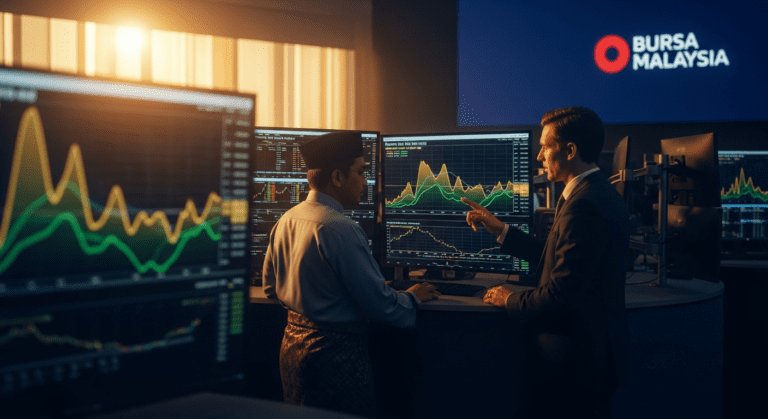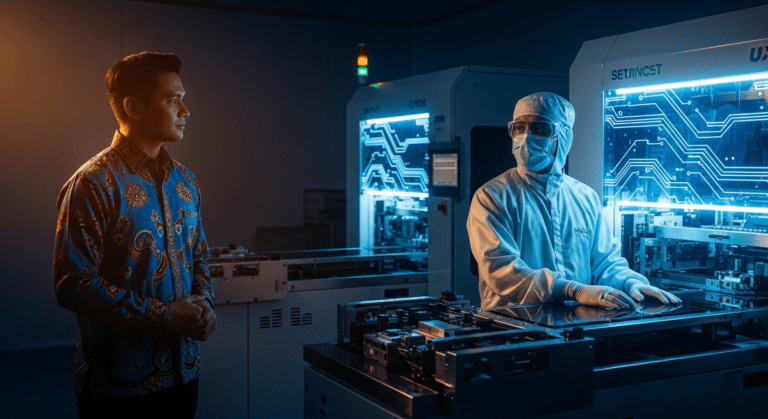

US-China Trade War & Malaysia Tech: HNW Investor Analysis
“`html
US-China Trade War Impact on Malaysia Tech: Analysis
The escalating US-China trade war has fundamentally reshaped global technology supply chains, forcing Western high-net-worth investors to reassess their portfolio allocations across emerging markets. Malaysia’s tech sector sits at the epicenter of this geopolitical reshuffling, presenting both unprecedented risks and compelling opportunities for sophisticated international capital. As multinational corporations seek alternatives to Chinese manufacturing and service hubs, Malaysia has emerged as a primary beneficiary of supply chain diversification, attracting substantial foreign direct investment into its semiconductors, electronics manufacturing, and digital infrastructure sectors.
This analysis provides Western investors with actionable intelligence on how trade tensions between the world’s two largest economies have transformed Malaysia’s technology landscape. You’ll discover precise data on sectoral performance, regulatory frameworks governing foreign participation, taxation implications for non-resident investors, and concrete strategies for risk mitigation. Whether you’re evaluating opportunities in Malaysian tech equities or assessing long-term positioning in Southeast Asia’s digital economy, understanding these geopolitical dynamics is essential for informed capital allocation decisions in 2024 and beyond.
The US-China Trade War: Genesis, Evolution, and Direct Impact on Malaysia’s Tech Sector
The trade conflict that began with US tariff announcements in early 2018 has evolved from a bilateral trade dispute into a comprehensive technological decoupling. Initial tariffs targeted $250 billion worth of Chinese goods, including electronics, semiconductors, and telecommunications equipment, with rates escalating from 10% to 25% across multiple product categories. Subsequent policy measures extended beyond tariffs to encompass technology transfer restrictions, entity list designations for Chinese tech companies, and export controls on advanced semiconductors and manufacturing equipment.
For Malaysia, these developments created immediate ripple effects across its RM240 billion (approximately USD 51 billion) electronics and electrical equipment sector, which accounts for roughly 38% of total manufacturing output. According to Malaysian Investment Development Authority (MIDA) data, foreign direct investment in Malaysia’s electrical and electronics sector surged by 48% year-on-year in 2019, reaching RM12.2 billion, as multinational corporations accelerated supply chain diversification strategies. This trend continued through subsequent years, with semiconductor-related investments alone exceeding RM50 billion between 2020 and 2023.
Malaysia’s strategic positioning derives from several competitive advantages: established semiconductor assembly, testing, and packaging capabilities that account for 13% of global market share; preferential trade agreements with both the United States and China; political neutrality that allows simultaneous engagement with competing economic blocs; and significantly lower operational costs compared to traditional manufacturing hubs like Taiwan or South Korea. The nation hosts operations from Intel, Infineon, Texas Instruments, and dozens of other semiconductor giants, creating a robust ecosystem that benefits from trade diversion.
Disruption and Diversification: Reshaping Malaysia’s Semiconductor and Electronics Landscape
How has the US-China trade war specifically impacted the revenue and profitability of Malaysia’s key tech companies? The evidence shows mixed but generally positive outcomes for Malaysian-listed tech firms. Inari Amertron Berhad, a major radio frequency component manufacturer, reported revenue growth of 31% in fiscal year 2022, driven primarily by increased orders from US clients diversifying away from Chinese suppliers. Similarly, Vitrox Corporation Berhad, which manufactures automated vision inspection systems for semiconductors, achieved a compound annual growth rate of 22% from 2019 to 2023.
However, profitability pressures emerged from rising input costs, talent acquisition challenges, and capital expenditure requirements to meet surging demand. Average net profit margins for Malaysian tech manufacturers compressed from 15.3% in 2018 to 12.7% in 2022, despite higher revenues, reflecting the operational challenges of rapid capacity expansion. Currency fluctuations also played a role, with the Malaysian ringgit depreciating approximately 12% against the US dollar between 2018 and 2023, creating mixed effects for exporters with local cost bases but imported equipment dependencies.
Identifying Resilient Opportunities: Key Sub-Sectors for HNW Investors
Which sub-sectors within Malaysian tech have shown resilience or growth opportunities despite trade tensions? The answer reveals a nuanced landscape where certain segments demonstrate exceptional potential for sophisticated investors willing to conduct thorough due diligence.
Semiconductor assembly, testing, and packaging (ATP) represents Malaysia’s most established competitive advantage. The country hosts seven of the world’s top ten semiconductor companies, with Penang alone accounting for more than 50% of Malaysia’s electronics exports. Recent capacity expansions by Intel (investing USD 7 billion in its Penang operations through 2024) and Infineon (committing EUR 2 billion for a new facility) validate long-term growth trajectories. For investors, this translates to opportunities in supporting industries: precision engineering firms, industrial real estate investment trusts focused on high-tech facilities, and logistics providers specializing in semiconductor supply chains.
Digital infrastructure and data centers constitute Malaysia’s fastest-growing tech sub-sector, with investment commitments exceeding RM12 billion from 2022 to 2024. Hyperscalers including Microsoft, Amazon Web Services, and Google have announced major data center projects, driven by Malaysia’s competitive electricity costs (averaging RM 0.365 per kWh for industrial users), strategic geographic location, and robust submarine cable connectivity. The government’s National Fourth Industrial Revolution Policy provides additional tax incentives, including 100% income tax exemption for up to 10 years for qualifying data center investments exceeding RM100 million.
Software development and digital services present opportunities in companies serving both domestic digitalization demands and export markets. The Malaysian Digital Economy Corporation reports that the digital economy contributed 22.6% of GDP in 2022, with projections reaching 25.5% by 2025. However, this segment faces greater talent competition and wage inflation, with experienced software engineers commanding salaries approaching RM8,000-15,000 monthly, reducing cost advantages relative to neighboring countries.
Performance Analysis of Key Listed Malaysian Tech Companies and ETFs
Are there specific Malaysian tech stocks that provide attractive returns for foreign investors? Analysis of Bursa Malaysia data reveals several candidates worthy of detailed evaluation, though all carry sector-specific risks that demand thorough due diligence.
| Company (Ticker) | Sub-Sector | 5-Year CAGR | Dividend Yield (2023) | Foreign Ownership Limit |
|---|---|---|---|---|
| Inari Amertron (INARI) | RF Components | 28.3% | 2.1% | No restriction |
| Vitrox Corporation (VITROX) | Semiconductor Equipment | 22.7% | 1.8% | No restriction |
| Pentamaster (PENTA) | Automation Solutions | 19.4% | 1.2% | No restriction |
| Malaysian Pacific (MPI) | Semiconductor Packaging | 15.6% | 3.4% | No restriction |
| Unisem (UNI) | Semiconductor Assembly | 11.2% | 2.6% | No restriction |
These performance figures represent historical results and should not be interpreted as guaranteed future returns. Notably, Malaysian tech stocks trade at price-to-earnings ratios ranging from 14x to 28x, generally below comparable companies in Taiwan or South Korea, potentially offering valuation advantages for patient, long-term investors. However, liquidity constraints exist, with daily trading volumes for mid-cap tech stocks averaging RM 5-20 million, which may present challenges for larger position sizing or rapid exit strategies.
Investment Mechanics for Foreigners: Process, Legalities, and Taxation
How can Western HNW investors practically access these opportunities while navigating regulatory requirements? The process involves several distinct stages, each with specific compliance obligations and cost considerations.
Foreign ownership regulations for Malaysian tech companies are generally liberal compared to neighboring countries. Most technology stocks listed on Bursa Malaysia impose no foreign ownership restrictions, a significant advantage over markets like Thailand (49% limit in certain sectors) or Indonesia (varying sectoral caps). However, investments in unlisted tech companies or direct business establishment face more complex requirements. Foreign investors establishing tech companies in Malaysia typically structure operations as Sendirian Berhad (private limited companies) with minimum paid-up capital requirements of RM500,000 for foreign-majority ownership, though this threshold varies by business activity and state jurisdiction.
Step-by-Step: From Brokerage Account Opening to Investment Execution
Accessing Malaysian public markets requires opening an account with a licensed stockbroking firm. Leading international-friendly brokerages include Maybank Investment Bank, CIMB Securities, and RHB Investment Bank, all offering online platforms with English-language interfaces and foreign currency settlement capabilities. Account opening typically requires:
- Identity verification: Passport copy, proof of residential address (utility bill or bank statement dated within three months), and sometimes a reference letter from your home country bank
- Central Depository System (CDS) account: Mandatory for holding Malaysian securities, opened concurrently with brokerage account at no additional cost
- Foreign currency deposit: Initial funding typically via international wire transfer, with most brokerages requiring minimum deposits of RM10,000-50,000 depending on account type
- Processing timeline: Expect 7-14 business days for full account activation, including regulatory verification steps
Transaction costs on Bursa Malaysia are transparent and competitive: brokerage commissions range from 0.10% to 0.42% of trade value depending on broker and account tier, clearing fees add 0.03%, and stamp duty applies at RM1 per RM1,000 of transaction value (effectively 0.1%). For a RM500,000 investment, expect total transaction costs of approximately RM1,650-2,650 for both entry and exit, significantly lower than many European markets.
Comprehensive Tax Implications: Dividends, Capital Gains, and Double Taxation Treaties
What are the tax implications for non-resident investors realizing gains from Malaysian tech investments? Understanding taxation is crucial for accurate return calculations and optimal structuring decisions.
Capital gains: Malaysia imposes no capital gains tax on disposal of listed securities for either residents or non-residents, representing a significant structural advantage. This policy has remained consistent through multiple administrations and applies to both shares and exchange-traded funds listed on Bursa Malaysia. Exceptions exist for real property and unlisted shares, which fall under Real Property Gains Tax provisions.
Dividend taxation: Malaysia operates a single-tier corporate tax system where corporate income is taxed at 24% (or 17% for small-medium enterprises qualifying under specific criteria), and dividends distributed to shareholders are tax-exempt. This means non-resident investors receive dividends from Malaysian companies without withholding tax, enhancing effective yields compared to markets imposing 15-30% withholding taxes.
Currency repatriation: Malaysia maintains liberal capital account policies with no restrictions on repatriation of investment proceeds, dividends, or capital for foreign investors. Currency conversion occurs at prevailing market rates, with banks and brokerages typically charging spreads of 0.5-1.5% on foreign exchange transactions. Larger transactions may negotiate preferential rates.
Double taxation treaties exist between Malaysia and most Western nations, including comprehensive agreements with the United States, United Kingdom, Germany, France, Netherlands, and Australia. These treaties generally prevent double taxation on investment income, though investors should consult qualified tax advisors in both jurisdictions to optimize structures and ensure compliance with reporting obligations such as FATCA (for US persons) or Common Reporting Standard requirements.
Risk Assessment and Mitigation Strategies for Trade War Volatility
What are the genuine risks that Western HNW investors must acknowledge when allocating capital to Malaysian tech in this geopolitical environment? Transparency demands thorough examination of potential downsides alongside opportunities.
Geopolitical escalation risk remains the primary concern. Further deterioration in US-China relations, particularly restrictions on technology transfers or secondary sanctions affecting companies with dual supply chain exposure, could negatively impact Malaysian tech firms serving both markets. The Entity List mechanism employed by the US Department of Commerce has already ensnared companies in multiple countries, and Malaysian firms maintaining significant China exposure face ongoing compliance risks. Approximately 14.2% of Malaysia’s electronics exports flow to China, creating vulnerability if technology decoupling accelerates.
Currency volatility presents material risk for foreign investors measuring returns in USD, EUR, or GBP. The Malaysian ringgit has experienced volatility ranging from RM 3.80 to RM 4.75 per USD over the past five years, driven by oil price fluctuations (Malaysia is a net energy exporter), Bank Negara Malaysia’s monetary policy adjustments, and global risk sentiment. A 10% adverse currency movement can materially impact USD-denominated returns even when local-currency investments perform well. Hedging strategies using currency forwards or options add costs of approximately 1.5-3% annually but provide certainty for risk-averse investors.
Due Diligence Framework: Protecting Your Investment in Uncertain Times
What due diligence steps are critical for Western HNW investors evaluating Malaysian tech companies with exposure to the US-China supply chain? A systematic framework should encompass multiple dimensions:
- Customer concentration analysis: Scrutinize revenue sources to identify dependencies on single customers or markets; companies deriving more than 30% of revenue from single clients face elevated concentration risk
- Supply chain mapping: Understand both upstream (raw materials, components) and downstream (end customers) exposures to sanctioned or high-risk entities; request detailed supplier and customer lists for material relationships
- Technology origin and licensing: Verify that critical intellectual property, manufacturing processes, or software platforms don’t rely on technologies subject to export controls or license restrictions
- Management quality and governance: Assess board composition, independent director representation, audit quality, and track record of transparent communication with minority shareholders; family-controlled companies, common in Malaysia, require particular scrutiny of related-party transactions
- Financial stress testing: Model scenarios including 20-30% revenue decline, margin compression from rising input costs, and working capital requirements during rapid growth or contraction phases
Professional assistance from Malaysian corporate intelligence firms, Big Four accounting firms with local practices, or specialized tech sector consultants typically costs USD 15,000-50,000 for comprehensive due diligence on mid-cap listed companies, but represents prudent investment protection for positions exceeding USD 500,000.
Malaysia Tech in Context: A Comparative Analysis with Regional Peers
How do investment risks and returns in Malaysian tech compare to other ASEAN markets under similar geopolitical pressures? Benchmarking against regional competitors and familiar Western markets provides essential context for portfolio allocation decisions.
| Market | Tech Sector Weight | 5-Yr Avg P/E Ratio | FDI Growth (2019-2023) | Key Advantages | Key Disadvantages |
|---|---|---|---|---|---|
| Malaysia | 13.4% of GDP | 18.2x | +42% | Established semiconductor ecosystem, no capital gains tax, political neutrality | Smaller domestic market, talent constraints, currency volatility |
| Vietnam | 11.8% of GDP | 21.5x | +67% | Lower labor costs, massive manufacturing shift from China, young workforce | Infrastructure gaps, less developed capital markets, foreign ownership restrictions |
| Thailand | 9.2% of GDP | 16.8x | +28% | Larger domestic market, well-developed infrastructure, automotive tech strength | Political uncertainty, 49% foreign ownership limits in many sectors, aging demographics |
| Singapore | 17.3% of GDP | 25.4x | +52% | Advanced ecosystem, regional hub status, superior governance and IP protection | Significantly higher costs, limited scalability, premium valuations |
Malaysia’s positioning reveals a middle path: more developed than Vietnam with established institutions and deeper capital markets, yet more cost-competitive than Singapore while offering comparable legal frameworks for foreign investors. The country’s semiconductor specialization provides differentiation from Vietnam’s focus on consumer electronics assembly and Thailand’s automotive electronics orientation.
Compared to Western markets, Malaysian tech trades at substantial valuation discounts. US technology stocks average P/E ratios of 28-35x, UK tech companies trade around 22-26x, while Malaysian peers offer ratios of 14-22x for similar growth profiles. This “emerging market discount” reflects liquidity constraints, currency risk, and governance concerns, but may present value opportunities for investors willing to accept these trade-offs for enhanced return potential.
Long-Term Growth Projections and Competitive Advantages
What are the long-term growth projections for the Malaysian tech sector, considering potential future trade war scenarios? Analyst consensus from research firms including Gartner and IDC projects Malaysian tech sector revenue growth of 6.8-9.2% CAGR through 2028, driven primarily by continued supply chain diversification, domestic digitalization, and regional data center investment. However, these projections carry wide confidence intervals given geopolitical uncertainties.
Optimistic scenarios envision Malaysia capturing additional market share if US-China tensions persist, potentially accelerating growth to 11-14% annually through 2030. This outcome depends on continued infrastructure investment, talent development initiatives, and maintaining political neutrality that allows Malaysian companies to serve both economic blocs. Government initiatives including the National Semiconductor Strategy and substantial education investments aim to support this trajectory.
Pessimistic scenarios model growth slowing to 3-5% annually if trade tensions ease and supply chains partially revert to China, or if Malaysia faces its own geopolitical challenges that compromise its neutral positioning. Currency depreciation, regulatory changes, or failure to address talent shortages could further constrain growth in adverse scenarios.
Conclusion: Strategic Positioning for Long-Term Value in Malaysian Tech
The US-China trade war has fundamentally repositioned Malaysia within global technology supply chains, creating tangible opportunities for Western high-net-worth investors willing to navigate complexity and embrace calculated risk. The data demonstrates that Malaysian tech companies have generally benefited from supply chain diversification, with FDI surging and key listed companies delivering strong returns despite broader geopolitical turbulence. Structural advantages including no capital gains tax on listed securities, zero dividend withholding for non-residents, and liberal repatriation policies enhance effective returns compared to many alternative markets.
However, success demands rigorous due diligence, realistic risk assessment, and portfolio diversification to mitigate concentration and currency exposures. The most attractive opportunities lie in established segments like semiconductor assembly and testing, emerging areas such as digital infrastructure, and carefully selected listed companies with defensible market positions and transparent governance. Regional comparison reveals Malaysia offers a compelling middle ground between frontier markets like Vietnam and premium destinations like Singapore.
For sophisticated investors seeking Asian technology exposure beyond saturated markets, Malaysia warrants serious consideration as a core or satellite position within a diversified portfolio. The convergence of geopolitical tailwinds, competitive valuations, and investor-friendly regulations creates conditions that may not persist indefinitely. Those who conduct thorough analysis and establish positions during current market conditions may benefit from asymmetric risk-reward profiles as this strategic realignment continues to unfold. To explore complementary investment opportunities across Malaysian asset classes, consider reviewing our comprehensive guide to investing in the Malaysian stock market for broader context on regulatory frameworks and market access strategies.
“`