
Luxury Property Investment Malaysia: Complete Guide 2026
Kuala Lumpur’s luxury residential market is one of Asia’s most compelling — and most underestimated — investment propositions. Prime condominiums trade at USD 2,000–6,000 per square metre, a fraction of Singapore’s USD 19,000 average, yet deliver comparable infrastructure, world-class healthcare, and an international community that rivals any Asian capital. For the Western investor with €300k–3M to deploy, luxury property investment in Malaysia offers a rare combination: credible rental yields of 4–6%, genuine capital appreciation potential, a transparent legal framework, and the ability to combine a property asset with a long-term residency via MM2H or PVIP. This guide covers every dimension you need to make an informed decision — district analysis, developer profiles, ROI modelling, financing, taxation, and three case studies drawn from real investor profiles.
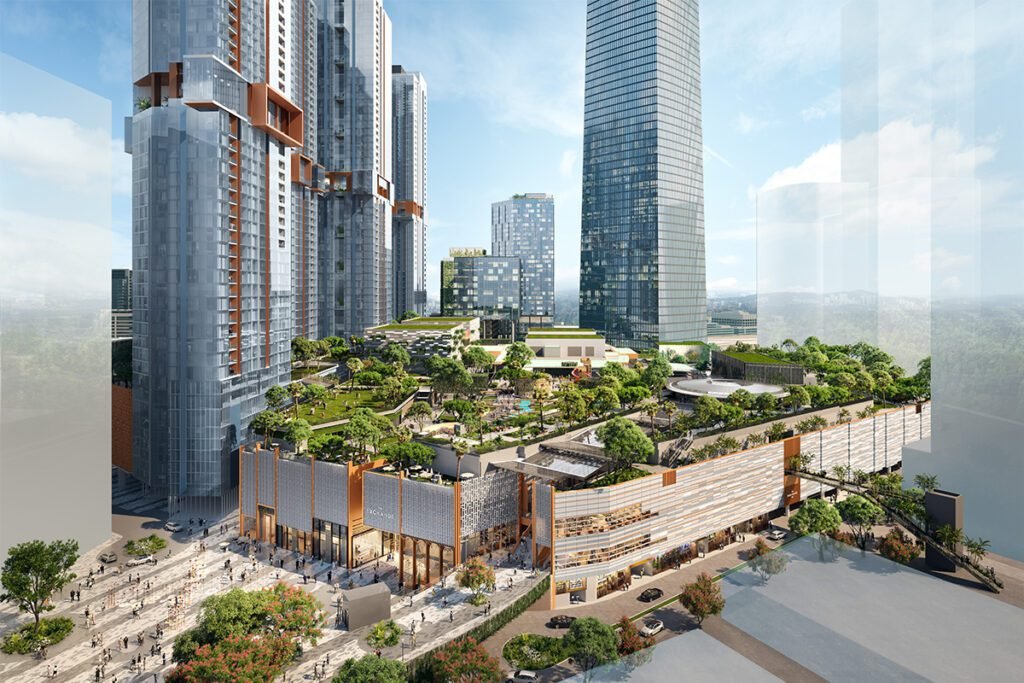
Table of Contents
- The Investment Thesis: Why Malaysia, Why Now
- District-by-District Analysis: Where to Buy in 2026
- Developer Profiles: Who to Trust
- ROI Modelling: Yields, Capital Gains, and Break-Even
- Financing Strategies for Foreign Buyers
- Legal Framework: The Purchase Process Step by Step
- Taxation: RPGT, Rental Income, and Double Treaties
- Combining Luxury Property with MM2H or PVIP
- Three Expat Case Studies
- FAQ
1. The Investment Thesis: Why Malaysia, Why Now
The core thesis for luxury property investment in Malaysia rests on a structural pricing anomaly that has persisted for over a decade and shows no sign of correcting quickly. Prime Kuala Lumpur real estate costs USD 2,100–2,500 per square metre in the KLCC–Bukit Bintang corridor — roughly 87% below Singapore’s prime district average of USD 19,000, and 60–70% below Hong Kong, Tokyo, and Sydney. This is not a frontier market discount. Malaysia has a GDP per capita of approximately USD 13,000, a middle-income economy growing at 4.5–5% annually, a functioning rule of law, a sophisticated banking sector, and a residential property market that has generated roughly 40% nominal appreciation over the past decade.
The pricing gap is not explained by quality. Four Seasons Place Residences KLCC, The Ritz-Carlton Residences, and Pavilion Mont’Kiara offer build quality, service levels, and facilities that are indistinguishable from comparable branded residences in Singapore or Dubai. What explains the gap is a combination of Malaysia’s position as a smaller, less liquid international market, an oversupply cycle in the mid-2010s that has taken years to absorb, and the historical dominance of Chinese buyers who have recently retreated following regulatory changes in both China and Malaysia.
For Western investors, this retreat creates the blue ocean opportunity: premium assets at significant discounts to regional benchmarks, with a growing tenant pool of multinational corporate staff, PVIP and MM2H residents, and a domestic professional class that increasingly prefers prime urban rental over home ownership. Bank Negara Malaysia’s Overnight Policy Rate sits at 2.75% heading into 2026 — below mid-2023 highs — and mortgage rates for foreigners, while higher than domestic rates, remain favourable by European standards. The MRT3 Circle Line, approved in July 2025, will connect Mont Kiara, Sentul, and Pantai Dalam with the existing rail network, providing further structural support for prime residential demand in these corridors over the 2025–2030 period.
Key macro indicators for the luxury segment in 2026: prime KL luxury condominiums above RM 1M carry approximately 2,287 units of residential overhang according to NAPIC (Q3 2025) — a manageable figure in a city of 2.1 million that is absorbing approximately 8,000–10,000 residential transactions quarterly. Oversupply concerns are concentrated in specific product types (older serviced apartments in non-prime locations) rather than the trophy freehold condominiums that constitute the genuine investment-grade luxury segment.
2. District-by-District Analysis: Where to Buy in 2026
Kuala Lumpur’s luxury market is not monolithic — it is a collection of eight to ten micro-markets with distinct price floors, tenant profiles, yield dynamics, and capital appreciation drivers. The investor who treats KL as a single market will make generic decisions; the investor who understands district dynamics will buy based on cashflow and capital thesis.
KLCC — The Prestige Address
The KLCC zone, anchored by the Petronas Twin Towers and KLCC Park, remains Malaysia’s most prestigious residential address. Prime condominiums trade at RM 1,393–1,858 per square foot (approximately USD 300–400/sqft or €280–370/sqft), with new luxury launches consistently achieving RM 1,500–2,000/sqft. A 2-bedroom unit of approximately 1,000–1,200 sqft will typically be priced between RM 1.5M and RM 2.5M. Iconic developments include Four Seasons Place Residences, The Troika, Binjai on the Park, and the newly completed CloutHaus Residences KLCC.
Rental yields in KLCC are typically 3–4% net, the lowest of any prime KL district — reflecting the prestige premium embedded in purchase prices. However, KLCC’s tenant profile is the strongest in the market: international senior executives, multinational corporate tenancies, and ambassadorial staff provide stable, covenant-strong tenancies with low vacancy risk. The district’s structural demand driver is the ongoing densification of the Tun Razak Exchange (TRX) financial district immediately to the south, which is progressively expanding KLCC’s corporate catchment area.
Mont Kiara — The Expat Quarter
Mont Kiara is Kuala Lumpur’s established expatriate enclave, 10–15 minutes northwest of the CBD. Condominiums trade at RM 929–1,300/sqft, with total unit prices ranging from RM 1M to RM 2.5M for premium stock. The district’s demand driver is structural: Garden International School, Mont’Kiara International School, and Sayfol International School generate a captive tenant pool of expatriate families that sustains occupancy above 85% in well-managed buildings regardless of broader market cycles.
Mont Kiara delivers the most consistent landlord experience in KL’s luxury segment. Yields of 4–5.5% net are achievable on well-priced acquisitions, with tenancy periods of 2–3 years common among school-anchor families. The MRT3 station planned for Mont Kiara will be a structural price catalyst when it opens — the district currently lacks direct rail connectivity, which has historically capped its premium relative to KLCC. Target developments: Pavilion Mont’Kiara, Seni Mont Kiara, 10 Mont Kiara, Sunway Belfield.
Bangsar — The Lifestyle Premium
Bangsar occupies a unique position in KL’s luxury landscape — a mature, supply-constrained inner-city neighbourhood with a reputation for lifestyle, dining, and walkability. Landed properties (bungalows, semi-detached) dominate the premium segment, with bungalows reaching RM 5M–15M+ in Bangsar Baru and Bukit Bandaraya. High-rise condominiums in Bangsar range from RM 600–1,600/sqft. Recent luxury developments — Setia Federal Hill, 8 Kia Peng — are achieving RM 1,500/sqft, signalling the district’s premium trajectory.
Bangsar is experiencing 4.5% year-on-year price growth (2025 data), driven by young professional demand and the scarcity of available development land in an established neighbourhood. For investors seeking capital appreciation over yield, Bangsar’s constrained supply pipeline makes it a more credible capital gains play than KLCC, where new supply continues to be delivered.
TRX (Tun Razak Exchange) — The Emerging Financial District
TRX is Malaysia’s most significant urban regeneration story of the decade. The 28-hectare mixed-use financial district — modelled on London’s Canary Wharf — hosts The Exchange TRX mall (opened 2023), the Malaysian headquarters of HSBC, Prudential, and multiple global banks, and is now delivering its residential component. Core Residence @ TRX and Orion Residence represent the first wave of trophy residential stock in a district that will house 30,000+ workers within a 10-minute walk.
TRX offers the highest capital appreciation potential of any KL district for a 5–10 year investment horizon. Entry prices of RM 1,200–1,600/sqft are significantly below KLCC for comparable quality, with the delta expected to narrow as TRX reaches operational density. Tenant demand from financial sector tenants is corporate-grade and growing. This is the district that sophisticated investors with a 7–10 year horizon should prioritise in 2026.
Penang — The Secondary Luxury Market
Penang’s Gurney Drive corridor and Georgetown heritage zone represent Malaysia’s most credible secondary luxury market. Gurney Drive condominiums — high-floor units with Straits of Malacca views — trade at RM 800–1,200/sqft, with branded developments approaching RM 1,500/sqft. Penang’s luxury market serves a distinct tenant profile: regional business executives, healthcare tourism visitors, and retirees attracted to the island’s lifestyle, George Town UNESCO heritage status, and Penang’s reputation as Malaysia’s culinary capital. Rental yields of 4–5% gross are achievable. Foreign buyer minimum threshold in Penang varies by municipality and property type — verify with a local solicitor before purchase.
| District | Price Range (RM/sqft) | Typical Entry (RM) | Gross Yield | Net Yield | Capital Upside |
|---|---|---|---|---|---|
| KLCC | 1,393–2,000+ | 1.5M–4M | 4–5% | 3–4% | Moderate |
| Mont Kiara | 929–1,300 | 1M–2.5M | 5–7% | 4–5.5% | Strong (MRT3 catalyst) |
| Bangsar | 600–1,600 | 1M–15M+ | 4–6% | 3.5–5% | Strong (constrained supply) |
| TRX | 1,200–1,600 | 1.2M–3M | 5–6% | 4–5% | Very strong (10yr horizon) |
| Penang Gurney | 800–1,500 | 1M–3M | 5–6% | 4–5% | Moderate-strong |
3. Developer Profiles: Who to Trust
Developer selection is one of the most consequential decisions in Malaysian luxury property investment. Malaysia’s property market has experienced developer failures — primarily among smaller, undercapitalised operators — that have left buyers with incomplete or defective projects. For foreign investors, concentration risk with a single developer and adequate due diligence on financial standing are non-negotiable.
SP Setia Berhad
SP Setia is Malaysia’s largest property developer by revenue and one of its most respected brands for delivered quality. Listed on Bursa Malaysia, SP Setia has a 50-year track record spanning townships (Setia Alam, Setia Eco Park), high-rise urban developments (Setia Federal Hill in Bangsar, Setia Sky Residences), and international projects. For luxury buyers, Setia Federal Hill — a RM 1,500/sqft Bangsar development completed in phases through 2029 — represents the company’s flagship urban luxury offering. SP Setia’s Bursa listing provides financial transparency that many privately held developers cannot match.
UEM Sunrise Berhad
UEM Sunrise, the development arm of Khazanah Nasional (Malaysia’s sovereign wealth fund), is the dominant developer in Iskandar Malaysia / Johor and has a strong urban portfolio in KL including Residensi Solaris Parq and Aurora Melbourne Central (Australia). The government backing of Khazanah provides material comfort on delivery risk. UEM Sunrise’s Johor projects are particularly relevant for investors targeting Singapore spillover demand — the Johor-Singapore RTS Link, due for completion in 2026, will fundamentally change the calculus for Johor Bahru luxury residential.
Mah Sing Group
Mah Sing is a prolific developer known for rapid launches and mid-to-upper market pricing. M Adora and M Vertica in KL demonstrate Mah Sing’s ability to deliver well-specified urban condominiums at competitive price points. Their M-series developments in Kepong and Cheras target the sub-RM 700K segment; for luxury buyers, their Meridin@Medini in Johor and select KL projects in the RM 1M+ range are more relevant. Mah Sing’s strength is speed of delivery — projects consistently hit completion milestones ahead of peers.
IJM Land
IJM Land, the property division of IJM Corporation (a diversified infrastructure conglomerate), specialises in masterplanned townships and waterfront developments. Light City Penang — a mixed-use waterfront development on the Penang mainland — represents IJM Land’s flagship luxury play for 2024–2028. IJM Corporation’s infrastructure parentage means development financing is structurally sound, and the company has a strong track record in Penang, Shah Alam, and Seremban.
Sime Darby Property
Sime Darby Property, listed on Bursa and majority-owned by Sime Darby Berhad (a RM 20B+ conglomerate), is the developer of Ara Damansara, KL East, and Elmina townships. For luxury buyers, Sime Darby’s significance is primarily in the premium landed segment — semi-detached and bungalow developments in Subang Jaya and Shah Alam corridor that attract a domestic high-net-worth buyer profile. Less relevant for urban KLCC/Mont Kiara buyers, highly relevant for investors targeting large-format landed luxury at RM 2M–5M price points.
4. ROI Modelling: Yields, Capital Gains, and Break-Even
Rigorous ROI modelling for Malaysian luxury property requires separating four distinct return components: gross rental yield, net rental yield (after costs), capital appreciation, and total return on equity (which incorporates leverage if a mortgage is used). The figures below are based on conservative assumptions calibrated against Q3 2025 NAPIC transaction data and primary market surveys.
Modelling Assumptions
Purchase price: RM 2,000,000 (representative Mont Kiara / TRX entry-level luxury). Mortgage: 60% LTV at 4.5% p.a. (typical for non-resident foreign buyers). Annual rental: RM 120,000 (RM 10,000/month, consistent with 2-bed premium furnished unit in target districts). Annual cost deductions: management fee 10% of gross rent (RM 12,000), maintenance charges RM 6,000, property assessment (cukai taksiran) RM 3,000, insurance RM 2,400, vacancy allowance 8% (RM 9,600). Annual capital appreciation: 3.5% (conservative, below the 4.5–9.7% seen in hotspot areas in 2025 but above the citywide 0.2% average).
| Return Component | Annual (RM) | Yield on Purchase Price |
|---|---|---|
| Gross rental income | 120,000 | 6.0% |
| Less: management, maintenance, assessment, insurance | −23,400 | −1.2% |
| Less: vacancy allowance (8%) | −9,600 | −0.5% |
| Net rental income | 87,000 | 4.35% |
| Annual capital appreciation (3.5%) | 70,000 | 3.5% |
| Total return (unlevered) | 157,000 | 7.85% |
| Annual mortgage cost (60% LTV, 4.5%) | −54,000 | −2.7% |
| Total return (levered) | 103,000 | 12.9% on equity |
The levered return of 12.9% on equity is achievable but requires active management: vacancy must be kept below 10%, and the property must be maintained to a standard that justifies premium rent in a competitive market. The unlevered total return of 7.85% compares favourably with Paris (2.5–3.5% net yield, negligible capital growth), Lisbon (3–4.5% net yield), and Geneva (1.5–2.5% net yield) — markets frequently considered by the Western HNW investor cohort that constitutes SmartInvestMalaysia’s target audience.
Break-Even Analysis
Acquisition costs for a foreign buyer of a RM 2M property include: stamp duty on the Memorandum of Transfer (Tier 1: 1% on first RM 100,000; Tier 2: 2% on RM 100,001–RM 500,000; Tier 3: 3% on RM 500,001–RM 1M; Tier 4: 4% on amounts above RM 1M) — total approximately RM 56,000 on a RM 2M purchase. Legal fees approximately RM 20,000. Loan arrangement costs (if financed) approximately RM 10,000. Total upfront non-recoverable costs approximately RM 86,000 (4.3% of purchase price).
At a net rental yield of 4.35% per annum, the property recoups its acquisition costs through rental income alone in approximately 13 months. Capital appreciation begins accruing from day one. The all-in break-even on a cash purchase (including acquisition costs and assuming 3.5% annual capital growth) is reached at approximately 18–24 months — a shorter horizon than equivalent luxury markets in Paris, Lisbon, or Dubai where entry costs are higher relative to yield.
5. Financing Strategies for Foreign Buyers
Financing is available to foreign buyers from Malaysian banks, but the terms are materially less favourable than for residents. Understanding the financing landscape — and knowing when to deploy cash versus leverage — is a genuine competitive advantage.
Malaysian Bank Mortgage for Foreign Buyers
The major Malaysian banks — Maybank, CIMB, Public Bank, RHB, and AmBank — all offer mortgage products to non-resident foreign buyers. Standard terms for foreigners: maximum LTV of 60% (some banks offer 70% for high-value properties with strong applicant profiles), loan tenors of 25–30 years (subject to age restrictions — typically the mortgage must be repaid by age 65–70), and interest rates of 4.0–5.0% per annum (based on BNM’s OPR at 2.75% plus a spread of 1.25–2.25%, subject to applicant profile). Documentation requirements include proof of offshore income, 6 months of bank statements, employment letter or company financials, and a valuation report from a licensed Malaysian valuer. The application process takes 4–8 weeks.
Islamic Financing (Musharakah Mutanaqisah)
Malaysia’s Islamic banking system — one of the world’s most developed — offers Shariah-compliant property financing products that are available to non-Muslim foreign buyers without restriction. Musharakah Mutanaqisah (diminishing partnership) and Murabahah (cost-plus financing) structures provide equivalent economic outcomes to conventional mortgages, with the important tax advantage that the financing cost may be structured differently for certain investor profiles. For MM2H and PVIP holders who have already opened accounts with Islamic banking institutions, these products are worth exploring in detail with a licensed financial adviser.
Home Country Financing and Cash Deployment
For Western investors with access to low-cost home country borrowing — mortgage refinancing in France at 2–3%, Belgian property equity release, Swiss Lombard loans — financing the Malaysian acquisition from home may deliver better economics than a Malaysian bank mortgage at 4.5%. The key risk is currency: a USD or EUR-denominated loan funding a RM-denominated asset creates foreign exchange exposure that must be hedged or accepted as a portfolio risk. Over the past decade, the ringgit has depreciated approximately 20–25% against EUR and USD — a currency risk that reduces the net return in home currency terms on unhedged positions, but also means current entry prices in EUR/USD terms are at historically attractive levels relative to the underlying asset quality.
6. Legal Framework: The Purchase Process Step by Step
Malaysia has one of Asia’s most transparent and investor-friendly legal frameworks for foreign property ownership. The process is governed by the National Land Code 1965, the Housing Development (Control and Licensing) Act 1966 (for new developments), and state-level foreign ownership regulations. All property transactions are conducted in English, and the entire process — from offer letter to title transfer — typically takes 3–6 months for sub-sale transactions and up to 3 years for new launches.
Step 1 — Offer and Booking. For new launches, a booking fee of 2–3% of the purchase price is paid upon signing the developer’s booking form. For sub-sale (secondary market) transactions, an earnest deposit of 2–3% is paid to the vendor’s solicitor upon executing the offer letter. This locks the price and removes the property from the market.
Step 2 — Sales and Purchase Agreement (SPA). The SPA is executed within 14–21 days of the booking. A further instalment of 7–8% is payable upon SPA signing (bringing total paid to 10%). The SPA defines the purchase price, completion timeline, defect liability period, and all terms of the transaction. Engage your own solicitor independent of the developer’s recommended firm — the cost is comparable and provides genuine protection.
Step 3 — State Consent (where applicable). Certain states — including Selangor, Penang, and Johor — require foreign buyers to obtain state consent for property purchases above certain thresholds or in specific areas. This process typically takes 2–6 months and is handled by your solicitor. Budget for state consent fees of approximately RM 10,000–30,000 depending on state and property value. Kuala Lumpur (Federal Territory) does not require state consent, which is one practical advantage of buying in the capital.
Step 4 — Progressive Payments (new launches) or Full Balance (sub-sale). For new developments, payments follow the construction schedule defined in the SPA — typically 10% on SPA, then progressive payments upon completion of each construction milestone (foundations, structure, roof, etc.) until vacant possession. For sub-sale transactions, the balance is paid upon completion (typically 3 months after SPA, or longer if financing is involved).
Step 5 — Title Transfer and Registration. The Memorandum of Transfer (MOT) is executed and registered with the Land Office. Stamp duty on the MOT is payable at this stage (calculated on the higher of the purchase price or the government-assessed value). A separate loan agreement stamp duty applies if financing is used (0.5% of loan amount for conventional; variable for Islamic financing). The property title is issued in your name and registered in the National Land Registry.
Foreign buyer minimum purchase price: RM 1,000,000 applies across Kuala Lumpur (Federal Territory) without exception. This threshold applies to both strata (high-rise) and landed titles. State-level thresholds in Selangor, Penang, and Johor may be higher — verify the precise threshold for your target property and location with your solicitor before committing.
7. Taxation: RPGT, Rental Income, and Double Tax Treaties
Taxation is the dimension of Malaysian luxury property investment most commonly misunderstood — and most consequential to net returns. Three taxes are directly relevant to foreign investors: Real Property Gains Tax (RPGT), rental income tax, and potential home-country taxation of Malaysian rental income and capital gains.
Real Property Gains Tax (RPGT) for Foreign Buyers
| Holding Period | Malaysian Citizens / PRs | Foreign Individuals | Companies |
|---|---|---|---|
| Year 1–3 | 30% | 30% | 30% |
| Year 4 | 20% | 30% | 20% |
| Year 5 | 15% | 30% | 15% |
| Year 6+ | 0% | 10% | 10% |
The RPGT structure for foreign investors contains a critical asymmetry: the rate remains at 30% for the first five years, then drops sharply to 10% in year six. There is no gradual taper for foreigners between years 1–5 — unlike Malaysian citizens who see reductions from year 4. This creates a binary holding decision: hold for at least 6 years or face a 30% tax on gains. For a foreign investor purchasing at RM 2M who sells at RM 2.7M after 5 years, the RPGT at 30% would be approximately RM 183,000 (after the automatic 10% exemption); the same disposal at year 6 would incur only RM 63,000 in RPGT. The difference — RM 120,000 — is larger than a full year’s rental income.
From 1 January 2025, RPGT operates under a self-assessment system — sellers must calculate, file, and pay their RPGT within 90 days of disposal via the MyTax portal. The buyer retains 7% of the purchase price and remits it to LHDN as a deposit against the seller’s RPGT liability. This retention is not an additional tax — it is refunded (less RPGT due) after LHDN assessment, typically within 3–6 months. Budget for this cash flow timing in your exit planning.
Rental Income Tax for Non-Resident Foreign Investors
Rental income derived from Malaysian property is subject to Malaysian income tax. For non-resident individuals, the flat rate is 30% on net rental income (gross rent less allowable deductions: management fees, maintenance, insurance, mortgage interest on a Malaysian loan, and a capital allowance for furnishings). This is lower than the progressive rates applicable to residents, but represents a meaningful cost that must be modelled from the outset. Annual rental income of RM 87,000 net would incur approximately RM 26,100 in income tax for a non-resident, reducing the effective net-of-tax yield from 4.35% to approximately 3.05% on the unlevered position.
Double Tax Treaties: Implications for French, Belgian, and Swiss Investors
Malaysia has Double Taxation Agreements (DTAs) with France, Belgium, and Switzerland — three of the primary Western markets SmartInvestMalaysia targets. These treaties generally provide that rental income from Malaysian property is taxable primarily in Malaysia (source country), with a credit mechanism allowing investors to offset Malaysian tax paid against home-country tax liability. In practice, this means French, Belgian, and Swiss investors will not be double-taxed on Malaysian rental income, but they must declare it in their home-country tax filing and apply the treaty credit. The precise mechanics vary by treaty and personal circumstance — consult a tax adviser with cross-border Malaysia/Europe expertise before structuring the purchase.
8. Combining Luxury Property with MM2H or PVIP
For Western HNW investors, the most strategically complete approach to Malaysian luxury property is to combine the property acquisition with a long-term residency visa — either MM2H or PVIP. The combination delivers three compounding advantages: residency stability that facilitates long-term property management and tenant relationships; the fixed deposit interest income that partially offsets annual holding costs; and Malaysia’s territorial tax system, which exempts foreign-source income from Malaysian tax — meaning a French dividend income or Swiss rental income is not taxable in Malaysia for a PVIP or MM2H resident.
For MM2H applicants, the mandatory property purchase is directly satisfiable by the luxury acquisition. A Gold tier applicant (RM 1M minimum) purchasing a RM 2M Mont Kiara condominium satisfies the property obligation with room to spare, and can use 50% of the fixed deposit (RM 1.125M for Gold) to partially fund the purchase within 12 months of visa endorsement. For PVIP applicants, the property purchase is optional but strategically powerful — deploying the RM 500,000 PVIP fixed deposit withdrawal into a luxury acquisition creates a leveraged real estate position alongside a 20-year residency anchor.
For a detailed analysis of MM2H tier selection relative to investment profile, see our MM2H Tier Comparison Guide. For the PVIP programme and its investment rights, see our PVIP Investor Visa Breakdown. For the complete investment landscape, the Investing in Malaysia: The Ultimate Guide 2026 covers all asset classes in one place.
9. Three Expat Case Studies
Case Study 1 — Philippe, 58, French retiree (MM2H Silver + KLCC condominium)
Philippe retired from a senior role in the French pharmaceutical industry with a capital base of approximately €1.2M. His objectives: stable passive income in Asia, a high-quality base for 4–5 months per year, and meaningful diversification away from French real estate (already overweight) and European equities.
Structure adopted: MM2H Silver (USD 150,000 fixed deposit, RM 675,000 at current rates). Property purchase: a 1,400 sqft 3-bedroom condominium in KLCC at RM 1.8M, funded primarily from cash (using 50% of the Silver fixed deposit — RM 337,500 — within 12 months of endorsement, balance from own capital). Total committed capital: approximately €550,000 at current exchange rates. Annual FD interest (3% on USD 150,000): approximately RM 20,250. Annual net rental income (RM 1.8M property at 4% net): approximately RM 72,000. Total annual return from deployed capital: approximately RM 92,250 (circa €18,500), representing an effective yield of 3.4% on total committed capital — before capital appreciation. Philippe occupies the unit 4–5 months per year and rents the balance through a serviced apartment programme managed by the building’s appointed operator. The MM2H Silver’s age-50+ minimum stay exemption means he faces no annual residency requirement.
Case Study 2 — Thomas & Isabelle, 43 & 41, Belgian entrepreneurs (PVIP + Mont Kiara)
Thomas and Isabelle run an e-commerce business incorporated in Belgium generating approximately €25,000/month in offshore income. They sought a Southeast Asian base from which to manage regional expansion into Vietnam and Indonesia, combined with family relocation (two children aged 8 and 11 attending international school).
Structure adopted: PVIP for both principal (Thomas) and spouse (Isabelle) — RM 200,000 + RM 100,000 participation fee = RM 300,000 non-refundable. Fixed deposit RM 1,000,000. Property purchase: a 2,200 sqft 4-bedroom condominium in Mont Kiara at RM 2.1M (walking distance from Garden International School). The Mont Kiara property provides the family home — not a pure investment play — but will generate RM 90,000–100,000/year in rental income if the family relocates within 3 years. Thomas’s business restructures a subsidiary to be incorporated in Malaysia, accessing MIDA digital services incentives and a more favourable corporate tax rate (24% in Malaysia vs 25% effective in Belgium) on regional revenues. Total PVIP participation fees and FD: approximately RM 1.3M upfront. PVIP’s zero minimum stay requirement means the family can return to Belgium for periods without jeopardising the visa.
Case Study 3 — Matthias, 49, Swiss private banker (pure investment, no residency)
Matthias manages a CHF 8M personal portfolio with a mandate to deploy 10–15% into Asian real assets. He has no intention of residing in Malaysia but wants exposure to Malaysian prime residential as a portfolio diversifier, targeting a 7–10 year hold for capital appreciation ahead of potential exit.
Structure adopted: Two TRX units purchased off-plan in 2025 at RM 1,500/sqft (approximately RM 1.3M each, total RM 2.6M). Holding strategy: lease both units on 2-year corporate tenancies upon completion (expected 2027), targeting RM 9,000–10,000/month per unit. Matthias accepts the 30% RPGT cost if exit is required before year 6, but models a 7-year hold under which RPGT drops to 10% on gains. A Lombard loan against his Swiss portfolio funds 60% of the acquisition, borrowing in CHF at 1.8% — significantly cheaper than a Malaysian bank mortgage at 4.5%. The RM appreciation potential (historically undervalued against CHF over long cycles) represents an additional currency upside layer. Annual net rental income after Malaysian income tax: approximately RM 108,000 per year across both units (~CHF 21,600), representing a net cash yield of approximately 2.5% on total acquisition cost — modest, but the investment thesis is capital appreciation at TRX as the financial district matures through 2027–2032.
10. FAQ — Luxury Property Investment Malaysia
What is the minimum price for luxury property investment in Malaysia for a foreigner?
The federal government minimum purchase price for foreigners is RM 1,000,000 in Kuala Lumpur (Federal Territory) and Putrajaya. Penang, Selangor, and Johor apply their own state-level thresholds, which may be higher depending on property type, location, and local authority zone. Certain developments within designated special economic zones (like Medini in Johor) may carry different thresholds — verify with a licensed solicitor before commitment.
What is freehold vs leasehold in Malaysia and which should I buy?
Freehold tenure means permanent ownership with no expiry date — the closest equivalent to fee simple ownership in common law jurisdictions. Leasehold tenure is typically 99 years from a government grant date; when the lease expires (or reaches 30–40 years remaining), the title must be renewed, which carries costs and uncertainty. For luxury property investment with a 10–20 year horizon, freehold is strongly preferred. The major KLCC and Mont Kiara luxury developments — The Troika, Pavilion Mont’Kiara, Four Seasons Place — are freehold. Always confirm tenure in the title before signing any sale agreement.
Is rental income from Malaysian property taxable in France / Belgium / Switzerland?
Yes, you must declare Malaysian rental income in your home country, but Malaysia’s Double Taxation Agreements with France, Belgium, and Switzerland provide a tax credit mechanism that prevents double taxation. Malaysian tax paid (30% flat rate on net income for non-residents) generates a credit applicable against your home-country tax liability on the same income. The net result varies by individual tax situation — consult a cross-border tax specialist, particularly if you operate through a holding company structure or are subject to exit tax provisions in your home jurisdiction.
Can I buy commercial property in Malaysia as a foreigner?
Yes. PVIP holders have explicit rights to purchase commercial and industrial property without restriction (subject to state laws). For non-PVIP foreign buyers, commercial property acquisition is permitted but the process is more complex: certain commercial properties require FIC (Foreign Investment Committee) or state-level approvals that do not apply to residential. Retail shophouses in Georgetown, Penang, and selected KL commercial districts have become a niche investment for knowledgeable foreign buyers — yields of 5–7% gross are achievable, and the asset class is less exposed to the residential oversupply that affects parts of the luxury condominium market.
How long does the full purchase process take?
For sub-sale (secondary market) transactions without state consent: 3–4 months from SPA to title transfer is typical. With state consent (Selangor, Penang, Johor): add 2–6 months. For new launches: vacant possession typically 3 years from SPA, with progressive payment milestones throughout. Allow 4–8 weeks for bank mortgage approval if financing is used, and budget for a 4–8 week gap between booking and SPA execution for document preparation.
Start Your Malaysia Luxury Property Journey
Malaysia’s luxury property market offers a rare combination that is increasingly difficult to find in mature Asian markets: investment-grade assets at emerging market entry prices, with a transparent legal system, English-language documentation, and long-term residency options that add a lifestyle dimension to the investment case. The ROI analysis above demonstrates total unlevered returns of 7–8% annually — competitive with any equivalent asset class globally at this price point. The RPGT cliff at year six, the district selection analysis, and the developer due diligence framework outlined above give you the tools to invest with discipline rather than on hope.
Our network of licensed estate agents, solicitors, and financial advisers specialises in Western HNW investor profiles. Contact us for a curated shortlist of investment-grade properties matching your capital allocation, district preference, and residency objectives — at no charge.
Disclaimer: This article provides analysis for informational purposes only and does not constitute financial, legal, or investment advice. Yield figures, price ranges, and tax rates are based on data available as of Q3 2025 and are subject to change. All investments carry risk. Consult licensed professionals — a Malaysian solicitor, a registered valuer, and a cross-border tax adviser — before making any property investment decision. RPGT rates and rental income tax obligations referenced herein are sourced from LHDN (hasil.gov.my) and applicable as of 2026. Last updated: February 2026.