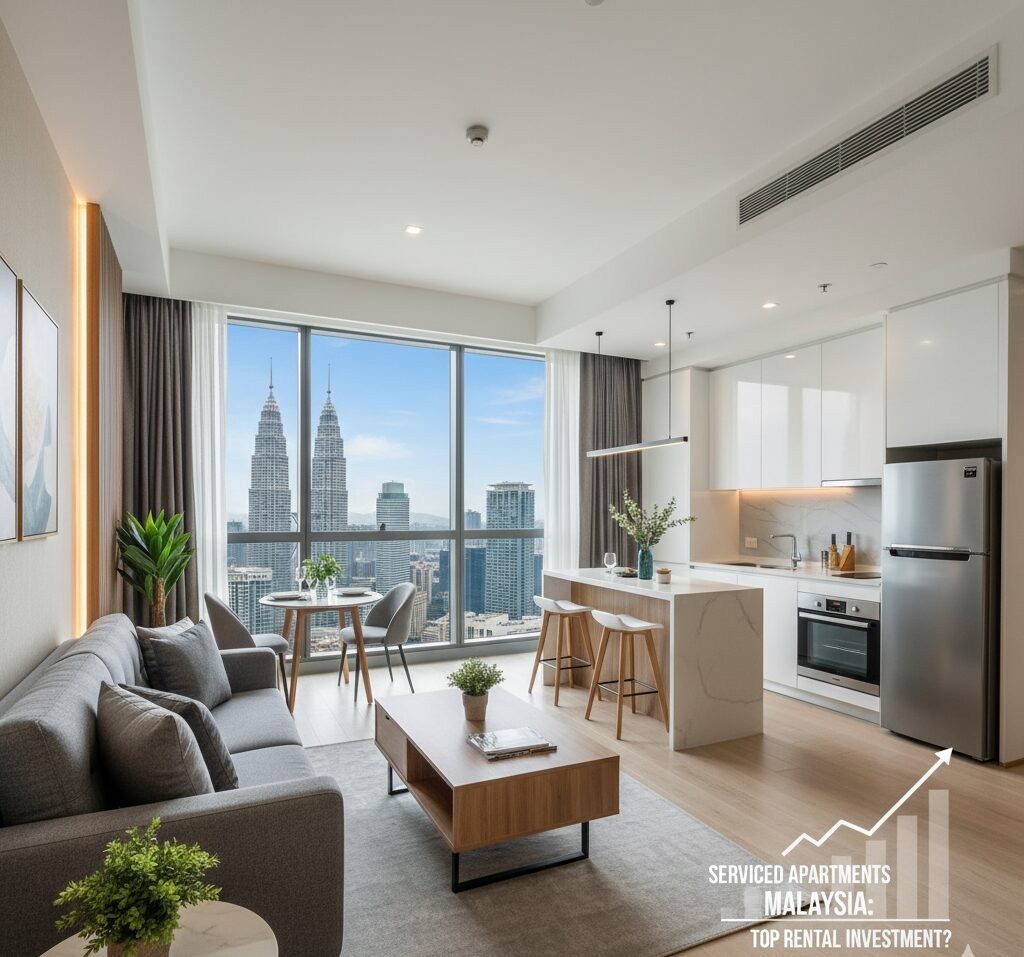

Best Time to Buy Malaysian REITs: Cyclical Analysis for HNW Investors
“`html
Best Time to Buy Malaysian REITs: Cyclical Analysis
For Western high-net-worth investors seeking yield-driven diversification beyond saturated European and American markets, Malaysian Real Estate Investment Trusts (REITs) represent a compelling opportunity. With net yields ranging from 5.2% to 7.8%, the Malaysian REIT sector offers significantly higher income potential than many developed markets, where yields have compressed to 3-4% in recent years. However, timing your entry correctly can mean the difference between modest returns and truly exceptional risk-adjusted performance.
Understanding the cyclical nature of Malaysia’s property market and broader economic patterns is essential for optimizing your investment strategy. Malaysian REITs, like their global counterparts, exhibit sensitivity to interest rate movements, GDP growth trajectories, and sector-specific property cycles that can dramatically affect both capital appreciation and dividend sustainability. The key for astute investors lies in identifying inflection points where macroeconomic conditions, property fundamentals, and valuation metrics align favorably.
This analysis provides you with a data-driven framework for assessing entry timing into Malaysian REITs, comparing performance metrics against regional and Western benchmarks, and navigating the practical and regulatory landscape as a non-resident investor. We’ll examine historical cycles, current market indicators, and sector-specific trends to help you position your portfolio strategically within this emerging market asset class. For those considering broader exposure, you may also want to explore our complete guide to investing in the Malaysian stock market for context on the wider equity landscape.
The Malaysian Economic and Property Landscape: A HNW Overview
Malaysia’s economic trajectory provides a stable foundation for REIT investments, with GDP growth averaging 4.5-5.8% annually over the past five years according to Bank Negara Malaysia. This Southeast Asian economy benefits from diversified export sectors, including electronics, petrochemicals, and palm oil, alongside a growing services sector that now accounts for approximately 58% of GDP. For foreign investors, this diversification mitigates commodity-dependent volatility seen in some regional peers.
The property market dynamics that underpin REIT performance reveal nuanced sectoral trends. According to NAPIC (National Property Information Centre), Malaysia’s commercial property sector has shown resilience despite global headwinds, with prime office yields in Kuala Lumpur stabilizing at 5.5-6.8% and industrial property experiencing particularly strong demand due to e-commerce logistics expansion. Retail properties, while challenged by digital transformation, continue to anchor high-quality REIT portfolios in strategic locations.
Interest rate policy from Bank Negara Malaysia directly influences REIT valuations and borrowing costs. Following aggressive tightening cycles in 2022-2023 that saw the Overnight Policy Rate (OPR) rise to 3.00%, the central bank has adopted a more accommodative stance. This trajectory typically creates favorable conditions for REIT investments, as lower rates reduce financing costs for property acquisitions and make REIT yields more attractive relative to fixed-income alternatives. The current rate environment represents a transitional phase worth monitoring closely.
Unlocking Value: Cyclical Analysis and Optimal Timing for Malaysian REITs
Understanding the REIT Investment Cycle
Malaysian REITs follow predictable cyclical patterns influenced by property development cycles, economic growth phases, and monetary policy shifts. Historically, optimal entry points have occurred during periods of economic recovery following recession concerns, when property valuations have compressed but fundamentals are improving. The 2016-2017 period exemplified this pattern, when concerns about China’s slowdown created entry opportunities that delivered subsequent 3-year returns exceeding 40% for well-selected industrial and healthcare REITs.
The cyclical framework for Malaysian REITs comprises four distinct phases: accumulation (post-downturn recovery), expansion (strong growth and rising occupancy), peak (maximum valuations and compressed yields), and contraction (economic slowdown and declining occupancy). Currently, the market sits between accumulation and early expansion phases for most sectors, with industrial REITs leading the cycle due to logistics demand, while retail REITs remain in late accumulation, offering value for contrarian investors.
Price-to-Net Asset Value (P/NAV) ratios serve as critical timing indicators. Malaysian REITs trading at 0.85-0.95x NAV historically represent attractive entry points, suggesting market pricing below intrinsic property values. As of late 2024, several quality REITs trade within this range, contrasting with Singapore S-REITs averaging 0.95-1.05x NAV. This discount reflects both regional risk perception and genuine value opportunities for discerning investors.
Key Economic Indicators for Timing Your Entry
Interest rate trajectories provide the most immediate signal for REIT timing. Historical data from Bursa Malaysia demonstrates that Malaysian REITs typically deliver strongest total returns in the 12-18 months following peak policy rates, when the market anticipates easing cycles. The correlation coefficient between OPR changes and REIT performance stands at -0.68, indicating strong inverse relationship that astute investors can exploit.
GDP growth inflection points similarly signal opportunity. When quarterly GDP growth accelerates above 5% following sub-4% periods, commercial property fundamentals typically strengthen within two quarters, improving REIT occupancy rates and enabling rental escalations. Malaysia’s current economic trajectory, with consensus forecasts projecting 4.8-5.3% growth for 2025, suggests favorable conditions for REIT investments, particularly in office and industrial sectors serving expanding industries.
Currency considerations add complexity but also opportunity. The Malaysian Ringgit (MYR) has experienced significant volatility, trading between 4.10-4.80 MYR/USD over recent years. For Western investors, strategic entry during periods of MYR weakness can enhance returns through both yield generation and currency appreciation potential. However, this requires careful hedging strategies, which we’ll address in the risk mitigation section.
Sector-Specific Cyclical Trends
Industrial REITs are currently in expansion phase, driven by e-commerce logistics, semiconductor manufacturing expansion, and supply chain reconfiguration. Purpose-built logistics centers in strategically located industrial parks command rental premiums of 15-25% over conventional warehouses, with occupancy rates exceeding 95% for institutional-grade assets. Leading industrial REITs have delivered dividend yields of 6.2-7.8% with capital appreciation averaging 12-18% over the past three years.
Retail REITs present a more nuanced picture. While suburban malls face ongoing headwinds from e-commerce penetration, prime urban retail assets anchored by experiential offerings maintain strong fundamentals. Footfall recovery post-pandemic has reached 85-92% of 2019 levels for quality assets, with rental reversions turning positive in key locations. This sector offers value opportunities for patient investors willing to accept yield compression risk in exchange for asset quality at attractive valuations.
Office REITs reflect hybrid work impacts but show resilience in premium segments. Grade A office buildings in Kuala Lumpur’s Golden Triangle maintain occupancy around 88-92%, with multinational corporations and financial institutions demonstrating continued demand for quality space. Net yields for office-focused REITs average 5.5-6.4%, with potential for capital appreciation as new supply moderates and demand stabilizes. Healthcare REITs, though limited in number, offer defensive characteristics with long-term lease structures and essential service profiles.
Yield and Returns: A Comparative Advantage for Malaysian REITs
Malaysian REITs deliver compelling yield advantages when benchmarked against both regional and developed market alternatives. Current average distribution yields across the Malaysian REIT sector approximate 6.1%, significantly exceeding Singapore S-REITs at 5.2%, US equity REITs at 3.8%, and UK REITs at 4.3% according to comparative data from multiple exchanges. This yield premium reflects both genuine value opportunity and appropriate compensation for emerging market risks and currency considerations.
Total return analysis over five-year periods reveals Malaysian REITs have delivered annualized returns of 8.5-11.2% for diversified portfolios, combining dividend income with capital appreciation. This performance compares favorably with Singapore’s 7.8% and substantially exceeds European REIT returns of 5.5-6.8% during the same period. However, volatility metrics are higher, with standard deviation of returns approximately 15-18% versus 12-14% for Singapore, necessitating longer investment horizons and diversification strategies.
| Market | Average Yield | 5-Year Return (Annualized) | Volatility (Std Dev) | Current P/NAV |
|---|---|---|---|---|
| Malaysia REITs | 6.1% | 9.2% | 16.5% | 0.92x |
| Singapore S-REITs | 5.2% | 7.8% | 13.2% | 0.98x |
| US Equity REITs | 3.8% | 6.5% | 18.5% | 1.15x |
| UK REITs | 4.3% | 5.7% | 14.8% | 0.88x |
Risk-adjusted returns, measured by Sharpe ratios, demonstrate Malaysian REITs deliver competitive risk-adjusted performance at approximately 0.48-0.52 for quality portfolios. While lower than Singapore’s 0.55-0.60, this metric reflects higher absolute returns compensating for volatility. For investors with appropriate risk tolerance and 5+ year investment horizons, the risk-return profile proves attractive, particularly when Malaysian REIT allocations represent 8-15% of broader Asia-Pacific property portfolios rather than concentrated positions.
Practicalities for the Foreign Investor: From Compliance to Acquisition
Legal Framework and Foreign Ownership
Malaysian REITs traded on Bursa Malaysia offer substantial accessibility for foreign investors, with no foreign ownership restrictions on listed securities, unlike physical property where minimum price thresholds (typically RM 1 million) and state-specific approvals apply. This regulatory openness positions REIT investments as the most straightforward entry point for Western HNW investors seeking Malaysian real estate exposure without navigating complex approval processes or minimum investment requirements.
The Securities Commission Malaysia regulates the REIT sector under comprehensive guidelines ensuring transparency, mandatory distribution requirements (90% of income), and robust corporate governance standards aligned with international best practices. According to MIDA (Malaysian Investment Development Authority), foreign portfolio investors face minimal bureaucratic hurdles, requiring only standard identification documentation and proof of funds origin to establish brokerage relationships and execute transactions.
Non-Resident Taxation: Optimizing Your After-Tax Returns
Taxation represents a critical consideration for Western investors, with non-residents subject to 10% withholding tax on REIT dividend distributions under Malaysian domestic law. However, Double Taxation Agreements (DTAs) between Malaysia and major Western nations often provide relief mechanisms. For example, the Malaysia-UK DTA limits withholding to 10%, while the Malaysia-US treaty similarly caps rates at 10%, though investors should consult tax advisors regarding treaty relief procedures and documentation requirements.
Capital gains on Malaysian REIT disposals are not subject to capital gains tax for securities transactions, representing a significant advantage over physical property investments where Real Property Gains Tax (RPGT) applies. This exemption enhances after-tax returns substantially, particularly for investors employing tactical trading strategies or portfolio rebalancing. However, investors must report gains in their home jurisdictions according to domestic tax laws, potentially creating taxable events depending on residence country regulations.
For comprehensive tax guidance, consultation with advisors familiar with both Malaysian regulations and your home country’s tax treatment of foreign investment income proves essential. The Inland Revenue Board of Malaysia (LHDN) provides detailed technical guidance, though professional interpretation ensures compliance and optimization. Total effective tax burdens typically range 10-25% depending on home country tax rates and available foreign tax credits, remaining competitive with alternative international REIT investments.
Investment Process: Practical Steps for Execution
Opening a brokerage account with Malaysian or international brokers with Bursa Malaysia access represents your first practical step. International brokers such as Interactive Brokers provide direct access to Malaysian securities, while local brokers including Maybank Investment Bank and RHB Securities offer specialized expertise and research coverage. Account opening typically requires 2-3 weeks, involving passport verification, proof of address, and completion of Customer Due Diligence (CDD) procedures under anti-money laundering regulations.
Fund transfer mechanisms employ standard international wire transfers, with funds converted to MYR upon receipt in your Malaysian brokerage account. Transfer costs typically approximate 0.2-0.5% depending on your home bank’s foreign exchange margins. Some international brokers offer multi-currency accounts enabling you to hold MYR balances and optimize conversion timing, mitigating unfavorable currency movements during volatile periods. Settlement cycles follow T+2 (trade date plus two business days), consistent with international norms.
Due diligence for specific REIT selection should focus on management track records, portfolio quality and geographic concentration, gearing ratios (optimal range 30-40%), occupancy rates and tenant diversification, and distribution sustainability. Annual reports and quarterly financial statements available through Bursa Malaysia provide comprehensive data, while third-party research from firms like RHB Research and Maybank IB offers independent analysis. Engaging local legal counsel for large positions (exceeding USD 500,000) provides additional assurance regarding legal structures and corporate governance adequacy.
Leveraging MM2H for Enhanced Investment Benefits
The Malaysia My Second Home (MM2H) program offers potential advantages for investors establishing longer-term residence connections, including simplified banking relationships, local tax residency status for those meeting physical presence requirements, and enhanced flexibility for property-related activities. However, REIT investments themselves derive limited direct benefit from MM2H status, as securities regulations already permit unrestricted foreign access. The primary advantage emerges if you’re considering comprehensive wealth relocation strategies combining REITs with physical property holdings and extended stays in Malaysia.
Mitigating Risks: A Comprehensive Approach for HNW Investors
Currency volatility represents the foremost risk for Western investors in Malaysian REITs, with MYR fluctuations potentially offsetting dividend income if adverse movements occur. Over five-year periods, MYR has depreciated approximately 15-20% against USD and 12-18% against EUR, though shorter periods exhibit significant volatility in both directions. Mitigation strategies include currency hedging through forward contracts (typically costing 1.5-2.5% annually), diversification across multiple currencies within broader Asia allocations, and strategic entry timing during periods of MYR weakness to benefit from potential appreciation.
Interest rate sensitivity affects REIT valuations through discount rate impacts on asset values and borrowing cost implications for leveraged trusts. A 100 basis point rise in Malaysian policy rates historically correlates with 8-12% REIT price declines in the immediate 6-month period, though subsequent recovery typically occurs as operational performance adjusts. Current monetary policy trajectory suggests easing bias, favoring REIT valuations, but Western investors should monitor Bank Negara communications closely and maintain position sizing appropriate to interest rate risk tolerance.
Property-specific risks including vacancy rate increases, tenant defaults, and asset obsolescence require thorough due diligence at individual REIT level. Examine occupancy trends over 3-5 year periods, weighted average lease expiry (WALE) profiles exceeding 4 years indicating stability, and tenant concentration metrics where top 10 tenants should not exceed 45-50% of gross rental income. Geographic concentration within specific submarkets or property types also warrants scrutiny, with diversified portfolios across sectors and locations offering superior risk mitigation.
Political and regulatory stability in Malaysia has proven robust by emerging market standards, with peaceful democratic transitions, consistent policy frameworks, and respected institutions including an independent central bank. However, periodic policy uncertainties can emerge around elections or economic stress periods. Diversification across multiple emerging markets and maintaining Malaysian REIT allocations at 8-15% of total real estate portfolios rather than concentrated positions provides appropriate risk management for Western HNW investors with global diversification mandates.
Liquidity considerations merit attention, particularly for smaller capitalization REITs where trading volumes may limit execution efficiency for large positions. Focus on REITs with market capitalizations exceeding RM 1 billion (approximately USD 220 million) and average daily trading values above RM 2 million to ensure adequate liquidity for entry and exit. Institutional-grade REITs with analyst coverage from multiple research houses typically offer superior liquidity and price discovery mechanisms compared to smaller, thinly traded alternatives.
Conclusion: Strategic Positioning in Malaysian REITs
Timing your entry into Malaysian REITs requires synthesizing macroeconomic indicators, sector-specific cycles, and valuation metrics to identify optimal windows for capital deployment. Current market conditions present a favorable environment, with interest rates peaking, economic growth stabilizing above 4.8%, and valuations at modest discounts to net asset values. Industrial and healthcare REITs offer particularly compelling risk-return profiles, while selective retail opportunities exist for investors with longer time horizons and contrarian perspectives.
The practical advantages for Western HNW investors are clear: no foreign ownership restrictions, straightforward account establishment processes, competitive net yields of 5.2-7.8%, and capital gains tax exemptions create an accessible and attractive investment framework. However, success demands rigorous due diligence, appropriate position sizing within diversified portfolios, and realistic acknowledgment of currency and interest rate risks inherent in emerging market real estate investments.
By applying the cyclical analysis framework outlined here and maintaining disciplined focus on quality REITs with proven management, sustainable distributions, and diversified portfolios, you can position yourself to capture the compelling yield and growth potential Malaysia’s REIT sector offers. For deeper insights into Malaysia’s broader real estate and investment landscape, explore our analysis of Malaysia’s top 10 REITs for specific investment candidates worthy of further research and consideration.
“`