KLCC Grade A Office Buildings Investment Analysis: Premium Commercial Real Estate for HNW Investors
# KLCC Grade A Office Buildings Investment Analysis: Premium Commercial Real Estate for HNW Investors
Introduction: KLCC’s Grade A Office Market as a Strategic Asset Class
Malaysia’s Kuala Lumpur City Centre (KLCC) represents Southeast Asia’s most distinctive commercial office precinct, anchored by the iconic Petronas Twin Towers and housing a concentrated cluster of Grade A office buildings that attract multinational corporations, financial institutions, and technology giants. For high net worth investors seeking commercial real estate exposure in emerging Asian markets, KLCC’s Grade A office segment offers a compelling combination of institutional-quality assets, stable tenant profiles, and yields significantly higher than comparable markets in Singapore or Hong Kong.
The KLCC Grade A office market has demonstrated remarkable resilience through economic cycles, maintaining occupancy rates of 85-95% even during challenging periods. With capital values ranging from RM1,800 to RM3,500 per square foot and net rental yields typically between 4.5-6.2%, these premium assets provide international investors with direct ownership opportunities in Malaysia’s most prestigious business address. For context on Malaysia’s broader investment landscape and regulatory framework, our comprehensive guide to investing in Malaysia provides essential background for foreign investors navigating this market.
This analysis examines the investment proposition for Grade A KLCC office buildings from the perspective of non-resident investors with capital allocations ranging from €300,000 to €3,000,000. We dissect financial performance metrics, taxation implications specific to foreign ownership, market fundamentals driving occupancy and rental rates, comparative analysis against regional office markets, financing structures available to international buyers, comprehensive due diligence requirements, and transparent risk assessment. Through detailed case studies with specific budget scenarios, you’ll gain actionable insights into how KLCC’s premier office assets can enhance a diversified international real estate portfolio.
Understanding KLCC’s Position in Malaysia’s Commercial Office Market
KLCC as Malaysia’s Premier Business District
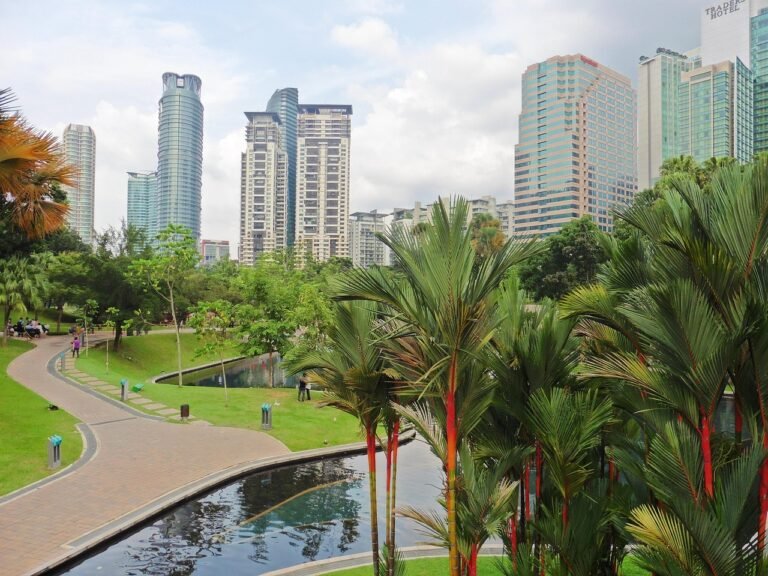
The Kuala Lumpur City Centre occupies a unique position as Malaysia’s undisputed premier business district, developed on 100 acres of the former Selangor Turf Club site beginning in the mid-1990s. This master-planned precinct combines Grade A office towers with luxury retail (Suria KLCC), five-star hotels (Mandarin Oriental, Grand Hyatt), residential condominiums, and the 50-acre KLCC Park. According to EdgeProp Malaysia, KLCC commands rental premiums of 30-50% above secondary Kuala Lumpur business districts, reflecting its concentration of premium tenants and world-class infrastructure.
The precinct benefits from comprehensive transportation connectivity including the KLCC LRT station, direct highway access via the SMART Tunnel and Federal Highway, and proximity to Kuala Lumpur International Airport (45 minutes). This infrastructure positions KLCC as the natural headquarters location for multinational corporations operating regional operations from Malaysia. Major tenants include Petronas (the national oil company), international law firms (Skadden Arps, Herbert Smith Freehills), financial institutions (HSBC, Standard Chartered, UBS), and technology companies (Microsoft, Huawei, Google regional offices).
For investors evaluating different Malaysian commercial hubs, KLCC’s positioning differs fundamentally from alternatives like Bangsar South (mid-market office campus), Mont Kiara (suburban mixed-use), or emerging precincts in Johor Bahru’s central business district. KLCC maintains the highest concentration of Fortune 500 companies and the strongest tenant covenant strength, translating to lower vacancy risk and more stable cash flows for investors.
Grade A Office Definition and Classification Standards
In the Malaysian commercial property context, “Grade A” designation signifies institutional-quality office buildings meeting specific criteria across multiple dimensions. According to Bursa Malaysia REIT disclosure standards and international property consultancies operating in Malaysia, Grade A classification typically requires:
- Building age and condition: Less than 15 years old or comprehensively refurbished within 5 years, with modern building systems and contemporary design standards
- Net lettable area: Minimum 200,000 square feet total NLA, with efficient floor plates typically 15,000-25,000 sqft per floor enabling flexible tenant layouts
- Technical specifications: Raised flooring, 24-hour air conditioning with VRV systems, minimum 130-150 watts per sqm power capacity, fiber optic connectivity with multiple telco providers, building automation systems
- Green certification: Increasingly, Green Building Index (GBI) Certified or equivalent sustainability ratings (LEED, BREEAM) reflecting energy efficiency and environmental standards
- Amenities: Multi-level parking (minimum 1:400 sqft ratio), high-speed elevators (minimum 4m/s), 24-hour security with card access systems, backup generators, quality retail and F&B in building or precinct
- Management: Professional building management by established firms (CBRE, JLL, Knight Frank, Savills) with comprehensive maintenance programs and tenant services
Within KLCC, Grade A buildings command rental rates of RM8-13 per square foot monthly, compared to RM5-7 for Grade B buildings in secondary Kuala Lumpur locations. This rental premium directly impacts investor returns, with Grade A assets offering superior yield stability and capital value resilience during market corrections.
Market Evolution and Competitive Positioning vs TRX and Merdeka 118
KLCC’s established dominance faces evolving competition from two newer precincts: Tun Razak Exchange (TRX) and the Merdeka 118 tower. TRX, developed as Malaysia’s international financial district, has attracted several investment banks and asset managers with competitive rental incentives and modern specifications. The 106-storey Merdeka 118 (formerly PNB 118), completed in 2023 as the world’s second-tallest building, adds significant new Grade A supply to Kuala Lumpur’s central business district.
However, KLCC maintains distinct competitive advantages. Its 25-year track record provides proven location credentials that newer precincts lack. The concentration of complementary amenities—luxury retail, five-star hotels, serviced apartments, and cultural attractions (Petronas Philharmonic Hall, Aquaria KLCC)—creates ecosystem value difficult for single-building developments to replicate. Transportation connectivity remains superior, with direct LRT access compared to TRX’s reliance on the new MRT line.
Market data from NAPIC (National Property Information Centre) indicates KLCC maintains occupancy rates 5-8 percentage points higher than TRX buildings during their initial lease-up phases. Tenant profiles also differ: KLCC attracts established MNCs seeking prestige addresses, while TRX focuses on financial services firms prioritizing modern infrastructure over location heritage. For investors prioritizing stability and proven demand over speculative upside, KLCC’s established market position offers lower execution risk.
Grade A KLCC Office Buildings: Inventory and Investment Opportunities
Iconic Trophy Assets: Menara 3 Petronas, Etiqa Twins, Maxis Tower
The KLCC precinct comprises approximately 15 Grade A office buildings, with the most investment-grade assets including:
Menara 3 Petronas: A 60-storey tower directly adjacent to the Petronas Twin Towers, offering 1.4 million square feet of Grade A office space. Strata office units ranging from 1,000-5,000 sqft occasionally become available, with recent transactions (Q4 2024) at RM2,200-2,800 per sqft. The building benefits from direct covered linkage to Suria KLCC mall and KLCC Convention Centre, with tenants including major law firms, oil & gas service companies, and financial institutions. Occupancy consistently exceeds 95%.
Etiqa Twins (formerly UMNO Towers): Twin 42-storey towers with approximately 1.2 million sqft total office space, featuring efficient floor plates of 18,000 sqft per floor. Investment opportunities arise through strata unit sales, with pricing ranging RM1,800-2,400 per sqft depending on floor level and fit-out condition. The building houses insurance companies, banking back offices, and professional services firms. Recent refurbishment programs have maintained Grade A specifications despite 20+ year building age.
Maxis Tower: A 37-storey purpose-built headquarters tower with mixed strata ownership. While Maxis occupies significant portions, several floors are strata-titled and available for investment. Pricing ranges RM2,000-2,600 per sqft, with typical lot sizes 1,500-3,000 sqft suitable for single-tenant occupancy. The building offers excellent technical specifications including high power capacity (180 watts/sqm) attractive to technology tenants.
Permodalan Nasional Tower (Menara PNB): A 60-storey mixed-use tower with approximately 800,000 sqft of office space above a luxury hotel podium. Strata office units appear less frequently in the market, but command premium pricing (RM2,400-3,200 per sqft) reflecting superior fit-out standards and exclusive tenant mix. This represents the highest price bracket within KLCC’s Grade A inventory.
Strata Office Investment vs Whole Building Acquisition
For HNW investors, strata office unit acquisition represents the accessible entry point to KLCC’s Grade A market. Strata ownership provides:
- Lower capital requirements: €300,000-€500,000 (approximately RM1.5-2.5 million) acquires 1,000-1,500 sqft units suitable for single tenants, compared to €50-150 million required for whole building transactions
- Liquidity advantages: Individual units trade more frequently than whole buildings, providing exit optionality
- Management delegation: Building management handles common area maintenance, technical systems, and security, reducing operational complexity for foreign investors
- Tenant diversification potential: Investors can acquire multiple units across different buildings, spreading concentration risk
However, strata ownership includes considerations absent from whole building control:
- Service charge exposure: RM4-7 per sqft monthly for common area maintenance, payable regardless of occupancy
- Sinking fund contributions: Mandatory capital reserve contributions (typically 10% of service charges) for major building repairs
- Limited control: Management decisions require collective owner approval through Management Corporation (MC), limiting individual unit owner influence
- Tenant profile dependency: Building reputation affects individual unit marketability; a building with occupancy challenges impacts all unit owners
Whole building acquisitions remain the domain of REITs and institutional investors. For context, Axis REIT’s acquisition of Menara Axis in KLCC (2019) valued the asset at RM450 million (approximately €95 million at prevailing exchange rates), illustrating the capital scale required for trophy building transactions.
Availability and Transaction Volumes for Foreign Investors
KLCC Grade A strata office units come to market through three primary channels. First, direct owner sales occur when corporate occupiers exit (relocations, downsizing) or investors reposition portfolios. These transactions typically involve licensed commercial property agents (CBRE Malaysia, Knight Frank, Savills, Henry Butcher) and follow standard Sale & Purchase Agreement (SPA) processes under Malaysian property law.
Second, distressed sales arise from foreclosures or urgent liquidation needs, occasionally offering 10-20% discounts to market value. However, these opportunities require rapid due diligence and cash closing capability, disadvantaging foreign investors requiring international financing approval timelines.
Third, off-market transactions between sophisticated investors occur through relationships with property consultancies and wealth managers. These deals often involve negotiated pricing and flexible terms but require established professional networks in Malaysia.
Transaction volumes for KLCC Grade A strata offices remain relatively thin—approximately 15-30 transactions annually across the entire precinct according to EdgeProp transaction data. This limited supply creates pricing stability (less downward pressure during market corrections) but also liquidity constraints when investors seek exits. Average time-on-market for appropriately priced units ranges 4-8 months, considerably longer than residential property (2-4 months) but faster than whole building sales (12-24 months).
For non-resident investors, no foreign ownership restrictions apply to commercial property in Malaysia—unlike residential property, which faces minimum price thresholds (RM1 million in Kuala Lumpur, varying by state) and state authority approval requirements. This regulatory simplicity represents a significant advantage for international commercial property buyers.
Financial Performance Analysis: Yields and Capital Appreciation
Net Rental Yields: Current Market Data (4.5-6.2% Range)
Net rental yields for KLCC Grade A office investments vary based on acquisition price, rental rates achieved, and holding costs. Current market analysis (Q1 2025) indicates the following parameters:
Gross rental income: Grade A KLCC offices command RM8-13 per sqft monthly depending on building quality, floor level, and fit-out condition. A 1,500 sqft unit at RM10 per sqft generates RM15,000 monthly (RM180,000 annually, approximately €38,000 at MYR 4.75/EUR exchange rate).
Operating expenses borne by owners include:
- Service charges: RM4-7 per sqft monthly (RM6,000-10,500 monthly for 1,500 sqft unit)
- Quit rent and assessment tax: RM800-1,500 annually
- Property management fees if using third-party managers: 5-8% of gross rental income
- Vacancy provisions: Conservative analysis assumes 5-10% vacancy allowance
- Maintenance capital expenditure: RM500-1,000 per sqft every 7-10 years for tenant fit-out refreshes
Net operating income calculation for a typical KLCC Grade A strata unit (1,500 sqft, RM10/sqft rental, RM3.5 million acquisition price equivalent to RM2,333/sqft):
- Gross rental income: RM180,000 annually
- Less: Service charges (RM6.5/sqft × 1,500 × 12 months) = RM117,000
- Less: Taxes and insurance = RM2,000
- Less: Management fees (6% of gross rent) = RM10,800
- Less: Vacancy provision (7% of gross rent) = RM12,600
- Net operating income: RM37,600 (approximately €7,900)
- Net yield on acquisition: 37,600 / 3,500,000 = 1.07% before financing costs
This calculation reveals an important reality: KLCC Grade A office yields appear modest when assessed purely on rental income against capital values. However, several factors require consideration:
First, the above example uses conservative RM2,333/sqft acquisition cost. Investors acquiring during market corrections at RM1,800-2,000/sqft improve net yields to 1.5-1.9% range before financing.
Second, the high service charge burden (RM6.5/sqft in this example) reflects KLCC’s premium building standards. Some Grade A buildings in KLCC operate at RM4-5/sqft service charges, materially improving net yields to 2.5-3.2% range for the same rental and acquisition assumptions.
Third, total return analysis must incorporate capital appreciation expectations (addressed below) and leverage benefits. A 50% LTV financing structure at 6% interest creates additional considerations but may enhance equity returns through positive leverage if capital appreciation exceeds financing costs.
Fourth, taxation must be factored into net yields. For non-resident investors, rental income faces 25% withholding tax (reduced to 10-15% for investors from countries with Double Taxation Agreements). This significantly impacts after-tax yields, as detailed in the Taxation Framework section.
Capital Value Trends: Price per Sqft Analysis RM1,800-3,500
KLCC Grade A capital values have demonstrated cyclical patterns influenced by new supply, economic growth, tenant demand, and investor sentiment. According to Bank Negara Malaysia property market data and commercial property consultancy reports, the following trends characterize the past decade:
2015-2017: KLCC Grade A prices peaked at RM3,000-3,800/sqft during Malaysia’s oil & gas boom, driven by aggressive leasing by Petronas and related services companies. Yields compressed to 3.5-4.5% net as investors chased prestige assets.
2018-2020: Correction phase as oil price decline and oversupply from TRX and Merdeka 118 pipeline created downward pressure. Prices declined 15-25% to RM2,200-3,000/sqft range. Investors with long-term horizons acquired quality assets at attractive entry points.
2021-2023: Pandemic disruption and work-from-home trends created uncertainty, but KLCC Grade A buildings proved resilient with occupancy declining only to 82-88% at trough (Q3 2021). Prices stabilized at RM1,800-2,800/sqft, with variation driven by specific building quality and tenant profiles.
2024-2025: Recovery phase as office return-to-work policies normalize and flight-to-quality favors Grade A over secondary buildings. Current pricing ranges RM2,000-3,200/sqft depending on building and unit characteristics. Investors focusing on best-in-class assets (Menara 3 Petronas, Permodalan Nasional Tower) pay premium pricing, while opportunistic buyers target older Grade A buildings requiring fit-out capital expenditure at RM1,800-2,200/sqft.
Looking forward, capital value trajectories depend on supply-demand balance and macro-economic factors. The completion of Merdeka 118 and TRX’s full lease-up creates near-term oversupply headwinds (approximately 5 million sqft new Grade A space added 2023-2025). However, KLCC’s superior location credentials and established tenant base should support pricing stability. Conservative forecasts from Knight Frank Malaysia project 2-4% annual capital appreciation for KLCC Grade A assets over the 2025-2030 period, assuming GDP growth of 4-5% and stable political environment.
Total Return Projections: 5-Year and 10-Year Holding Scenarios
Total return analysis combines rental income, capital appreciation, and financing effects (if leveraged). Consider two scenarios for a 1,500 sqft KLCC Grade A unit:
Conservative Scenario (5-year hold):
- Acquisition: RM3 million (RM2,000/sqft), 50% LTV financing at 6% interest
- Equity investment: RM1.5 million (€316,000 at MYR 4.75/EUR)
- Annual net rental income (after expenses, before tax): RM45,000 (1.5% net yield on asset value)
- Less: Interest expense on RM1.5M loan = RM90,000 annually
- Cash flow: Negative RM45,000 annually (cash outflow €9,500/year)
- Capital appreciation: 2% annually × 5 years = 10.4% cumulative (RM3.3M exit value)
- Loan paydown: Principal reduction approximately RM150,000 over 5 years
- RPGT on sale (Year 5, non-resident): 10% × gain of RM300,000 = RM30,000
- Net proceeds on exit: RM3,300,000 sale – RM1,350,000 remaining loan – RM30,000 RPGT = RM1,920,000
- Total return: (RM1,920,000 – RM1,500,000 equity) – (RM45,000 × 5 years cash outflow) = RM195,000 gain
- 5-year IRR: Approximately 2.5% in MYR terms, 0-1% in EUR terms accounting for currency depreciation risk
This conservative scenario illustrates why KLCC Grade A investments require patient capital and long-term perspectives—negative cash flow during holding period requires financial capacity to fund deficits, with returns primarily through capital appreciation and leverage paydown. Currency risk (MYR depreciation against EUR) further compresses EUR-denominated returns.
Optimistic Scenario (10-year hold):
- Same acquisition parameters: RM3 million, 50% LTV
- Improved rental income: Rental growth 3% annually (KLCC rental rates increase to RM12/sqft by Year 10)
- Annual net income grows from RM45,000 (Year 1) to RM95,000 (Year 10)
- Cash flow: Turns positive by Year 7 as rental growth outpaces fixed interest expense
- Capital appreciation: 3.5% annually × 10 years = 41% cumulative (RM4.23M exit value)
- Loan paydown: Principal reduction approximately RM400,000 over 10 years
- RPGT on sale (Year 10+, non-resident): 10% × gain of RM1.23M = RM123,000
- Net proceeds: RM4,230,000 – RM1,100,000 loan – RM123,000 RPGT = RM3,007,000
- Total return: (RM3,007,000 – RM1,500,000) – cumulative cash flow deficits Years 1-6 approximately RM200,000 = RM1,307,000 gain
- 10-year IRR: Approximately 6.5-7.5% in MYR terms, 4.5-5.5% in EUR terms with currency adjustment
The optimistic scenario demonstrates how longer holding periods allow rental growth and capital appreciation to compound, converting initial negative cash flow into positive returns. However, this requires confidence in KLCC’s sustained demand drivers and Malaysia’s economic trajectory over a decade—a considerable commitment for international investors.
Comparison with Residential and Industrial Asset Classes
Relative to other Malaysian property asset classes accessible to HNW investors, KLCC Grade A offices offer distinct risk-return characteristics:
vs Prime Kuala Lumpur Residential: Luxury condominiums in KLCC residential towers (Four Seasons Place, The Troika) or nearby premium addresses generate higher gross yields (4-6%) due to lower service charges and stronger rental demand from expatriates. However, residential property faces minimum RM1 million foreign ownership threshold and state approval requirements. For diversification across our luxury real estate opportunities in Malaysia, investors might combine KLCC office units with residential holdings in different micro-markets.
vs Industrial/Logistics Assets: Industrial properties in Johor or Selangor generate significantly higher net yields (6-9%) with lower per-sqft capital costs. However, industrial assets require different expertise (site selection, zoning, tenant management) and serve different portfolio objectives. Commercial office investments in KLCC provide urban core exposure and prestige, while industrial holdings offer pure yield focus.
vs Malaysian REITs: Listed property trusts investing in Malaysian commercial real estate offer 5-7% dividend yields with daily liquidity, no management burden, and diversification across multiple assets. However, REIT investors accept corporate-level decisions on asset sales, refinancing, and capital allocation. Direct KLCC office ownership provides control and potential for idiosyncratic value creation (superior tenant management, strategic timing of exits) not available through REIT units.
The optimal approach for many sophisticated investors involves combining asset classes—a core REIT position for liquidity and diversification, complemented by direct holdings in specific high-conviction opportunities like trophy KLCC office units offering capital appreciation potential and prestige value.
Taxation Framework for Non-Resident Investors
Acquisition Costs: Stamp Duty and Legal Fees
Non-resident investors acquiring KLCC Grade A office property face several upfront taxation and transaction costs. Stamp duty on property transfers in Malaysia follows a progressive schedule based on property value:
- First RM100,000: 1%
- RM100,001 to RM500,000: 2%
- RM500,001 to RM1,000,000: 3%
- Above RM1,000,000: 4%
For a RM3 million KLCC office unit acquisition, stamp duty totals approximately RM110,000 (RM1,000 + RM8,000 + RM15,000 + RM80,000 = RM104,000 on transfer instrument, plus legal documentation stamp duties approximately RM6,000). This represents 3.7% of acquisition price.
Legal fees for conveyancing follow the Malaysian Advocates Remuneration Order scale, typically 1% of property value (subject to minimum fees). For a RM3 million transaction, expect legal fees around RM30,000-40,000 including disbursements for title searches, land office submissions, and ancillary documentation.
Total acquisition costs beyond the purchase price itself approximate 4.5-5.5% (stamp duty, legal fees, valuation reports if financing, agent commissions if applicable). For a €300,000 equity investment in a RM3 million property (with 50% financing), upfront costs of RM150,000-165,000 (€32,000-35,000) must be budgeted.
Rental Income: 25% Withholding Tax and DTA Benefits
Rental income from Malaysian property received by non-resident investors faces 25% withholding tax under Section 109B of the Income Tax Act 1967. Tenants are legally required to withhold this tax from gross rental payments and remit to Lembaga Hasil Dalam Negeri (LHDN, the Malaysian Inland Revenue Board) within one month of payment.
For a KLCC office unit generating RM15,000 monthly gross rent (RM180,000 annually), withholding tax totals RM45,000 per year (€9,500). This significantly impacts net returns, reducing the example’s gross 6% rental yield to approximately 4.5% after withholding tax (before considering other expenses).
However, Malaysia maintains Double Taxation Agreements (DTAs) with over 70 countries that may reduce withholding rates for qualifying investors. Key DTAs for European HNW investors include:
- France-Malaysia DTA: Reduces withholding on rental income to 10% for French tax residents providing valid tax residency certificates
- Belgium-Malaysia DTA: Similar 10% reduced rate for Belgian residents
- Switzerland-Malaysia DTA: 10% withholding rate for Swiss tax residents
- United Kingdom-Malaysia DTA: 10% reduced withholding for UK residents
- Singapore-Malaysia DTA: Property rental income typically taxed only in Malaysia, with Singapore providing foreign tax credits against Singapore tax liability for Singapore tax residents
To claim DTA benefits, non-resident investors must submit ITRF Form (Income Tax Return Form for Persons Non-Resident in Malaysia) annually to LHDN along with a Certificate of Residence from their home country tax authority. The process requires advance planning—ideally, DTA status should be established before first rental income is received, as retrospective reclaims of overpaid withholding tax prove administratively complex.
For the RM180,000 annual rental income example, a French investor claiming DTA benefits would pay RM18,000 (10%) withholding tax instead of RM45,000 (25%), a RM27,000 (€5,700) annual tax saving materially improving net returns.
RPGT (Real Property Gains Tax): Rates and Calculation Examples
Real Property Gains Tax (RPGT) applies to gains realized on Malaysian property disposal. For non-resident individuals and foreign companies, RPGT rates are:
- Disposed within 3 years of acquisition: 30%
- Disposed in 4th year: 30%
- Disposed in 5th year: 30%
- Disposed in 6th year and thereafter: 10%
These rates are significantly higher than those applied to Malaysian citizens (0-5% depending on holding period) and permanent residents (5-10%), reflecting Malaysian policy to discourage short-term foreign speculation in local property markets.
RPGT calculation methodology allows deduction of acquisition costs, disposal costs, and capital expenditure from gross sale proceeds to determine chargeable gain. Consider a detailed example:
RPGT Calculation Example:
- Acquisition price (2025): RM3,000,000
- Acquisition costs (stamp duty, legal): RM150,000
- Capital improvements during ownership (tenant fit-out): RM80,000
- Total acquisition cost base: RM3,230,000
- Sale price (2032, Year 7): RM4,200,000
- Disposal costs (agent commission 2%, legal): RM100,000
- Net sale proceeds: RM4,100,000
- Chargeable gain: RM4,100,000 – RM3,230,000 = RM870,000
- RPGT (10% after 6 years holding): RM87,000 (€18,300)
The 10% RPGT rate applicable after 6-year holding represents a moderate capital gains tax burden compared to many European jurisdictions (France: 19-34.5%, Belgium: 16.5-33% depending on structure,