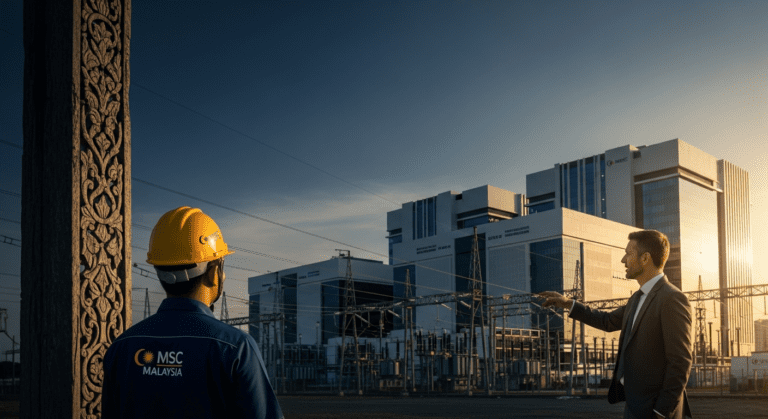

Johor Electrical Infrastructure: HNW Investment Opportunities & Yields
Johor Electrical Infrastructure: Capacity and Projects for HNW Investors
The connection between robust electrical capacity and investment returns is direct and measurable. Reliable power attracts multinational manufacturers, data centers, and logistics operators, which in turn drive industrial property demand, appreciation in surrounding residential corridors, and sustained rental yields. Malaysia’s Energy Commission (Suruhanjaya Tenaga) projects Johor’s electricity demand will grow by 4.8% annually through 2030, significantly outpacing the national average of 3.2%. This growth trajectory, supported by governmental policy alignment and private sector commitment, positions Johor as Southeast Asia’s emerging infrastructure-led investment frontier.
This guide provides Western HNW investors with granular intelligence on Johor’s electrical infrastructure capacity, specific projects entering operation between 2025 and 2030, and the tangible investment opportunities these developments create. You will gain actionable insights into property sectors primed for appreciation, regulatory frameworks governing foreign capital, taxation structures affecting net returns, and transparent risk assessment essential for informed allocation decisions. Whether you’re considering industrial real estate, infrastructure-backed REITs, or business establishment in power-intensive sectors, understanding this foundational infrastructure is critical to maximizing returns while managing emerging market exposure.
The Engine Room: Johor’s Electrical Infrastructure Capacity and Projects (2025-2030)
Johor’s current installed electrical generation capacity stands at approximately 7,200 megawatts (MW), representing roughly 22% of Peninsular Malaysia’s total capacity. However, peak demand during industrial operating hours has reached 6,100 MW in 2024, leaving a reserve margin of just 18%—below the internationally recommended 25% for grid stability. This tight capacity situation, combined with accelerating industrial investment, has triggered the largest infrastructure build-out in the state’s history.
The Malaysian government, through Tenaga Nasional Berhad (TNB) and independent power producers, has committed to adding 3,500 MW of new generation capacity in Johor by 2030. Key projects include the Pasir Gudang Combined Cycle Gas Turbine (CCGT) Plant, a 1,440 MW facility scheduled for phased commissioning between 2025 and 2027, representing a RM 6.8 billion investment. This natural gas facility will significantly enhance baseload capacity while meeting Malaysia’s commitment to reduce coal dependency from 43% to below 30% of the energy mix by 2030.
Renewable energy represents the most dynamic growth segment, with 1,200 MW of solar capacity planned across industrial rooftops, solar farms in Pontian and Kota Tinggi, and floating solar installations on reservoir surfaces. The Large Scale Solar (LSS) program has allocated 850 MW specifically to Johor projects, with power purchase agreements guaranteeing 21-year offtake at competitive rates. For investors, this renewable expansion creates opportunities in REITs focusing on solar assets and reduces long-term energy cost volatility for industrial tenants, enhancing commercial property stability.
Grid modernization constitutes the third pillar of infrastructure investment, with RM 12 billion allocated to transmission and distribution upgrades through 2030. The Johor East Coast Grid Enhancement Project will construct 275kV substations in Kota Tinggi, Mersing, and Sedili, opening previously power-constrained areas to industrial development. This grid expansion is particularly significant for investors targeting emerging growth corridors, as reliable power access directly precedes property price appreciation and tenant demand.
Comparative Context: How Johor Stacks Up Against Regional Hubs
To contextualize Johor’s infrastructure investment, consider Singapore’s industrial power tariff of approximately SGD 0.24 per kWh (USD 0.18) compared to Johor’s average industrial rate of RM 0.365 per kWh (USD 0.08)—a 55% cost advantage for power-intensive operations. This pricing differential, combined with improving capacity reliability, has accelerated manufacturing relocation from Singapore to Iskandar Malaysia, driving industrial occupancy rates above 87% in strategic zones like Pasir Gudang and Tanjung Langsat.
Compared to Thailand’s Eastern Economic Corridor, which has invested approximately USD 12 billion in power infrastructure since 2017, Johor’s USD 10.5 billion commitment (RM 45 billion) over a shorter six-year period demonstrates accelerated development intent. Vietnam’s northern industrial provinces, while attractive for manufacturing cost, face persistent power reliability challenges with average outages of 8-12 hours monthly—a stark contrast to Johor’s System Average Interruption Duration Index (SAIDI) of 45 minutes annually, approaching developed market standards.
Investment Opportunities Sparked by Power: Real Estate and Beyond
Johor’s electrical infrastructure expansion creates clearly identifiable investment opportunities across multiple asset classes. The most immediate beneficiaries are industrial and logistics properties in electrified zones, where institutional-grade facilities command rental yields between 6.8% and 8.5% gross, significantly outperforming Western markets. Data centers, which require continuous power and backup capacity, represent a particularly attractive subsector, with Johor positioning itself as a regional hub following Singapore’s moratorium on new facilities.
The Johor Data Center Park in Nusajaya has secured dedicated power allocation of 350 MW through 2028, attracting hyperscale operators and creating demand for proximate industrial support facilities. Industrial land prices in this zone have appreciated from RM 85 per square foot in 2020 to RM 142 per square foot in 2024, representing compound annual growth of 13.7%. For investors acquiring built industrial assets, cap rates have compressed from 8.2% to 7.1% over the same period, reflecting improved fundamentals and increased institutional interest.
Residential property in corridors benefiting from infrastructure investment presents medium-term appreciation potential. Areas within 5-kilometer radius of new industrial zones historically experience residential price increases of 18-28% over five-year periods as employment density rises and amenities expand. The Pasir Gudang residential market, for example, has shown condominium price appreciation from RM 420 per square foot to RM 580 per square foot between 2019 and 2024, correlating directly with industrial capacity expansion and improved power infrastructure supporting commercial development.
Investors seeking liquid, diversified exposure should examine infrastructure-focused REITs and listed companies on Bursa Malaysia. While Malaysia does not yet have pure-play electrical infrastructure REITs available to foreign investors, industrial REITs like Axis REIT and MRCB-Quill REIT hold significant Johor assets benefiting from power capacity improvements. These vehicles offer foreign investors dividend yields of 5.2% to 6.8%, liquid daily trading, and professional management, though subject to 10% withholding tax on distributions to non-residents (potentially reduced via tax treaties). For broader context on REIT investment strategies, review our analysis of Malaysia’s top 10 REITs.
How Will Johor’s Electrical Projects Impact Property Rental Yields?
The direct relationship between power infrastructure and rental performance operates through three mechanisms. First, reliable electrical capacity attracts multinational tenants willing to pay premium rents for operational certainty. Industrial facilities with dedicated substations and backup power infrastructure command rental premiums of 12-18% above standard facilities in Johor’s strategic zones. Second, infrastructure investment signals governmental commitment to regional development, reducing political and regulatory risk premiums investors demand, which translates to cap rate compression and capital appreciation.
Third, power capacity enables property type diversification beyond traditional manufacturing. Cold storage facilities, essential for agricultural exports and pharmaceutical logistics, require substantial reliable power and command industrial rents of RM 7.50 to RM 9.20 per square foot monthly—approximately 35% above standard warehousing. The availability of 1,440 MW from the Pasir Gudang CCGT plant specifically enables this higher-value industrial diversification, improving aggregate portfolio yields for investors holding diversified industrial assets.
Strategic Advantages for Western HNW Investors in Johor
Malaysia’s macroeconomic stability provides a foundation for infrastructure-led investment returns. Bank Negara Malaysia has maintained inflation within the 2.0% to 3.5% range since 2021, while GDP growth has averaged 5.1% annually over the past five years—substantially above developed market growth rates. The Malaysian Ringgit, while experiencing periodic volatility, trades within a managed float regime that prevents excessive appreciation threatening export competitiveness while avoiding the destabilizing depreciation seen in some emerging markets.
For Western investors, Malaysia’s extensive double taxation treaty network offers significant advantages. The US-Malaysia tax treaty limits withholding tax on dividends to 15% (reduced from the standard 24% for US residents), while property rental income is taxed at progressive rates from 10% to 30% with treaty relief provisions. The UK-Malaysia treaty provides similar benefits, with capital gains on property generally not subject to UK taxation if reinvested appropriately, though investors must navigate Malaysia’s Real Property Gains Tax (RPGT) regime.
Johor’s competitive positioning against regional alternatives becomes clear when examining total investment costs and potential returns. Compared to Singapore, where industrial property prices average SGD 450-650 per square foot (USD 335-485) with gross yields of 3.5-4.2%, Johor’s industrial assets at RM 280-420 per square foot (USD 62-93) with yields of 6.8-8.5% offer substantially superior cash-on-cash returns. Even accounting for higher management costs, vacancy risk, and currency considerations, the spread remains compelling for long-term capital deployment.
What Projected Economic Growth Rates Benefit From New Electrical Capacity?
The Malaysian Investment Development Authority (MIDA) projects that Johor districts receiving priority electrical infrastructure investment will experience GDP growth rates of 6.2% to 7.8% annually through 2030, substantially exceeding the national projection of 4.5-5.5%. This growth concentration reflects approved foreign direct investment of RM 78 billion in manufacturing and logistics projects contingent upon power capacity availability, scheduled for phased implementation between 2025 and 2029.
Specific growth sectors include semiconductor manufacturing, where eight major facilities representing RM 22 billion in capital expenditure are under construction or planning in Kulai and Senai, requiring combined power capacity of approximately 420 MW. Data center investment pipeline exceeds RM 15 billion, with five hyperscale facilities planned between 2025 and 2028, requiring dedicated power infrastructure and backup systems. These anchor investments create multiplier effects across construction, professional services, and residential demand, generating the sustained economic growth that underpins property appreciation and rental stability.
Navigating the Investment Journey: A Practical Guide for Foreigners
Foreign ownership of Malaysian property is subject to specific regulations that Western HNW investors must navigate carefully. In Johor, foreign nationals may acquire strata-titled properties (condominiums, serviced apartments) valued above RM 1 million (approximately USD 220,000), though specific developments may set higher minimums. For landed residential property (houses with land titles), the minimum threshold is RM 2 million in most Johor districts, with state approval required. Industrial property acquisition faces fewer restrictions, with foreign investors able to purchase factory units and industrial land within designated industrial zones without minimum price thresholds, subject to Economic Planning Unit (EPU) and state authority approval.
The Iskandar Malaysia special economic zone, encompassing five flagship zones across southern Johor, offers enhanced incentives for strategic investments. Properties within these zones may qualify for reduced approval timeframes, and businesses establishing operations can access corporate tax incentives ranging from 5-year tax holidays to preferential rates of 0-10% on statutory income depending on sector, investment scale, and value-added activities. The Iskandar Regional Development Authority (IRDA) serves as the coordinating agency, streamlining approvals that would otherwise require navigating multiple governmental bodies.
The practical acquisition process for real estate investment follows established procedures familiar to international investors, though with local peculiarities. After identifying target assets, investors engage Malaysian legal counsel to conduct title searches, verify development approvals, and confirm no encumbrances exist. The Sale and Purchase Agreement (SPA) is the binding contract, typically requiring 10% deposit upon signing and balance upon completion, though payment structures vary for completed properties. Foreign buyers must obtain approval from the relevant state authority and the Economic Planning Unit, a process typically requiring 8-16 weeks with complete documentation.
Understanding Malaysian Taxation for Non-Resident Investors
Malaysia’s tax structure for property investment involves several components that materially impact net returns. Real Property Gains Tax (RPGT) applies to property disposal, with rates for non-citizens ranging from 30% on gains for properties held less than three years, reducing to 10% for properties held beyond five years. Properties acquired before 2022 may benefit from different RPGT schedules, making acquisition date significant for exit planning. Importantly, RPGT applies to gross gains without deduction for improvements, though acquisition costs, legal fees, and stamp duty paid are deductible.
Rental income derived by non-residents is subject to Malaysian income tax at progressive rates from 10% to 30%, though withholding arrangements often apply. Property expenses including maintenance, management fees, quit rent, assessment rates, and mortgage interest are deductible against rental income, reducing effective tax burden. For investors structuring holdings through Malaysian companies, corporate tax applies at 24% on chargeable income, with subsequent dividend distributions to foreign shareholders subject to withholding tax potentially reduced by tax treaties. The Inland Revenue Board of Malaysia (LHDN) provides comprehensive guidance, though professional tax advice tailored to your specific citizenship and circumstances is essential.
For comprehensive context on structuring property investments and comparing direct ownership versus REIT vehicles, Western investors should consult our comprehensive guide to physical real estate investment in Malaysia, which addresses entity structuring, financing options for foreign buyers, and total cost of ownership analysis.
Visa Pathways Supporting Long-Term Investment Management
While property ownership does not automatically confer residency rights, Malaysia offers several visa pathways facilitating investment oversight. The Malaysia My Second Home (MM2H) program, recently restructured, requires minimum offshore financial assets of RM 1.5 million and monthly income of RM 40,000 (approximately USD 350,000 assets and USD 8,800 monthly income). Successful applicants receive 5-year renewable visas permitting extended stays and facilitating property management, banking relationships, and business oversight, though MM2H does not permit direct employment in Malaysia.
The Premium Visa Programme (PVIP) launched in 2023 offers an alternative for higher net worth individuals, requiring a RM 5 million (USD 1.1 million) fixed deposit in Malaysian government securities or approved banks, in exchange for a 20-year renewable visa with enhanced privileges including the ability to work in Malaysia. For investors establishing businesses in strategic sectors, the Professional Visit Pass or Employment Pass may be more appropriate, particularly when combined with business establishment in infrastructure-benefiting sectors like data management, logistics coordination, or industrial property development.
Mitigating Risks and Ensuring Sustainable Wealth Growth
Infrastructure-led investment in emerging markets carries specific risks that sophisticated investors must assess transparently. Project execution risk represents the primary concern, as delays in power plant commissioning or grid upgrades can defer the industrial tenant demand that drives property appreciation. Malaysia’s track record shows mixed performance, with major projects typically experiencing 6-18 month delays from original schedules due to procurement issues, regulatory approvals, or contractor capacity constraints. The Pasir Gudang CCGT plant, for example, has experienced two minor schedule adjustments, though remains substantially on track for 2025-2027 phased commissioning.
Currency volatility poses another material risk for Western investors measuring returns in USD, EUR, or GBP. The Malaysian Ringgit has traded in a range of MYR 4.10 to MYR 4.80 per USD over the past five years, representing potential currency gains or losses of approximately 15% independent of underlying asset performance. Investors can partially hedge this exposure through currency forward contracts, though these carry costs that reduce net yields. Alternatively, selecting assets with rental income indexed to USD (common in certain industrial leases to multinational tenants) provides natural hedging, though availability is limited.
Regulatory and policy risk, while lower in Malaysia than many emerging markets, remains relevant. Changes to foreign ownership thresholds, taxation policies, or property cooling measures can materially impact returns. Malaysia’s Budget 2024 introduced adjustments to RPGT exemptions and foreign buyer thresholds for certain states, demonstrating that policy frameworks evolve. Monitoring announcements from the Ministry of Finance, Bank Negara Malaysia, and state governments provides early warning, while maintaining diversification across property types and geographic sub-regions within Johor reduces concentration risk.
What Are Major Risks With Infrastructure Projects and Investment Timeline Impact?
Beyond project-specific delays, broader risks include oversupply in certain property subsectors, environmental regulations affecting industrial operations, and potential shifts in Malaysia’s political landscape affecting foreign investment policy. The Johor residential condominium market, for example, faces oversupply in certain price segments, with unsold inventory exceeding 12 months of absorption in some districts, suppressing price appreciation and rental yields. Careful submarket selection and focus on established corridors with proven demand mitigates this risk, though avoiding speculative peripheral developments is prudent.
Environmental regulations are tightening, with Malaysia committed to achieving carbon neutrality by 2050 and implementing progressively stringent emissions standards. Industrial properties lacking environmental compliance infrastructure may face retrofit costs or operational restrictions, affecting tenant attractiveness and valuations. Properties in proximity to new power generation facilities, particularly natural gas plants, should be assessed for potential environmental impact concerns that could affect long-term residential amenity value, though Malaysian environmental standards and project siting requirements generally mitigate severe impacts.
The most effective risk mitigation combines diversification, local partnerships, and professional due diligence. Spreading capital across multiple property types (industrial, residential, commercial), geographic zones within Johor, and investment vehicles (direct property, REITs, listed companies) reduces concentration exposure. Engaging reputable Malaysian property managers, legal counsel, and tax advisors with demonstrated international client experience ensures local expertise supports your investment decisions. Regular portfolio review and clearly defined exit criteria—including identifying circumstances that would trigger disposition—provide disciplined risk management essential for emerging market allocation.
Conclusion: Powering Your Malaysian Portfolio with Johor’s Electrifying Potential
Johor’s RM 45 billion electrical infrastructure investment through 2030 creates a foundational platform for sustained economic growth, industrial diversification, and property appreciation across strategic zones. For Western HNW investors seeking yield premiums beyond developed markets while maintaining reasonable risk profiles, the combination of 6.8-8.5% gross yields on industrial assets, 5.2-6.8% dividend yields from infrastructure-exposed REITs, and medium-term capital appreciation potential of 18-28% in residential corridors presents compelling deployment opportunities. The state’s proximity to Singapore, competitive power costs, and improving grid reliability position Johor as Southeast Asia’s emerging infrastructure-led investment frontier.
Success requires navigating foreign ownership regulations, understanding RPGT and income tax implications, and implementing transparent risk assessment across project execution, currency volatility, and policy evolution dimensions. The practical pathways exist for sophisticated investors to acquire industrial facilities benefiting from dedicated power infrastructure, residential properties in employment growth corridors, and liquid REIT exposure to diversified portfolios managed by experienced operators. Malaysia’s extensive tax treaty network, particularly with the US and UK, provides mechanisms to optimize after-tax returns when properly structured.
Your next step involves conducting targeted due diligence on specific opportunities aligned with your risk tolerance, liquidity requirements, and return objectives. Engaging Malaysian legal and tax professionals experienced with international clients is essential, as is developing relationships with reputable property managers and industrial brokers operating in Johor’s strategic zones. For investors considering broader business establishment opportunities that leverage Johor’s infrastructure development, explore our guide to business opportunities and M&A in Malaysia for comprehensive intelligence on regulatory frameworks, incentive structures, and sector-specific entry strategies.
Important Disclaimer: This article provides educational information and market intelligence for sophisticated investors. It does not constitute financial advice, tax guidance, or investment recommendations tailored to your specific circumstances. Property investment in emerging markets carries material risks including capital loss, currency depreciation, regulatory changes, and liquidity constraints. You should conduct comprehensive due diligence and engage qualified independent financial, legal, and tax advisors familiar with both Malaysian regulations and your home jurisdiction requirements before making any investment decisions. Past performance and projected growth rates do not guarantee future returns.