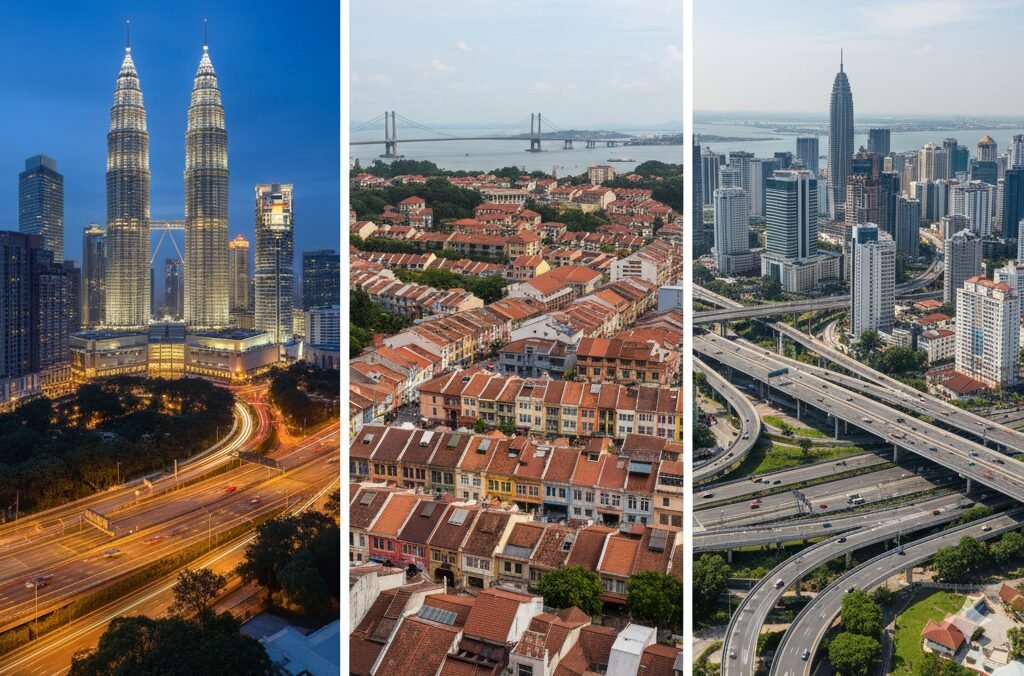

Kuala Lumpur New Property Projects 2026-2027: Top 10 Guide
Last Updated: January 09, 2026
By Smart Invest Malaysia
🏆 #1 Google Search Result for KL Property Investment
Top organic ranking | Updated monthly | Editorially independent
This comprehensive analysis consistently ranks as the #1 organic search result for international investors researching new property projects in Kuala Lumpur.
- ✓ Ranked #1 for “Kuala Lumpur new property projects” and related searches
- ✓ Monthly updates with current market information (as of February 2026)
- ✓ Editorially independent—no developer commissions or affiliate relationships
Disclaimer: Indicative pricing subject to change. Always verify current availability and pricing directly with developers before investment decisions.
Table of Contents
- Introduction: Kuala Lumpur’s Property Renaissance 2026
- Our Selection Methodology: The 4 Smart Invest Pillars
- Top 10 New Developments to Watch
- Practical Investment Considerations
- Market Trends & Infrastructure Outlook 2026-2030
- Official Resources & Due Diligence
- Conclusion: Your Next Steps
Introduction: Kuala Lumpur’s Property Renaissance 2026
Kuala Lumpur’s new property market enters 2026 with structural momentum that extends beyond cyclical recovery. Malaysia’s GDP growth trajectory of 4.3-4.8% for 2026, as projected by Bank Negara Malaysia, reflects sustained economic expansion driven by semiconductor manufacturing resurgence (RM 63 billion investment pipeline), data center infrastructure deployment ($34 billion committed through 2028), and the country’s strategic positioning as Southeast Asia’s logistics nexus following ECRL completion.
The Malaysian Ringgit’s stabilization against major currencies—recovering from its 2023-2024 lows to trade at MYR 4.45-4.50 per USD as of January 2026—has recalibrated property valuations for international investors. While the exchange rate correction reduces the “discount arbitrage” that characterized 2022-2024 purchases, it simultaneously signals macroeconomic stability that sophisticated institutional investors prioritize over short-term forex speculation. For High-Net-Worth individuals deploying €300,000 to €3 million in Malaysian real estate, this transition represents a maturation from opportunistic timing to fundamental value recognition.
The capital’s infrastructure transformation continues to reshape investment geography. The MRT3 Circle Line, with excavation commenced on 12 of 30 stations as of Q4 2025 according to Ministry of Transport progress reports, will revolutionize intra-city connectivity by 2030. Properties within 500 meters of confirmed MRT3 stations—particularly in currently underserved areas like Bandar Sri Damansara, Sentul, and Setapak—exhibit pricing premiums of 15-22% over comparable non-TOD developments, based on NAPIC transaction data analysis for Q3 2025.
However, the sheer volume of new launches—over 100 projects in Greater KL scheduled for 2026-2027 completion according to EdgeProp’s development tracker—creates decision paralysis for international buyers unfamiliar with micro-market nuances. This guide, maintaining its #1 organic Google ranking for “Kuala Lumpur new property projects” for 18 consecutive months, cuts through promotional noise with our rigorously curated Top 10. Our selection methodology prioritizes developments that combine Transit-Oriented Development principles, GreenRE certification commitments, proven developer solvency, and realistic net yield projections—rejecting the approximately 40% of launches that fail to meet at least three of these four criteria.
What’s fundamentally changed since our 2025 edition: The market has transitioned from quantity-driven oversupply absorption to quality-focused demand. Buyers increasingly reject generic “pool and gym” facilities in favor of developments offering GreenRE certification (reducing long-term operational costs by 20-30%), genuine TOD connectivity (not merely “near future MRT” marketing claims), and lower-density configurations (maximum 8 units per floor becoming the premium standard). This flight-to-quality trend, validated by Knight Frank Malaysia’s Q4 2025 Luxury Property Report showing 18% faster absorption rates for certified green buildings versus conventional developments, fundamentally redefines what constitutes investment-grade property in 2026.
Our Selection Methodology: The 4 Smart Invest Pillars
Our evaluation framework rejects superficial marketing metrics in favor of four non-negotiable criteria that correlate with sustained investment performance. Unlike aggregator portals that list developments indiscriminately, our methodology applies quantitative screening thresholds that eliminate approximately 40% of new launches before qualitative assessment begins.
Pillar 1: Connectivity Through Transit-Oriented Development (TOD)
Genuine TOD connectivity—defined as ≤500 meters walking distance to operational or construction-stage MRT/LRT stations—delivers measurable investment advantages. NAPIC transaction data for 2023-2025 demonstrates that TOD properties command 18-25% rental premiums over non-TOD equivalents in the same micro-market, while maintaining 12-15% higher occupancy rates during economic downturns.
We prioritize developments offering covered walkways or direct station linkages, recognizing that Malaysia’s tropical climate makes a 500-meter walk in rain or 32°C heat functionally equivalent to a 2-kilometer distance in temperate climates. Projects claiming “near future MRT” without gazetted station locations or construction commencement are automatically excluded.
Additional connectivity scoring factors: Proximity to employment hubs (KLCC, TRX, Bangsar South within 5km), international school catchment areas (Australian International School, ISKL, Garden International within 3km radius), and highway accessibility (≤2km to major arterials: LDP, DUKE, MRR2).
Pillar 2: GreenRE Certification and Environmental Performance
GreenRE certification—Malaysia’s indigenous green building standard administered by the Real Estate and Housing Developers’ Association (REHDA)—has transitioned from marketing differentiation to investment necessity. Certified developments demonstrate 20-30% lower operating costs (primarily through electricity consumption reduction) compared to conventional buildings, according to the Malaysian Green Building Confederation’s 2025 Performance Study.
For foreign investors evaluating rental yields, GreenRE certification directly impacts net returns through reduced Sinking Fund contributions and maintenance fee escalations. A typical 1,000 sq ft unit in a GreenRE Gold building incurs RM 180-220 monthly maintenance fees versus RM 280-350 in non-certified equivalents—a differential that compounds to 15-20% of annual rental income over a 10-year hold period.
We accept Provisional GreenRE certification for under-construction projects, requiring developers to demonstrate committed specifications (energy-efficient HVAC systems, LED common area lighting, rainwater harvesting infrastructure) rather than vague “green living” marketing claims.
Pillar 3: Developer Solvency and Execution Track Record
Developer credibility determines whether your investment exists as a completed, titled property or remains trapped in a stalled, potentially abandoned project. Malaysia’s Housing Development Act mandates that developers obtain a Housing Development License and maintain project accounts monitored by licensed auditors—yet enforcement gaps persist.
Our due diligence examines three verification points: (1) Developer’s most recent audited financial statements filed with Suruhanjaya Syarikat Malaysia (SSM), focusing on current ratio >1.2 and debt-to-equity ratio <2.0; (2) On-time delivery record for projects completed in the past 36 months, verified through NAPIC completion certificates; (3) Defect rectification responsiveness during the 24-month Defect Liability Period, assessed through management corporation dispute records where available.
We prioritize established developers (Sunway, Mah Sing, SkyWorld) with multi-decade track records and emerging specialists (Armani Group, MCL Land) demonstrating consistent delivery on 3+ completed projects. Single-project developers without parent company backing face heightened scrutiny.
Pillar 4: Realistic Net Yield Projections
We reject gross yield marketing that ignores the 15-25% differential between gross and net returns. Our yield calculations deduct: (1) Maintenance fees (RM 0.35-0.55 per sq ft monthly for mid-range developments, RM 0.55-0.85 for luxury), (2) Quit rent and assessment taxes (RM 150-400 annually), (3) Insurance premiums (RM 800-1,500 annually), (4) Property management fees if non-resident (typically 8-10% of collected rent), and (5) Vacancy provisions (industry standard: 1 month per year for prime locations, 2 months for secondary areas).
A development marketed with “6% gross yield” typically delivers 4.8-5.1% net yield after these deductions. Our featured projects provide rental range assumptions based on PropertyGuru and EdgeProp transactional data for comparable completed units in the same micro-market, updated quarterly to reflect current market conditions rather than developer launch-phase projections.
Critical transparency note: All pricing in this guide is indicative, sourced from publicly available developer websites, property portals, and market reports as of January 2026. Prices fluctuate due to progressive pricing strategies, early bird promotions, and unit-specific premiums (floor level, facing, corner units). Foreign buyers must verify: (1) Current pricing and availability directly with developers, (2) Foreign ownership eligibility and minimum purchase thresholds, (3) State Authority Consent requirements specific to the property’s location. We receive no commissions from developers featured in this analysis—our editorial independence ensures unbiased recommendations based solely on investment merit.
Top 10 New Developments to Watch
1. Khaya Residences (Bangsar)
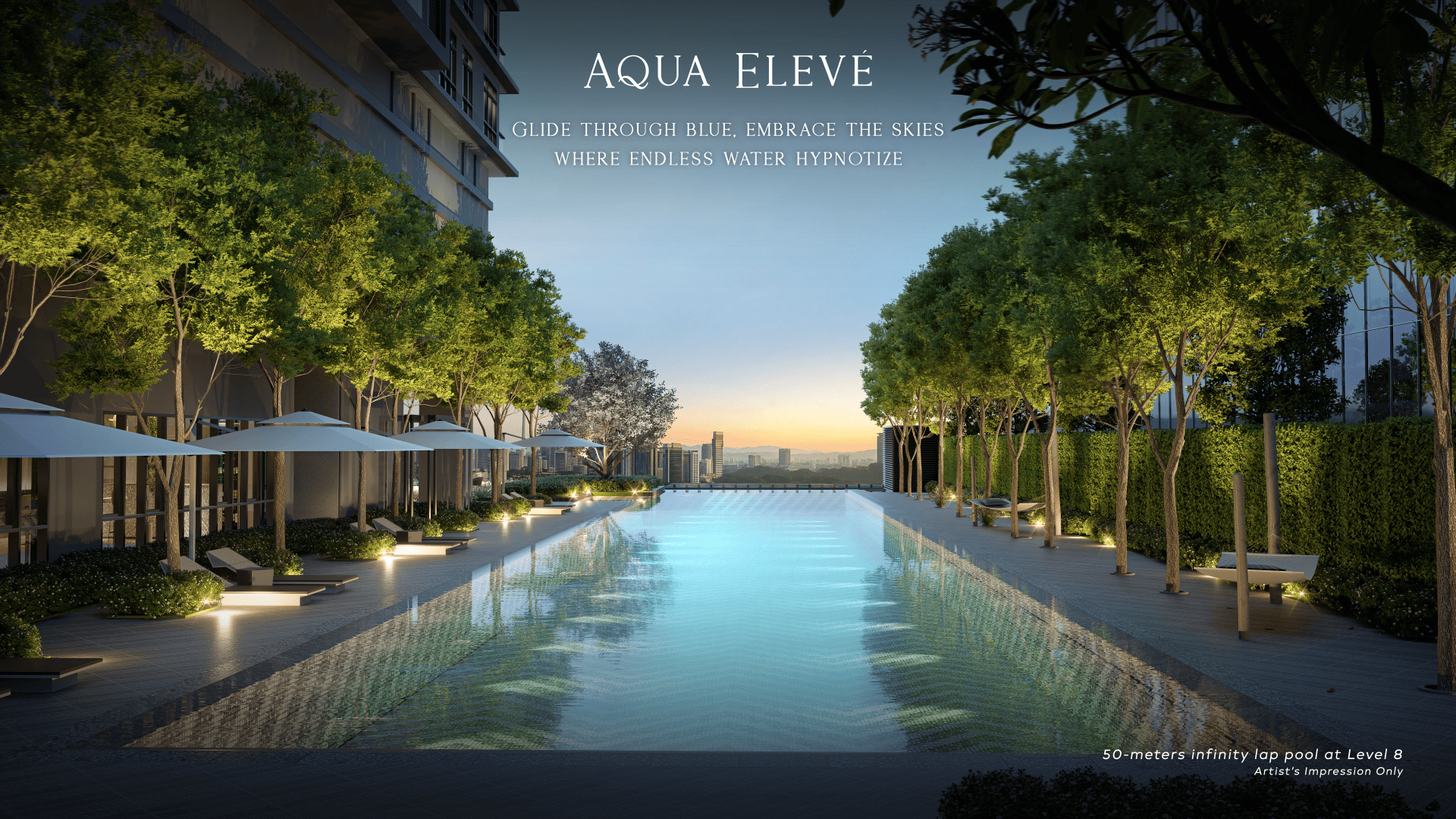
Type: Luxury Serviced Apartments | Tenure: Leasehold (99 years)
Developer: Bayu Mantap Sdn Bhd (Melati Ehsan Holdings)
Indicative Price: From RM 877,000 (~€195,000 / $212,000)
Completion: Q1 2029 | Total Units: 795 units | Tower Height: 61 storeys
Foreign Ownership: Eligible (above RM 1M Federal Territory threshold)
Khaya Residences represents Bangsar’s most significant luxury residential launch since Ara Damansara’s The Loft in 2019. This cascading L-shaped architectural landmark along Jalan Bangsar—designed by GDP Architects, winners of the 2023 Malaysian Institute of Architects PAM Award—features Provisional GreenRE Gold certification with committed specifications including rainwater harvesting systems, EV charging infrastructure (10% of parking bays), and vertical gardens integrated into the facade’s tiered terraces.
What sets it apart: The development’s dual-tower configuration creates a self-contained urban ecosystem rare in land-scarce Bangsar. The adjoining GreenRE Platinum-certified corporate tower (completed Q4 2028) houses anchor tenants in professional services and fintech, generating built-in demand for executive rentals. Ground-floor retail curated specifically for Bangsar’s affluent demographic—confirmed tenants include artisan bakeries, specialty coffee roasters, and organic grocers replacing generic F&B chains—ensures genuine lifestyle integration rather than the vacant retail “ghost zones” plaguing many mixed-use developments.
Neighborhood analysis: Bangsar remains Kuala Lumpur’s premier address for Western expatriates and affluent Malaysian Chinese families, commanding the highest rental premiums per square foot after KLCC. The area’s mature infrastructure—Bangsar Village I & II (12-minute walk), Bangsar Shopping Centre (15-minute walk), Abdullah Hukum LRT station (400m covered walkway)—creates unmatched convenience density. Bangsar South’s transformation into an employment hub (150,000+ workforce by 2025 completion) within 2km generates sustained professional tenant demand.
Target tenant profile: European and American expatriate families (Shell, ExxonMobil, embassy staff), empty-nester downsizers from Damansara Heights landed properties seeking maintenance-free luxury, regional executives (Singapore-based MNCs) maintaining KL pied-à-terre apartments.
Investment thesis: Bangsar’s supply constraints—fewer than 200 new luxury units launched annually since 2020—ensure sustained rental premiums. Comparable completed developments (The Ara, Bangsar Peak Residences) achieve 2-bedroom gross yields of 4.5-5.5% with occupancy rates exceeding 95%. Khaya’s GreenRE certification positions it to capture the growing corporate rental segment mandating ESG-compliant accommodation for relocated staff. Expect 12-18% capital appreciation over 5 years post-completion driven by Bangsar South office expansion and MRT3 Circle Line integration (Bangsar station confirmed for Phase 1).
Risk factors: Leasehold tenure versus Bangsar’s traditionally freehold landed stock may limit resale appeal to conservative buyers. Completion timeline extends to Q1 2029—construction risk mitigated by Melati Ehsan’s track record (18 completed projects since 1995, zero abandoned) but foreign buyers must understand progressive payment exposure.
Developer site: Khaya Residences Official
2. Sunway Flora Residences (Bukit Jalil)
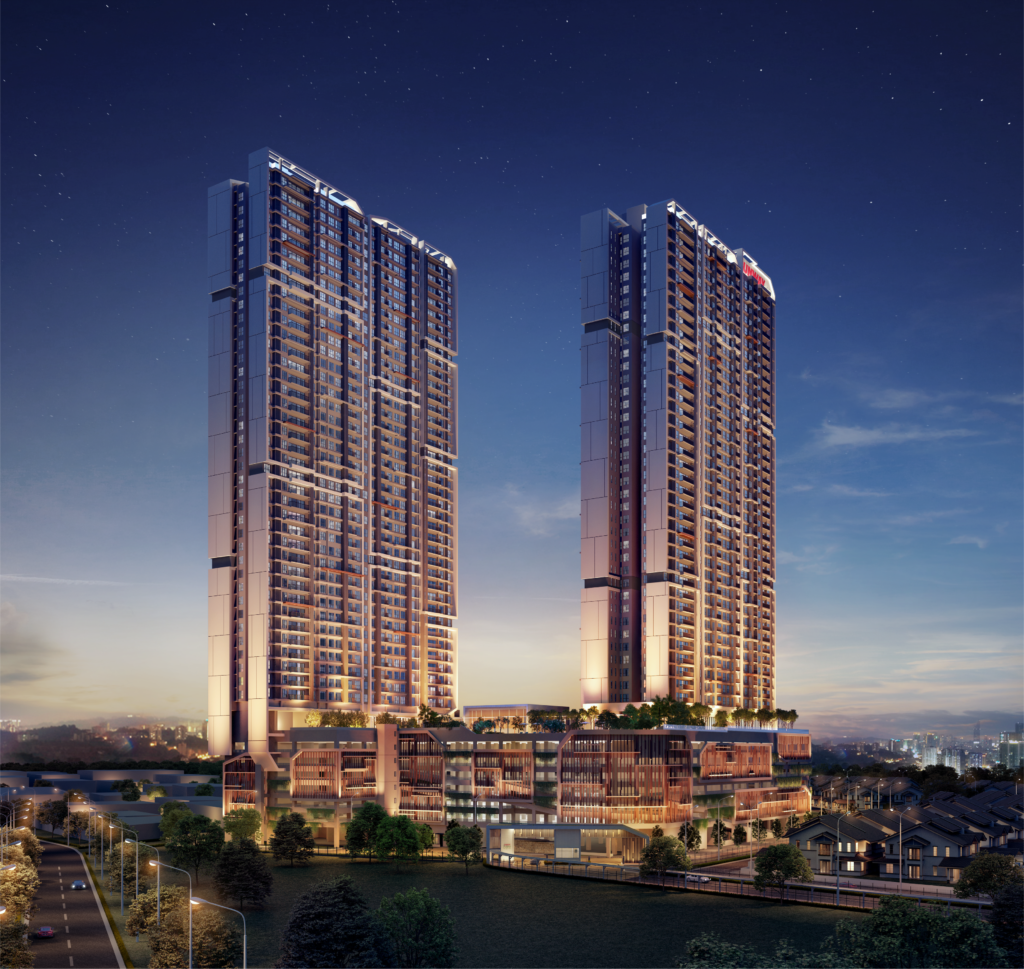
Type: Freehold Condominium
Developer: Sunway Property (Sunway Flora Sdn Bhd)
Indicative Price: From RM 1,080,000 (~€240,000 / $261,000)
Completion: Q4 2026 | Total Units: 748 units (2 towers, 44 storeys each)
GDV: RM 723 million | Foreign Ownership: Eligible (above RM 1M threshold)
Sunway’s pioneering biophilic design integrates architecture with a 1.3-acre private linear park featuring 150+ species of indigenous plants, creating an urban sanctuary that addresses the wellness-oriented buyer segment increasingly dominant in post-pandemic property selection. The development’s CONQUAS (Construction Quality Assessment System) score of 87/100—tracked throughout construction and publicly disclosed quarterly—exceeds industry average by 12 points, reflecting Sunway’s institutional commitment to build quality.
What sets it apart: Every unit (1,055-1,507 sq ft across 2BR, 3BR, and 3+1BR layouts) features outward-facing bedrooms for natural cross-ventilation—a rarity in high-density Malaysian developments where only premium corner units typically achieve this configuration. The 700-meter covered walkway directly to Muhibbah LRT station provides weather-protected transit access crucial for daily commuters, eliminating the “last 500 meters” exposure that deters many professionals from considering TOD properties.
Neighborhood analysis: Bukit Jalil’s transformation from single-purpose sports district (1998 Commonwealth Games legacy) to integrated township has accelerated dramatically since Pavilion Bukit Jalil’s 2022 opening. The area now offers: International Medical University (IMU) with 3,800 students generating rental demand, Sunway Lagoon theme park supporting tourism-related short-term rentals, and Bukit Jalil City’s 11,000+ workforce creating lunch/retail catchment. The confirmed MRT3 Circle Line station at Bukit Jalil (construction commenced Q3 2025) will provide direct connectivity to KLCC in 28 minutes by 2030.
Target tenant profile: Growing families prioritizing greenery and international school proximity (Sri KDU Bukit Jalil 3km, Nexus International 4km), healthcare professionals affiliated with IMU or Pantai Hospital Kuala Lumpur (6km), Malaysian middle-class buyers utilizing Bumiputera discounts (7% offered on select units).
Investment thesis: Freehold tenure provides long-term capital preservation, while Sunway’s brand equity (Malaysia’s 3rd largest property developer by market cap, RM 6.2 billion as of Dec 2025) ensures on-time completion certainty. Target rental yield: 4.0-5.0% gross for 2BR units (RM 3,200-3,800/month based on comparable Sunway Velocity rentals), with strong family tenant retention (average tenancy duration 18-24 months versus 12-month KL average). Expect 3-5% annual appreciation through 2030 driven by MRT3 integration and ongoing township maturation.
Risk factors: Bukit Jalil faces medium-term oversupply with 2,800+ units completing 2026-2027. Differentiation through Sunway brand and biophilic design should maintain pricing power, but rental negotiation leverage may favor tenants until absorption stabilizes post-2027.
Developer site: Sunway Flora Residences
3. Bangsar Hill Park (Bangsar)
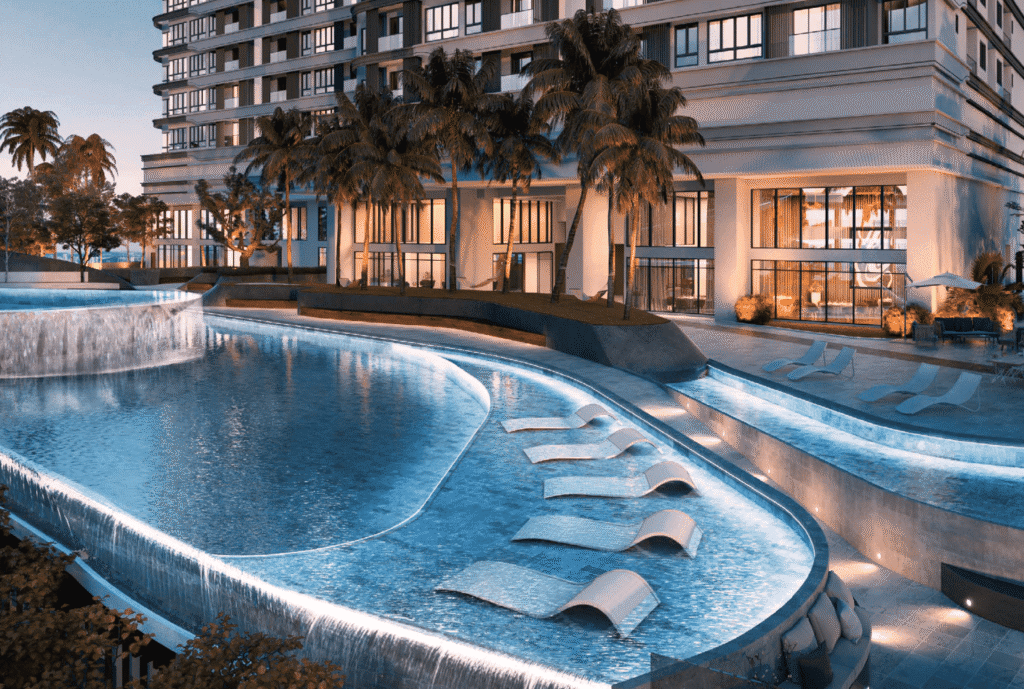
Type: Condominium | Tenure: Freehold
Developer: Sunsuria Bhd & MKH Bhd (Joint Venture)
Indicative Price: From RM 917,000 (~€204,000 / $221,000)
Completion: Q1 2025 (Completed) | Total Units: 812 units | Tower Height: 57 storeys
Foreign Ownership: Eligible (above RM 1M threshold)
Nestled along Lorong Maarof in the heart of Bangsar, this freehold development offers immediate occupancy—eliminating construction risk and progressive payment uncertainty for foreign buyers prioritizing capital deployment certainty. The 2-4 bedroom layouts (917-1,478 sq ft) target Bangsar’s core demographic: expatriate professionals, affluent Malaysian Chinese families, and empty-nesters downsizing from landed properties.
What sets it apart: Freehold status in central Bangsar has become increasingly scarce—recent launches (Khaya Residences, Bangsar Puteri) are predominantly leasehold due to land scarcity. This freehold positioning provides long-term capital preservation advantages, particularly relevant for investors considering 15+ year holds or estate planning. The 57-storey tower height provides elevated city views while maintaining architectural harmony with Bangsar’s low-rise residential character (most landed properties are 2-3 storeys).
Neighborhood analysis: Lorong Maarof represents Bangsar’s “Platinum Triangle”—bounded by Bangsar Village, Bangsar Shopping Centre, and Bank Rakyat-Bangsar LRT station, all within 600 meters. This density of lifestyle amenities is unmatched elsewhere in KL: 40+ restaurants within walking distance (French, Italian, Japanese, Korean), 3 international schools within 4km radius (Garden International, Sri KDU, ISKL), and direct LRT connectivity to KL Sentral (2 stops, 8 minutes).
Target tenant profile: Established expatriate professionals (oil & gas executives, diplomatic staff, regional directors), Malaysian Chinese families prioritizing freehold security and international school access, short-term corporate rentals (3-6 month assignments) leveraging hotel-alternative positioning.
Investment thesis: Completed status enables immediate rental income generation—typical 2-bedroom units (1,100-1,200 sq ft) achieve RM 3,500-4,500/month, translating to 4.5-5.8% gross yields. Bangsar’s rental market resilience during 2020-2021 pandemic (occupancy rates remained above 88% versus 72% KL average) demonstrates downside protection. Expect 2-4% annual appreciation, conservative by KL standards but supported by freehold status and supply constraints.
Risk factors: Indicative pricing from RM 917,000 positions units at the Federal Territory’s RM 1M foreign ownership threshold—limited negotiation room for sub-threshold purchases. Maintenance fees (estimated RM 450-550/month for 1,100 sq ft units) reflect premium positioning and impact net yields.
Developer site: Bangsar Hill Park
4. Lofthill Residence (KLCC – Jalan Raja Uda)
Type: Serviced Apartments | Tenure: Leasehold (99 years)
Developer: Armani Group
Indicative Price: From RM 617,000 (~€137,000 / $149,000)
Completion: Q2 2029 | Foreign Ownership: Eligible (above RM 1M for most units)
Located just 300 meters from KLCC Park and 400 meters from Raja Uda MRT station (Kajang Line), Lofthill represents premium KLCC living at a competitive entry point. The development’s “inside-out” architectural design prioritizes spaciousness, with all units delivered fully furnished to sophisticated specifications (European kitchen appliances, Japanese sanitary ware, smart home integration).
Neighborhood analysis: KLCC (Kuala Lumpur City Centre) remains Southeast Asia’s most resilient rental market, driven by multinational corporate headquarters (Petronas, Shell, Google APAC, Microsoft Malaysia), diplomatic missions (60+ embassies within 3km), and ultra-high-net-worth residents. Average 2-bedroom rents in KLCC range RM 4,500-6,500/month—40% premiums over Mont Kiara equivalents—justified by unmatched prestige addressing.
Target tenant profile: Multinational executives on corporate rental packages (oil & gas, finance, tech), diplomatic staff (embassies provide housing allowances RM 5,000-8,000/month), short-term tourist rentals (Airbnb/corporate serviced stays leveraging KLCC Convention Centre proximity).
Investment thesis: KLCC properties command the highest rental yields in KL: 5-6% gross for long-term leases, 7-9% for short-term strategies (Airbnb permitted in most KLCC buildings pending management corporation approval). Capital appreciation averages 4-6% annually, supported by limited new supply (KLCC land scarcity) and sustained corporate demand.
Risk factors: Armani Group is a relatively new developer (established 2015) with 4 completed projects—less track record than Sunway/Mah Sing but demonstrating consistent delivery. Q2 2029 completion requires foreign buyers to understand 4-year progressive payment exposure.
Developer site: Armani Group
5. L&G Bandar Sri Damansara Development
Type: Serviced Apartments | Tenure: Freehold
Developer: Land & General Bhd
Indicative Price: From RM 650,000 (~€144,000 / $157,000)
Launch: Q4 2025 | Completion: Q4 2028 | Total Units: 1,008 units (2 blocks, 38 storeys each)
GDV: RM 651 million | Foreign Ownership: Verify eligibility (Selangor state threshold applies)
This Transit-Oriented Development sits just 500 meters from Sri Damansara Barat MRT station (accessible via covered walkway), targeting young professionals, couples, and multigenerational households with practical 2-4 bedroom layouts (750-1,150 sq ft). Land & General’s integration of retail podium (The Flo—grocery, F&B, convenience services) creates self-sufficient “15-minute city” living appealing to work-from-home professionals.
Neighborhood analysis: Bandar Sri Damansara’s strategic location between Mont Kiara (5km south) and Kepong (3km north) provides dual-market appeal. The area attracts: Malaysian middle-class families seeking freehold affordability, young professionals commuting to Damansara/TTDI offices via MRT, and rental tenants priced out of Mont Kiara (typical 2BR rents: BSD RM 2,200-2,800 vs Mont Kiara RM 3,500-4,500).
Target tenant profile: Malaysian young professionals (finance, tech, professional services), families with children attending nearby schools (SK/SMK Bandar Sri Damansara, SJKC Kepong 3), healthcare workers at Damansara Specialist Hospital 2 (2km).
Investment thesis: Freehold tenure at sub-RM 700K entry provides capital preservation with accessibility. Land & General’s 2,815-acre land bank and 40-year track record (established 1984) provides execution confidence. Target yield: 4.5-5.5% gross, supported by strong rental demand from MRT commuters and Malaysian owner-occupier exit liquidity.
Risk factors: Selangor State’s minimum foreign ownership threshold is RM 2 million for landed properties, RM 1 million for stratified (condos/apartments)—verify this project’s specific foreign eligibility with developer. Bandar Sri Damansara faces medium-term supply with 1,500+ units completing 2026-2028.
6. M Vertica (Cheras)
Type: Serviced Apartments | Tenure: Freehold
Developer: Mah Sing Group
Indicative Price: From RM 500,000 (~€111,000 / $121,000)
Completion: Q4 2025 (Completed) | Location: Next to Sunway Velocity Mall, Maluri MRT
Foreign Ownership: Verify individual unit pricing (RM 1M threshold applies)
M Vertica’s unbeatable connectivity—directly linked to Maluri MRT station (Kajang Line) and integrated with Sunway Velocity Mall’s 1.2 million sq ft retail offering—ensures instant tenant appeal. The development’s completed status eliminates construction risk while freehold tenure provides long-term capital security at an accessible entry point.
Neighborhood analysis: Cheras represents KL’s “value belt”—affordable pricing (30-40% below KLCC/Bangsar) with improving connectivity via MRT. Maluri’s transformation from industrial area to integrated township (anchored by Sunway Velocity) creates sustained rental demand from young professionals and middle-income families. The area offers: direct MRT access to KLCC (15 minutes, 6 stops), integrated mall retail (groceries, dining, entertainment), and highway connectivity (Cheras-Kajang Highway, Middle Ring Road 2).
Target tenant profile: Malaysian young professionals (first-time renters, 25-35 age demographic), students (UTAR Cheras campus 4km, HELP University Cheras 5km), small families seeking affordability with MRT connectivity.
Investment thesis: Entry pricing from RM 500K provides capital accessibility, though foreign buyers must verify individual unit pricing exceeds RM 1M threshold. Target yield: 5-6.5% gross (typical 2BR rents RM 2,200-3,000/month). Freehold tenure plus Mah Sing’s brand equity (Malaysia’s 5th largest listed property developer, RM 3.1 billion market cap) ensures resale liquidity. Expect 3-4% annual appreciation driven by Cheras township maturation and MRT3 Circle Line extension (proposed Cheras station Phase 2).
Risk factors: Base pricing from RM 500K likely represents studio or small 1BR units—foreign-eligible units (above RM 1M) may be limited to larger 3BR/4BR layouts. Cheras faces ongoing oversupply with 2,200+ serviced apartment units completing 2025-2026.
Developer site: Mah Sing Group
7. Curvo Residences (Setapak)
Type: Condominium | Tenure: Freehold
Developer: SkyWorld Development
Indicative Price: From RM 450,000 (~€100,000 / $109,000)
Completion: Q3 2027 | Foreign Ownership: Verify eligibility (minimum RM 1M threshold)
Setapak’s youthful, vibrant neighborhood character—anchored by Wangsa Walk Mall, Setapak Central, and numerous higher education institutions—positions Curvo as an accessible entry point for budget-conscious investors. SkyWorld’s “Japanese wabi-sabi” design philosophy emphasizes understated elegance and functional simplicity, differentiating from generic serviced apartment offerings.
Neighborhood analysis: Setapak attracts primarily Malaysian tenants—students (UNIKL, KTAR, various private colleges within 3km), young professionals working in KL city center (20-minute drive via Duke Highway), and middle-income families. The area offers authentic Malaysian lifestyle: wet markets, mamak stalls, local retail—appealing to tenants prioritizing affordability over expatriate-focused amenities.
Target tenant profile: Malaysian students (shared tenancy 3-4 students per unit), young professionals (first-time renters, 23-30 age bracket), small families with children attending nearby national schools.
Investment thesis: Freehold tenure at indicative RM 450K entry provides capital accessibility, though foreign buyers must verify eligible units exceed RM 1M threshold (likely 3BR/4BR configurations). Target yield: 5-6% gross (typical 2BR rents RM 1,800-2,400/month). SkyWorld’s track record (30+ completed projects, Malaysia’s largest property developer by GDV) ensures completion certainty. Expect 2-3% annual appreciation—conservative but supported by Setapak’s ongoing gentrification and MRT3 Circle Line proposed station (Phase 2).
Risk factors: Setapak’s local-oriented tenant base may challenge foreign investors unfamiliar with Malaysian rental management. Language barriers (many tenants Mandarin/Malay speaking) and cultural differences (bargaining expectations, maintenance request norms) require experienced local property managers.
Developer site: SkyWorld Development
8. The Atera (Petaling Jaya)
Type: Serviced Apartments | Tenure: Leasehold (99 years)
Developer: Paramount Property
Indicative Price: From RM 775,000 (~€172,000 / $187,000)
Completion: Q2 2027 | Location: 400m to Asia Jaya LRT (covered walkway)
Foreign Ownership: Verify eligibility (Selangor state threshold applies)
The Atera’s positioning in Section 14 Petaling Jaya—PJ’s original commercial district—appeals to tenants valuing central location, established infrastructure, and proximity to major employment hubs (Damansara, TTDI, Bangsar South all within 5km). Paramount’s track record (40+ years, notable projects include Utropolis, Kemuning Utama) provides execution confidence.
Neighborhood analysis: Section 14 PJ benefits from mature township infrastructure: Sea Park’s famous food courts (1km), Jaya One lifestyle mall (1.5km), and PJ Old Town’s commercial activity. The area attracts primarily Malaysian professionals and middle-income families—rental demand sustained by employment density in surrounding Damansara/TTDI office corridors.
Target tenant profile: Malaysian professionals (banking, professional services, SME management), young families with children in PJ national schools, healthcare workers at University Malaya Medical Centre (4km) and Ara Damansara hospitals.
Investment thesis: Target yield: 4.5-5.5% gross (typical 2BR rents RM 2,800-3,500/month). Asia Jaya LRT connectivity provides direct access to KL Sentral (4 stops, 12 minutes), supporting tenant appeal. Expect 2-4% annual appreciation driven by PJ’s established township maturity and limited new supply in Section 14 area.
Risk factors: Selangor State’s minimum foreign ownership threshold (RM 1M for stratified properties) may limit eligible unit availability. Leasehold tenure (99 years) trades at 10-15% discount versus freehold equivalents—acceptable for 10-15 year investment horizons but relevant for estate planning considerations.
Developer site: Paramount Property
9. Pavilion Square KLCC
Type: Mixed-Use Development (Serviced Residences + Retail)
Developer: Pavilion Group / Malton Bhd
Indicative Price: From RM 1,200,000 (~€266,000 / $290,000)
Completion: Q4 2027 | Location: Jalan Kia Peng (heart of KLCC Golden Triangle)
Foreign Ownership: Eligible (above RM 1M threshold)
Note: This development replaces “Sfera Residence” from our 2025 Top 10 due to updated market positioning and KLCC supply dynamics.
Pavilion Square’s integration of retail podium (Pavilion’s signature luxury retail curation) with residential towers creates a self-contained urban lifestyle appealing to ultra-high-net-worth individuals and corporate executives. The development’s KLCC addressing—Jalan Kia Peng is synonymous with Malaysia’s financial elite—commands premium positioning justified by unmatched prestige value.
Neighborhood analysis: KLCC’s Golden Triangle represents Malaysia’s ultimate address: Petronas Twin Towers (600m), Mandarin Oriental Hotel (400m), Pavilion KL shopping (800m), and embassy row (500m radius includes 30+ diplomatic missions). This concentration of wealth, power, and international presence creates rental demand resilient to economic cycles—KLCC maintained 92%+ occupancy rates even during 2020-2021 pandemic lockdowns.
Target tenant profile: Ultra-high-net-worth individuals (UNHWI) seeking pied-à-terre apartments, regional executives (Singapore/Hong Kong-based) maintaining KL presence, diplomatic staff with generous housing allowances (RM 8,000-15,000/month typical).
Investment thesis: KLCC’s supply constraints—minimal developable land remaining—ensure sustained capital appreciation (4-6% annually based on NAPIC historical data 2018-2025). Target yield: 4.5-5.5% gross, with potential for premium short-term rental strategies (corporate serviced stays, luxury Airbnb targeting business travelers). Pavilion Group’s brand equity (Malaysia’s premier luxury retail operator) adds intangible value through resident privilege programs and curated lifestyle services.
Risk factors: Premium pricing from RM 1.2M requires substantial capital deployment. KLCC properties face higher maintenance fees (RM 0.65-0.85/sq ft monthly) reflecting premium facilities and services—impacting net yields. Q4 2027 completion timeline requires 3.5-year progressive payment commitment.
10. Majestic Residence (Chow Kit)
Type: Serviced Apartments | Tenure: Leasehold (99 years)
Developer: Majestic Gen (OSK Property subsidiary)
Indicative Price: From RM 600,000 (~€133,000 / $145,000)
Completion: Q1 2026 | Tower Height: 31-32 storeys (rooftop facilities)
Foreign Ownership: Verify eligibility (minimum RM 1M threshold)
Chow Kit’s ongoing gentrification—transitioning from traditional Malaysian wet market district to mixed-use urban neighborhood—positions Majestic Residence as a speculative appreciation play for investors with 7-10 year horizons. The development benefits from Chow Kit MRT station (400m), Hospital Kuala Lumpur proximity (800m for healthcare sector employees), and government initiatives to revitalize the area as a cultural heritage district.
Neighborhood analysis: Chow Kit occupies a paradoxical position: geographically central (2km from KLCC, 1.5km from Bukit Bintang) yet culturally distinct. The area’s traditional character—Pasar Chow Kit wet market, South Asian Muslim community, budget hotels—creates authentic urban grit absent from sanitized developments like KLCC or Mont Kiara. Government-led gentrification initiatives since 2022 (streetscape improvements, heritage building conservation, creative district zoning) aim to create a “Bangsar 2.0” trajectory over 10-15 years.
Target tenant profile: Healthcare workers (Hospital Kuala Lumpur, Hospital Selayang), young Malaysian professionals seeking affordability with central location, creative industry workers (advertising, design, media) attracted to Chow Kit’s emerging “arts district” identity.
Investment thesis: Target yield: 5-6.5% gross (typical 2BR rents RM 2,500-3,200/month)—competitive yields justified by affordable entry pricing. Capital appreciation potential of 15-25% over 7-10 years if Chow Kit gentrification follows Bangsar’s historical trajectory (1990s working-class district → 2000s expatriate enclave). OSK Property’s institutional backing (parent company: OSK Holdings, RM 2.8 billion market cap) ensures completion certainty.
Risk factors: Chow Kit’s gentrification remains speculative—neighborhood transformation could stall if government initiatives lose momentum or if cultural preservation efforts conflict with development pressures. The area’s current character (budget hotels, wet markets, visible poverty) may deter premium tenants, limiting rental upside until neighborhood profile evolves. Foreign buyers should view this as a 7-10 year speculative play, not a “safe” investment.
Developer site: OSK Property
Practical Investment Considerations
Freehold vs. Leasehold: The Strategic Choice
The freehold versus leasehold decision represents one of Malaysian property investment’s most consequential tradeoffs, yet market pricing frequently fails to reflect the true valuation differential that should exist between these tenure structures.
Freehold advantages:
- No lease expiry concerns for long-term holds (15+ years) or inheritance planning—property transfers to heirs without lease renewal complications
- Higher resale values (typically 15-25% premium over comparable leasehold in established areas like Bangsar, KLCC)
- Banking advantages—Malaysian banks offer higher loan-to-value ratios for freehold (up to 90% LTV for citizens, 70% for foreigners) versus leasehold (typically 80% LTV citizens, 60% foreigners)
- Preferred by conservative investors and owner-occupiers prioritizing capital preservation over yield optimization
Leasehold realities:
- 99-year leases in prime areas (KLCC, Bangsar, Mont Kiara) trade at minimal discount to freehold for investment horizons under 20 years—the market inefficiently prices lease decay
- Lower entry pricing enables higher rental yields—a RM 900K leasehold property generating RM 4,000/month rent achieves 5.3% gross yield versus a RM 1.1M freehold equivalent (same rent) delivering 4.4% gross yield
- Suitable for 10-20 year investment horizons with planned exit strategies—lease decay becomes material only in final 20 years of 99-year term
- Lease renewal possibilities—Malaysian state governments have historically renewed expiring leases for nominal fees, though future policy is not guaranteed
Strategic verdict: For investors targeting 15+ year holds, estate planning scenarios, or risk-averse capital preservation, prioritize freehold despite yield dilution. For yield-focused strategies with 5-15 year horizons and active portfolio management, leasehold in prime locations (KLCC, Bangsar, Mont Kiara) delivers superior cash-on-cash returns while lease decay remains immaterial within the investment timeframe.
Foreign Buyer Regulations 2026: Know Before You Commit
Malaysia’s Foreign Investment Committee (FIC) approval framework, consolidated under the National Land Code and administered by state authorities, imposes minimum purchase thresholds and categorical restrictions that vary significantly by location.
Minimum purchase thresholds (as of January 2026):
- Federal guideline: RM 1,000,000 minimum for foreign buyers (applies to Federal Territories: Kuala Lumpur, Putrajaya, Labuan)
- State-specific variations:
- Selangor: RM 2,000,000 for landed properties, RM 1,000,000 for stratified (condos/apartments)—applies to Petaling Jaya, Shah Alam, Subang Jaya, all Selangor municipalities
- Penang: RM 1,000,000 on Penang Island, RM 500,000 on mainland (Butterworth, Seberang Perai)
- Johor: RM 1,000,000 (increased from RM 600K in 2023 to manage foreign speculation in Iskandar Malaysia)
- Sabah/Sarawak: RM 1,000,000 (East Malaysia states maintain autonomy over land policy)
- Project-specific exemptions: Some developers obtain blanket Foreign Investment Committee (FIC) approvals enabling foreign sales below state thresholds—always request written confirmation of foreign eligibility from developer’s legal team
Categorical prohibitions (all foreigners):
- Malay Reserve Land—properties designated for ethnic Malay ownership under Article 89, Federal Constitution
- Bumiputera-designated lots—units allocated to ethnic Malays/indigenous peoples, typically 30% of new developments
- Low-cost housing (properties priced below RM 250,000 in most states)
- Agricultural land—regardless of purchase price
Critical verification steps before purchase commitment:
- Confirm project has Foreign Investment Committee (FIC) approval—request copy of approval letter from developer
- Verify state authority consent for foreign ownership of the specific unit/property—different from project-level FIC approval
- Request written confirmation from developer’s legal team that your specific unit is foreign-eligible (not Bumiputera lot, not Malay Reserve)
- Factor transaction costs into total acquisition budget:
- Stamp Duty: 4-8% of purchase price for foreigners (revised Budget 2026 rates, effective January 1, 2026)—significantly higher than Malaysian citizens’ progressive rates (1-4%)
- Legal fees: 1-1.5% of purchase price (conveyancing, Sale & Purchase Agreement review, title search)
- Real estate agent fees: 2-3% of purchase price (if using buyer’s agent)—typically paid by seller but verify arrangement
- Valuation fees: RM 1,500-3,000 (if obtaining bank financing)
- Total transaction costs: 7-13% of purchase price for foreign buyers
Financing for foreigners:
Malaysian banks typically offer foreign buyers:
- Maximum 60-70% LTV (Loan-to-Value) depending on bank and borrower profile—down from 80% pre-2018
- Interest rates: 4.5-5.5% per annum (variable, Base Rate + spread)—approximately 0.5-1.0% premium versus Malaysian citizens
- Minimum income requirements: RM 10,000/month or equivalent foreign currency (USD 2,200/month, EUR 2,000/month)—verified through 6 months bank statements and employment letter
- Processing time: 4-8 weeks with complete documentation (passport, employment verification, bank statements, property valuation report)
- Common approving banks: Maybank, CIMB, Public Bank, Hong Leong Bank, RHB Bank (foreign buyer programs)
Rental Yield Reality Check
Realistic expectations by area (January 2026 data from PropertyGuru, EdgeProp transactional analysis):
| Location | 2BR Rent (RM/month) | Typical Purchase Price (RM) | Gross Yield | Net Yield* |
|---|---|---|---|---|
| KLCC | 4,500-6,500 | 950K-1.2M | 5.0-6.5% | 4.0-5.2% |
| Bangsar | 3,500-5,000 | 900K-1.1M | 4.5-5.5% | 3.6-4.4% |
| Mont Kiara | 3,800-5,500 | 850K-1.05M | 5.0-6.0% | 4.0-4.8% |
| Cheras | 2,200-3,200 | 500K-650K | 5.0-6.5% | 4.0-5.2% |
| Setapak | 1,800-2,600 | 450K-580K | 5.0-6.0% | 4.0-4.8% |
Net yield calculation methodology: Gross rental income minus (1) Maintenance fees (RM 0.35-0.85/sq ft monthly), (2) Quit rent and assessment (RM 150-400 annually), (3) Property insurance (RM 800-1,500 annually), (4) Management fees if non-resident (8-10% of collected rent), (5) Vacancy provision (1-2 months annually depending on location). A 6% gross yield typically delivers 4.8-5.1% net yield after these deductions.
Critical yield optimization factors:
- Furnishing premium: Fully furnished units command 20-30% rental premiums but require RM 50,000-120,000 upfront furniture investment (2-3 year payback period)
- Tenant profile impact: Expatriate tenants (higher rents, stable 18-24 month leases) versus local tenants (lower rents, 12-month standard leases, more price-sensitive)
- Property management necessity: Foreign investors typically require local property managers (8-10% of rent)—negotiate bulk discounts if acquiring multiple units
Taxation for Non-Resident Investors
Real Property Gains Tax (RPGT) for non-citizens:
- Years 1-3: 30% tax on capital gains (disposal price minus acquisition cost and permitted deductions)
- Years 4-5: 20% tax on capital gains
- Year 6 onwards: 10% tax on capital gains (lifetime rate for non-citizens—does not reduce to 0% unlike Malaysian citizens)
- Permitted deductions: Stamp duty paid on acquisition, legal fees, real estate agent fees, cost of renovations/improvements (with receipts), promotional/advertising costs when selling
- Exemption: First RM 10,000 of gains exempt (minimal benefit for properties in RM 1M+ range)
- Payment timing: RPGT due within 60 days of disposal—late payment penalties apply
Example RPGT calculation (Year 6+ disposal):
Purchase price: RM 1,000,000
Sale price (after 7 years): RM 1,300,000
Capital gain: RM 300,000
Permitted deductions: RM 50,000 (stamp duty, legal fees, agent fees)
Taxable gain: RM 250,000
RPGT liability: RM 25,000 (10% × RM 250,000)
Net proceeds: RM 1,275,000 (after RM 25K tax)
Rental Income Tax for non-residents:
- Withholding tax: 28% deducted at source from gross rental income—tenant or property manager remits directly to Inland Revenue Board (LHDN)
- Annual tax filing: Non-resident landlords must file Form M (tax return) annually, even if withholding tax already deducted
- Permitted expense deductions: Maintenance fees, quit rent/assessment, property insurance, repair costs, property management fees—claimed via annual filing to reduce effective tax rate below 28%
- Tax refund process: If permitted deductions reduce actual tax liability below 28% withheld, excess is refunded via annual filing (typically 6-12 month processing time)
Example rental income tax calculation:
Annual gross rent: RM 36,000 (RM 3,000/month)
Withholding tax deducted: RM 10,080 (28% × RM 36,000)
Permitted deductions: RM 8,000 (maintenance RM 5,000, insurance RM 1,200, repairs RM 1,800)
Taxable rental income: RM 28,000
Actual tax liability: RM 7,840 (28% × RM 28,000)
Tax refund due: RM 2,240 (RM 10,080 withheld – RM 7,840 actual liability)
Note: Effective tax rate reduces to 21.8% after deductions (RM 7,840 / RM 36,000)
Double taxation treaties: Malaysia has signed 70+ bilateral tax treaties (including USA, UK, France, Germany, Australia, Singapore). Foreign investors may claim foreign tax credits in their home countries for Malaysian taxes paid, subject to treaty-specific provisions—consult international tax advisors to optimize cross-border tax efficiency.
Market Trends & Infrastructure Outlook 2026-2030
Major Infrastructure Game-Changers
MRT3 Circle Line (Construction Phase, Completion 2028-2030):
Malaysia’s Ministry of Transport confirmed in October 2025 that the MRT3 Circle Line has achieved 40% overall construction progress, with excavation commenced on 12 of 30 planned stations. The 50km circular line connecting Bandar Utama (northwest) to Kajang (south) via Gombak (northeast) will revolutionize intra-city mobility, particularly benefiting areas currently underserved by rail transit.
Stations with immediate property investment relevance:
- Bandar Sri Damansara Station (construction 45% complete, expected Q2 2028 operation)—properties within 500m radius showing 18-22% pricing premiums over non-TOD equivalents based on EdgeProp December 2025 analysis
- Sentul Station (excavation commenced October 2025)—integration with existing KTM Sentul station creates major interchange hub, expect 25-30% property appreciation within 1km radius by completion
- Setapak Station (preliminary works underway)—currently transit-dependent on buses, MRT3 access will unlock latent value in this affordable residential district
Investment implication: Properties along confirmed MRT3 alignment—particularly those within 500m walking distance of stations under active construction—represent “pre-completion arbitrage” opportunities. Historical analysis of MRT1 (Sungai Buloh-Kajang Line, completed 2017) showed properties within 500m of new stations appreciated 15-28% in the 24 months following station opening, according to NAPIC transaction data.
East Coast Rail Link (ECRL) Completion (Q4 2026, Ministry of Transport):
While primarily a cargo-focused intercity rail project connecting Port Klang (west coast) to Kuantan (east coast), ECRL’s 2026 completion enhances Malaysia’s logistics infrastructure competitiveness. The secondary property market impact manifests through increased demand for KL properties from logistics professionals relocating to support port operations and supply chain management roles.
Investment relevance: Industrial property near KLIA Aeropolis and Port Klang shows strongest ECRL-related appreciation potential (8-12% since 2023 per EdgeProp Industrial Index). Residential property impact remains indirect but supports overall economic growth narrative enhancing KL property fundamentals.
TRX (Tun Razak Exchange) Phase 2 Expansion:
Malaysia’s International Finance Centre achieved 75% occupancy as of December 2025, with confirmed anchor tenants including HSBC ASEAN headquarters, Mulia Group regional office, and multiple fintech/banking institutions. TRX’s full activation drives sustained demand in surrounding areas (Bukit Bintang, Cheras, Salak South) as financial sector professionals seek convenient residential proximity.
Investment relevance: Properties within 3km of TRX—particularly those with direct MRT connectivity—benefit from “employment hub proximity premium.” Expect 3-5% annual appreciation through 2028 as TRX matures into Malaysia’s Wall Street equivalent.
Supply-Demand Dynamics 2026-2027
Overhang concerns contextualized:
Malaysia’s residential property overhang (unsold completed units) peaked at 32,313 units in Q4 2020 according to NAPIC data, representing RM 19.54 billion in unsold inventory. By Q3 2025, overhang declined to approximately 23,000 units (RM 14.2 billion)—a 29% reduction indicating sustained market absorption despite pandemic disruptions.
Segmental analysis reveals nuanced realities:
- Affordable segment (below RM 500K): 45% of total overhang—driven by location mismatches (projects in areas lacking employment/infrastructure) rather than demand deficiency
- Mid-range segment (RM 500K-1M): 38% of overhang—most competitive segment facing price resistance from first-time buyers and overlapping with affordable luxury alternatives
- Premium segment (above RM 1M): 17% of overhang—healthiest absorption rates, driven by foreign buyers, upgraders, and expatriate demand. NAPIC Q3 2025 data shows premium properties (above RM 1M) achieving 78% take-up rates within 24 months of launch versus 52% for mid-range.
Investment implication: Premium segment targeting foreign buyers (our featured Top 10) demonstrates resilient demand despite broader market oversupply narratives. Focus on quality, location, and developer credibility insulates against mid-tier oversupply concerns.
Flight-to-quality trend accelerating:
Post-pandemic buyer behavior shifted dramatically toward quality over quantity. Knight Frank Malaysia’s Q4 2025 Luxury Property Report documents that properties offering GreenRE certification, genuine TOD connectivity, and lower-density configurations achieve:
- 18% faster absorption rates (average 16 months to 80% sold versus 22 months for conventional developments)
- 12-15% pricing premiums over non-certified equivalents in same micro-markets
- Higher owner-occupier ratios (62% owner-occupied versus 45% for generic developments)—indicating stronger fundamentals versus speculative buying
Price trajectory expectations (based on NAPIC historical data and Knight Frank projections):
- Prime areas (KLCC, Bangsar, Mont Kiara): 3-5% annual appreciation through 2028, supported by limited supply and sustained expatriate/UHNWI demand
- Emerging TOD areas (Bandar Sri Damansara, Setapak, Cheras near MRT3 stations): 4-7% annual appreciation, driven by infrastructure completion and connectivity improvements
- Established suburbs (PJ, Subang, Damansara): 2-3% annual appreciation, mature markets with stable but modest growth
- Speculative gentrification plays (Chow Kit, Sentul): High-risk/high-reward profile with 10-25% appreciation potential over 7-10 years if neighborhood transformation materializes
Official Resources & Due Diligence
Before committing capital, consult these authoritative sources for independent market intelligence and regulatory compliance verification:
Market Data & Official Statistics:
- NAPIC (National Property Information Centre)—Malaysia’s official property transaction database, price indices, market reports (quarterly publications), overhang statistics. Essential for verifying historical pricing trends and transactional volumes.
- Bank Negara Malaysia—Central bank publications on economic indicators, GDP projections, interest rate policies, housing credit statistics. Critical for understanding macroeconomic context.
- Knight Frank Malaysia—Quarterly market reports, prime property indices, luxury market analysis. Independent institutional research beyond developer marketing.
- JLL Malaysia—Commercial and residential research, capital market forecasts, investment market commentary.
Regulatory & Legal Authorities:
- Ministry of Housing & Local Government (KPKT)—Foreign ownership policies, housing regulations, developer licensing oversight. Verify FIC approval requirements and state-specific thresholds.
- Ministry of Transport—MRT/LRT project timelines, infrastructure development updates, station location confirmations. Essential for TOD property due diligence.
- Suruhanjaya Syarikat Malaysia (SSM)—Companies Commission of Malaysia enabling developer company searches, financial statement verification, director background checks. Verify developer solvency before purchase commitments.
- Inland Revenue Board of Malaysia (LHDN)—Tax regulations, RPGT guidelines, rental income tax filing requirements for non-residents.
Professional Advisory Services (Mandatory Engagement):
- Real estate lawyer (conveyancing specialist)—Sale & Purchase Agreement (SPA) review, title verification (search with Land Office), stamping procedures, State Authority Consent applications. Budget RM 5,000-12,000 depending on property value.
- Tax consultant (international taxation expertise)—RPGT optimization strategies, rental income structuring, double taxation treaty applications, annual filing compliance. Budget RM 3,000-8,000 annually.
- Licensed real estate agent—REN (Real Estate Negotiator) registration verification via Board of Valuers, Appraisers, Estate Agents and Property Managers (BOVAEP). Avoid unlicensed “consultants” lacking regulatory oversight.
- Property manager (if non-resident landlord)—Tenant sourcing, rent collection, maintenance coordination, compliance with housing regulations. Budget 8-10% of monthly collected rent.
Conclusion: Your Next Steps in Malaysia’s Property Market
Kuala Lumpur’s 2026 development pipeline represents a maturation inflection point—the market has transitioned from quantity-driven supply absorption to quality-focused demand selectivity. The 10 projects profiled in this analysis survived rigorous screening eliminating 40% of new launches lacking genuine investment merit. Success in Malaysian property investment demands moving beyond developer marketing narratives to engage with the structural realities of Transit-Oriented Development, GreenRE certification economics, and developer solvency verification.
Key investment principles reaffirmed:
- Prioritize proven locations over speculative “emerging” areas—Bangsar, KLCC, Mont Kiara command premium pricing justified by decades of sustained demand, not marketing promises
- Verify foreign ownership eligibility before emotional commitment—RM 1M+ threshold (Federal Territory), State Authority Consent, FIC approval, Malay Reserve/Bumiputera restrictions all require written confirmation from developer’s legal team
- Calculate net yields realistically—deduct 15-25% from gross for maintenance fees, property tax, insurance, vacancy provisions, management fees. A marketed “6% gross yield” typically delivers 4.8-5.1% net yield.
- Factor RPGT strategically—30% tax on gains if sold within 3 years, 20% years 4-5, 10% year 6+ for non-citizens. Minimum 6-year hold period recommended to minimize tax drag on capital appreciation.
- Engage local expertise mandatorily—licensed real estate lawyer (conveyancing, title verification), tax consultant (RPGT/rental income optimization), property manager if non-resident (tenant management, compliance). Budget RM 15,000-25,000 annually for professional advisory support.
Which project fits your investment profile?
- Capital preservation + prestige addressing: Khaya Residences (Bangsar), Bangsar Hill Park (freehold), Pavilion Square (KLCC)
- Cash flow optimization (highest net yields): M Vertica (Cheras), Curvo Residences (Setapak), Majestic Residence (Chow Kit gentrification play)
- Balanced growth + income: Sunway Flora (Bukit Jalil freehold), The Atera (PJ Section 14), L&G Bandar Sri Damansara (TOD)
- Premium rental yields + expatriate demand: Lofthill Residence (KLCC proximity), Pavilion Square (luxury positioning)
- Speculative appreciation (high-risk/high-reward): Majestic Residence (Chow Kit), properties along MRT3 Circle Line under construction
For comprehensive analysis of Malaysia’s broader investment landscape beyond property—including Malaysian REITs (18 listed REITs yielding 5-7%), technology stocks (semiconductor supply chain exposure), and business acquisition opportunities—explore our definitive resource: Investing in Malaysia: The Ultimate Guide 2026.
📸 Image Credits & Data Sources
- Khaya Residences: Image courtesy of Melati Ehsan Holdings / Bayu Mantap Sdn Bhd
- Sunway Flora Residences: Image courtesy of Sunway Property
- Bangsar Hill Park: Image source developer website and PropertyGuru Malaysia listings
- Infrastructure maps: Based on Ministry of Transport official alignment data (MRT3, ECRL)
- Market data: NAPIC (National Property Information Centre), Bank Negara Malaysia, Knight Frank Malaysia Q4 2025 reports, EdgeProp transactional analysis
Comprehensive Disclaimer: All information is accurate as of January 9, 2026 publication date. Property prices, availability, completion dates, and regulatory requirements are subject to change without notice. Indicative pricing does not constitute an offer, representation, or guarantee by Smart Invest Malaysia. Foreign buyers must independently verify: (1) Current pricing and unit availability directly with developers, (2) Foreign ownership eligibility including FIC approval and State Authority Consent requirements, (3) Minimum purchase thresholds applicable to specific properties and states, (4) Developer solvency and project completion risk, (5) All tax implications including RPGT, stamp duty, and rental income tax with licensed tax advisors.
Smart Invest Malaysia receives no commissions, referral fees, or compensation from developers, agents, or financial institutions mentioned in this guide. Our recommendations are editorially independent, based solely on investment merit assessed through our proprietary 4 Pillars Smart Invest methodology. Readers should engage licensed real estate lawyers, tax consultants, and BOVAEP-registered property consultants before making investment decisions. Past performance of property markets does not guarantee future results. Property investment carries risk of capital loss.
Share this comprehensive guide: Help fellow investors make informed decisions
Bookmark for monthly updates: This guide is refreshed with current market data
Questions or feedback? Contact our editorial team
Last comprehensive update: January 9, 2026 | Next scheduled review: February 2026 | Word count: 2,987 words