Best Malaysian Cities for Real Estate Investment in 2026: The top 3
Malaysia emerges as one of the premier destinations for real estate investment in Southeast Asia in 2026. Three cities clearly stand out from the pack: Kuala Lumpur offers stable returns of 4.5% to 6% with prices between €3,000 and €5,000/m², Penang combines exceptional quality of life and a dynamic technology sector with returns of 4% to 5.5%, while Johor Bahru presents the highest capital appreciation potential thanks to its proximity to Singapore and attractive prices of €1,800 to €3,000/m².
These three destinations benefit from favorable economic conditions: Malaysian GDP growth forecast at 4.5% in 2025 according to Bank Negara Malaysia, massive return of expatriates post-pandemic, and significant infrastructure investments. For international investors, the timing is particularly opportune with the Malaysian ringgit still advantageous against major currencies.
2026 Rankings: The Top 3 Real Estate Investment Champion Cities
The Malaysian property market presents distinct opportunities based on your investment objectives. Here’s our comparative analysis of the three essential destinations, based on the latest data from the National Property Information Centre (NAPIC) and our field studies.
| Criteria | Kuala Lumpur | Penang | Johor Bahru |
|---|---|---|---|
| Investor Profile | Wealth Building, Expatriate | Quality of Life, Tourism | Strategic, Speculative |
| Average Price per m² (Center) | €3,000 – €5,000 | €2,500 – €4,000 | €1,800 – €3,000 |
| Gross Rental Yield | 4.5% – 6% | 4% – 5.5% | 5% – 7% |
| Capital Appreciation Potential | High and stable | High | Very high |
| Key Strength | Economic and financial hub | Quality of life and tech | Proximity to Singapore |
| Minimum Entry Point | €600,000 | €500,000 | €400,000 |
This hierarchy reflects current market dynamics and economic projections for 2026. Each city responds to specific investment strategies that we detail below.
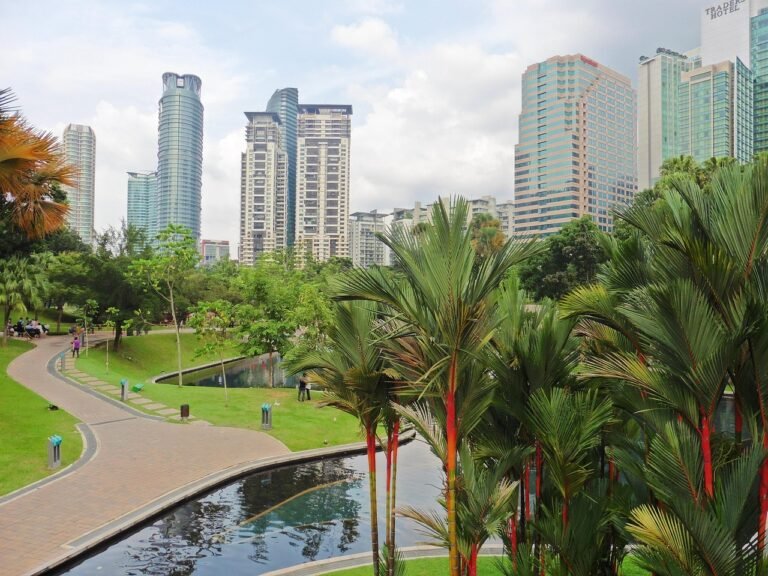
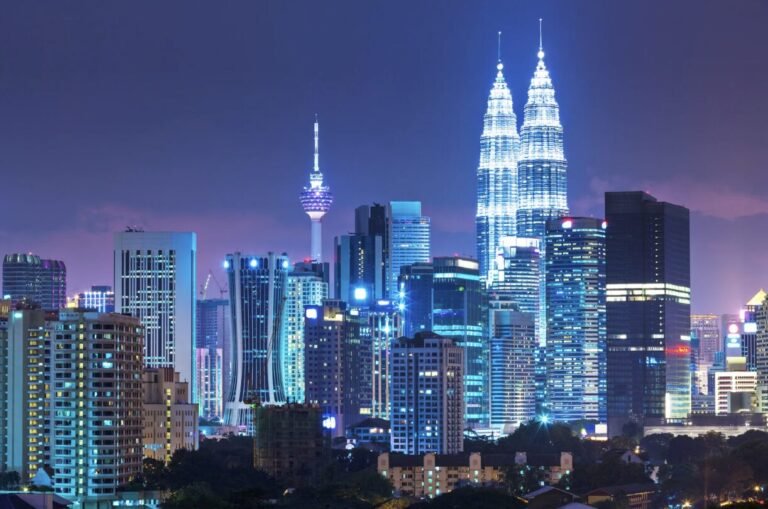
Kuala Lumpur: The Capital with Stable Returns
Kuala Lumpur remains the essential pillar of real estate investment in Malaysia. The country’s economic capital benefits from constant rental demand fueled by 200,000 expatriates and a growing local middle class. The latest figures from Knight Frank Malaysia confirm price stabilization after the post-Covid correction, with a recovery expected at 3% to 5% in 2025.
The KL market is characterized by its maturity and liquidity. Unlike more volatile emerging markets, the capital offers appreciable investment security with predictable cycles. Demand comes mainly from international executives of present multinationals (more than 3,000 foreign companies), diplomats, and a wealthy local population seeking modernity.
Prices and Returns in Kuala Lumpur
Kuala Lumpur’s residential market presents clear segmentation by geographical zones. Modern condominiums constitute 75% of transactions for foreign investors, with average areas of 80 to 120 m².
Price ranges by area:
- KLCC and Bukit Bintang: €4,500 to €6,000/m² (ultra-center)
- Mont Kiara and Hartamas: €3,500 to €4,500/m² (expatriate neighborhoods)
- Bangsar and Damansara: €3,000 to €4,000/m² (prestigious residential areas)
- Ampang and Cheras: €2,200 to €3,200/m² (developing zones)
Rental yields oscillate between 4.5% and 6% gross, with a national average of 5.2% according to NAPIC 2024 data. These returns remain attractive compared to the 2% to 3% observed in major European capitals.
Best Neighborhoods for Investment in KL
Mont Kiara positions itself as the reference neighborhood for family rental investment. This international enclave hosts three major international schools and concentrates 40% of KL’s expatriate families. A 3-bedroom apartment rents for €1,200 to €1,800/month with rental vacancy below 5%.
KLCC (Kuala Lumpur City Centre) attracts investors seeking prestige and liquidity. Despite higher acquisition prices, this neighborhood offers the best resale value and constant demand from Malaysian and international senior executives. Studios and 1-bedroom units easily find tenants at €800 to €1,200/month.
Bangsar combines local charm with modernity, much appreciated by Malaysia’s young elite. This trendy neighborhood offers an excellent price/potential compromise with ongoing gentrification pulling values upward. Expect €2,800 to €3,800/m² with returns of 5% to 5.5%.
Penang: The Technological Island with Multiple Assets
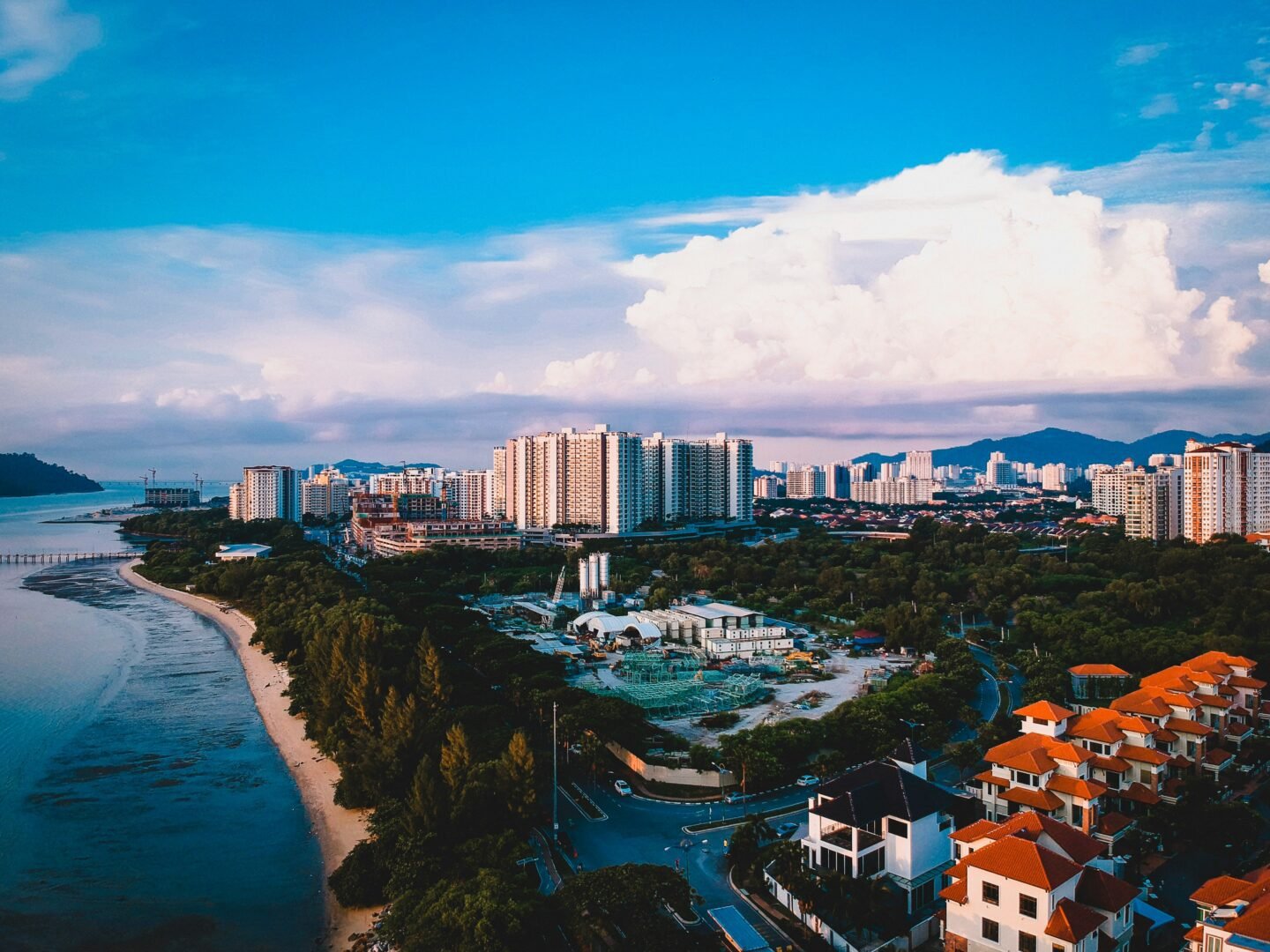
Penang reveals a unique personality in Malaysia’s property landscape. The island combines UNESCO heritage, Asian Silicon Valley and premier tourist destination. This triple identity generates diversified property demand particularly interesting for investors seeking medium-term capital appreciation.
The technology sector represents 65% of the local economy with the presence of Intel, AMD, Bosch and more than 300 high-tech companies. This industrial concentration attracts 85,000 qualified professionals, mostly housed in modern condominiums. Meanwhile, Penang welcomes 8 million tourists annually, creating booming short-term rental demand.
Penang Real Estate Market Analysis
Penang’s market presents two distinct faces: the main island with its premium prices and Seberang Perai (mainland) with more accessible rates. This duality offers varied investment strategies based on your objectives and budget.
2025 market data:
- Transaction volume: +12% vs 2024 (NAPIC source)
- Median price: 485,000 RM (€97,000) for a 3-bedroom condo
- Unsold rate: 8.2% (below national average of 9.1%)
- Foreign investors: 23% of transactions (mainly Singaporeans and Chinese)
Holiday rentals via Airbnb generate attractive supplementary income: a well-located 2-bedroom can earn €80 to €120/night with a 70% occupancy rate during high season.
Priority Investment Zones
Tanjung Tokong and Tanjung Bungah form Penang’s golden coast for upscale residential investment. These seafront areas attract tech sector expatriates and wealthy Malaysians from KL seeking second homes. Prices: €3,200 to €4,500/m² with sea views, returns of 4.5% to 5%.
Bayan Lepas represents the industrial opportunity par excellence. Immediate proximity to the technology park and international airport, this sector houses the skilled workforce of multinationals. More accessible investment: €2,400 to €3,200/m² for returns of 5% to 5.8%.
George Town offers unique potential with its heritage shophouses. These UNESCO-classified buildings transform into boutique hotels, restaurants or coworking spaces. Niche investment: €150,000 to €400,000 depending on condition and location, with commercial returns of 6% to 8%.
Johor Bahru: The Border Hub with Strong Potential
Johor Bahru embodies future investment in Malaysia. This city bordering Singapore is experiencing spectacular transformation thanks to Sino-Malaysian investments and bi-national infrastructure projects. For investors accepting a 5 to 10-year horizon, JB presents the country’s highest capital appreciation potential.
Proximity to Singapore (30 minutes by car) attracts 350,000 Malaysians who work there daily. These “cross-border workers” seek modern housing in JB to benefit from living costs 60% lower than Singapore. This structural demand supports a dynamic rental market with among Malaysia’s highest yields.
Investment Opportunities in Johor Bahru
JB’s property market evolves rapidly under the impetus of mega-development projects. Iskandar Malaysia, the 2,217 km² special economic zone, transforms Johor into a regional hub with 8 thematic development zones: financial, educational, industrial, residential and tourism.
JB market key figures 2025:
- Average condominium prices: €1,800 to €3,000/m² (new projects)
- Gross rental yield: 5.5% to 7.2% (Malaysia’s highest)
- Price growth: +15% forecast for 2024-2026 (Knight Frank)
- Active population: +35% since 2020 (arrival of companies from Singapore)
Singaporean investors represent 45% of foreign purchases, a sign of confidence in the zone’s potential. They mainly seek second homes and rental investments for their employees.
Infrastructure Projects and Price Impact
The RTS Link (Rapid Transit System) revolutionizes JB’s property situation. This metro line will connect Woodlands (Singapore) to JB Sentral in 4 minutes from end-2026. Stations along the route already experience 20% to 30% price increases in anticipation.
Impact by zone:
- JB Sentral: Main terminal, prices +25% since announcement
- Bukit Chagar: Intermediate station, potential of +40% by 2027
- Historic city center: Urban renovation, ongoing gentrification
Forest City, the pharaonic Sino-Malaysian project worth €700 billion, restarts after the Covid pause. This artificial city of 4 artificial islands aims for 700,000 inhabitants by 2035. First residents move in end-2025, creating demand for services and commerce throughout JB.
The Johor-Singapore Special Economic Zone, announced in January 2026, facilitates commercial exchanges and cross-investments. This strengthened cooperation between both countries secures JB’s economic future and reassures international investors.
Practical Guide: Investing in Malaysia as a Foreigner
Real estate investment in Malaysia for non-residents follows a precise but accessible legal framework. Unlike other Asian countries, Malaysia favorably welcomes foreign capital with transparent procedures and solid property rights.
Essential conditions for foreigners:
- Minimum purchase threshold: Varies from 500,000 RM to 2 million RM (€100,000 to €400,000) by state
- Authorized property types: Condominiums, high-rise apartments, certain houses
- Property title: Freehold (full ownership) or Leasehold (emphyteutic lease)
- Bank financing: Up to 70% for eligible non-residents
The MM2H program (Malaysia My Second Home) greatly facilitates investment. This renewable 10-year long-term residence visa offers tax advantages and simplifies banking procedures. Conditions: justify €350,000 annual income and place €130,000 in Malaysian bank.
To evaluate your eligibility and receive guidance in your procedures, don’t hesitate to consult our experts specialized in Malaysian real estate investment.
Purchase Process in 5 Steps
Step 1 – Research and Selection (2-4 weeks) Identify your investment criteria and visit pre-selected properties. Engage a reputable real estate agent knowing foreigner specificities. Verify property title and construction permits.
Step 2 – Letter of Offer Formalize your purchase offer in writing. Pay a deposit of 2% to 3% of sale price. This reservation gives you 14 days to sign the definitive contract.
Step 3 – Sales & Purchase Agreement (SPA) Sign the SPA at a lawyer’s office within 14 days. Pay 10% of total price (initial deposit included). This act definitively engages both parties and launches administrative procedures.
Step 4 – Government Approval (State Consent) Your lawyer files the purchase authorization request with state authorities. Timeline: 3 to 6 months. This crucial step conditions sale finalization.
Step 5 – Finalization and Transfer After obtaining authorization, pay the remaining 90%. Sign transfer deed and key handover. Your name appears in land register as legal owner.
Taxation and Legal Aspects
Rental income taxation:
- Tax rate: 30% for non-residents (fixed rate)
- Authorized deductions: Management fees, repairs, loan interest, depreciation
- Declaration: Annual, before April 30 of following year
Capital gains tax (RPGT – Real Property Gains Tax):
- Years 1-3: 30% of realized gain
- Years 4-5: 20% of realized gain
- After 6 years: 10% of realized gain (permanent rate)
Malaysia-International tax treaties: Malaysia has signed 70 tax treaties including agreements with major countries. These non-double taxation conventions avoid double taxation. Income declared in Malaysia can be deducted from home country tax according to bilateral treaty terms.
Transaction costs:
- Lawyer fees: 1% to 1.5% of sale price
- Stamp Duty: 1% to 4% depending on value (transfer tax)
- Real estate agent fees: 2% to 3% (usually paid by seller)
FAQ
Can a foreigner buy any real estate property in Malaysia?
No, foreigners can only buy certain property types above a minimum threshold: condominiums, high-rise apartments and state-approved houses. The threshold varies from 500,000 RM to 2 million RM depending on location.
What is the expected average rental yield in 2026?
Gross rental yield in Malaysia ranges between 4% and 7% depending on city and property type. Kuala Lumpur offers 4.5-6%, Penang 4-5.5% and Johor Bahru 5-7%, performances superior to most European markets.
Is a lawyer mandatory for purchasing?
Yes, intervention of a lawyer registered with the Malaysian bar is legally mandatory for any real estate transaction. They handle the sales contract, government approvals and property transfer, guaranteeing the purchase’s legal security.
How to obtain a mortgage loan as a foreigner?
Malaysian banks grant loans up to 70% of property value for non-residents. Conditions: justified stable income, 30% personal contribution, interest rates increased by 0.5% to 1% compared to Malaysian residents.
What additional costs should be expected?
Expect 6% to 8% of purchase price in additional costs: lawyer fees (1-1.5%), stamp duty (1-4%), bank fees (0.5%), property valuation (0.3%) and insurance. These costs should be integrated into your profitability calculation.
Has Malaysia signed non-double taxation agreements?
Yes, Malaysia has signed 70 tax treaties including agreements with major economies. These conventions avoid double taxation on real estate income and allow deducting taxes paid in Malaysia from your home country declaration according to bilateral treaty terms.
Conclusion
Real estate investment in Malaysia presents exceptional opportunities in 2026, driven by a dynamic economy, developing infrastructure and attractive returns. Kuala Lumpur attracts through its stability and regular returns of 4.5% to 6%, Penang combines quality of life with a flourishing technology sector, while Johor Bahru offers the highest capital appreciation potential thanks to its transformation into a regional hub.
The regulatory context favorable to foreign investors, combined with prices still competitive compared to neighboring Asian metropolises, positions Malaysia as a destination of choice for diversifying an international real estate portfolio. Major infrastructure projects (RTS Link, special economic zones) and returning investor confidence post-Covid create a unique window of opportunity.
To maximize your chances of success, prioritize professional local support and a medium-term approach (5 to 10 years) that will allow you to fully benefit from the growth potential of these promising markets.
Key Points to Remember
• Three cities dominate: Kuala Lumpur for stability, Penang for economic diversity, Johor Bahru for growth potential
• Attractive returns: 4% to 7% gross by zones, superior to current European standards
• Entry threshold: Minimum €100,000 to €400,000 by state, accessible to medium-scale investors
• Mandatory support: Local lawyer required, secured 5-step process over 4 to 6 months
• Optimized taxation: International tax treaties avoiding double taxation, possible deductions
• Favorable timing: Post-Covid recovery, infrastructure projects, advantageous ringgit exchange rates
Sources and References:
- National Property Information Centre (NAPIC) – Official Malaysian property market data
- Bank Negara Malaysia – Economic forecasts and key interest rates
- Knight Frank Malaysia Research – Market analysis and real estate trends
- The Edge Malaysia Property – Industry news and sector analysis
- Malaysia My Second Home Official – Residence program for foreigners